Overview
As New York builds its clean energy economy, it can maximize community benefits and ensure that all workers can access high-quality union careers. To support this goal, the Climate Jobs Institute (CJI) has partnered with organizations in New York’s Apprenticeship Readiness Collective (ARC) and with Uprose, a Brooklyn-based, nationally recognized environmental justice organization, to develop and deliver a climate and clean energy apprenticeship readiness curriculum called Next Generation Clean Energy.
The first of its kind in New York, the curriculum introduces climate change’s science, disproportionate impacts on frontline communities and intersections with participants’ lives. It also explores the role of labor unions in addressing the climate crisis and highlights career opportunities in the building and construction trades that emerge from the clean energy transition.
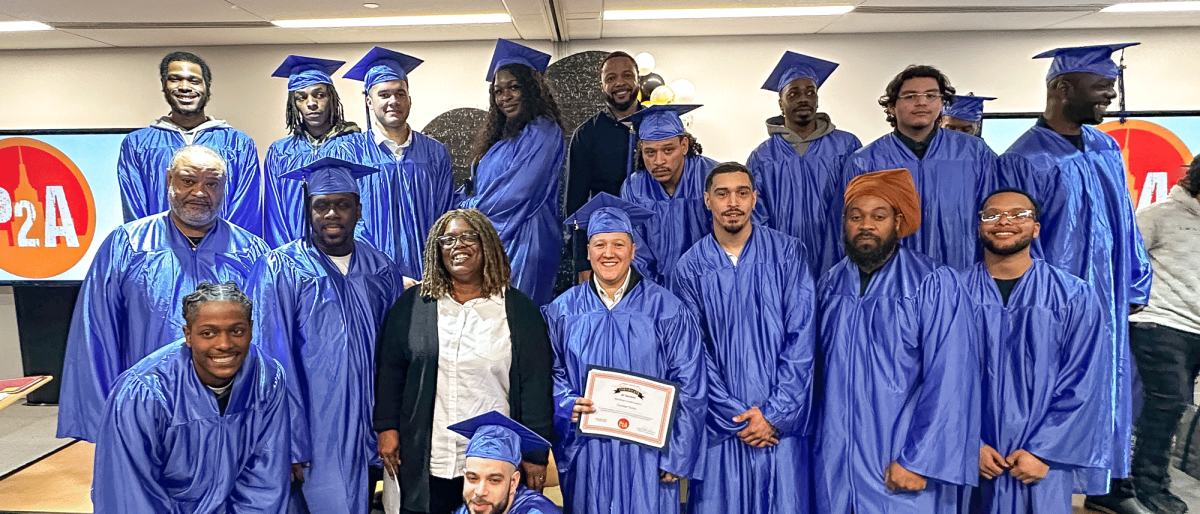
In 2025, CJI and Pathways to Apprenticeship (P2A) taught the curriculum to roughly 50 participants. In 2026, the CJI team has built significant instructor capacity through a train-the-trainer model.
Results
- Participants developed a stronger understanding of climate science, environmental justice and the relationship between climate change and their community members’ lived experiences.
- Participants connected career opportunities in the construction trades with New York’s clean energy transition while learning how unions can help shape equitable climate solutions.
- Participants gained knowledge about the role of organized labor in advancing not only workplace standards and economic security, but also solutions to broader social and environmental issues.
- Feedback from participants and partner organizations indicated that the curriculum was engaging and transformative, with learners describing it as an eye-opening experience that expanded their understanding of climate change and their potential role in addressing it.
- Participants reported gaining new knowledge and confidence to discuss climate issues within their workplaces and communities.
- The train-the-trainer model strengthened partner organizations’ capacity to deliver climate education directly within apprenticeship readiness programs, creating opportunities to expand the program’s reach across New York City and beyond.
“It gave me an opportunity to understand and to see what so many people are talking about, how I can, myself, get the meaningful knowledge and information I need to speak to others about it, and maybe we can make a change.” —Seagan Soobrian-Aziz
Recommendations
- Climate and workforce development organizations should integrate climate literacy, environmental justice and labor education into apprenticeship readiness and workforce training programs.
- Union apprenticeship pathways should continue to prioritize outreach to workers from low-income, frontline and historically underserved communities to ensure an equitable clean energy transition.
- Workforce development partners should invest in instructor training and peer-learning models that build organizations’ capacity to deliver high-quality climate education at scale.
- Clean energy workforce programs should emphasize the connection between technical skills, union careers and leadership opportunities within both the labor and environmental movements.
- Policymakers, funders and educational institutions should support partnerships between labor organizations, community groups and training providers to expand access to clean energy career pathways.
Research Impact
The Next Generation Clean Energy Program demonstrates how applied research can inform workforce development strategies. Findings from a 2023 CJI report, “Building an Equitable, Diverse, & Unionized Clean Energy Economy: What We Can Learn from Apprenticeship Readiness,” directly informed the design of the curriculum, helping translate research on apprenticeship readiness into a practical educational tool.
By integrating climate science, environmental justice, labor history and career exploration into apprenticeship readiness training, the program helped participants understand both the opportunities associated with the clean energy transition and the roles they can play in shaping it. The progression from research, to convening, curriculum development, pilot implementation, instructor training and program expansion illustrates a replicable model for translating research into practice.
AUTHORS:
Melissa Shetler, Climate Jobs Institute assistant director of labor outreach and workforce development; Zach Cunningham, Climate Jobs Institute assistant director of labor education

CONTACT:
Lara Skinner
Director
lrs95@cornell.edu
The Climate Jobs Institute is guiding New York and the nation’s transition to a strong, equitable and resilient clean energy economy that tackles the climate crisis, creates high-quality jobs, confronts race and gender inequality, and builds a diverse and inclusive workforce