Overview
New York’s progress toward the commitments established in the Climate Leadership and Community Protection Act (CLCPA) has been mixed. Much more is needed to meet the law’s goals and address the severe affordability crisis the state is facing, even following amendments made to the CLCPA in 2026.
To meet the moment, New York needs to employ new approaches to the clean energy transition. This report, called “Key Interventions: How New York Can Still Achieve Its Climate, Jobs, and Equity Mandates,” comes on the heels of federal divestment in renewable energy and identifies 10 immediate interventions New York can take to 1) drive down emissions; 2) expand access to high-quality union jobs; 3) contribute economic, social, and health benefits; and 4) make the state more affordable.
Key Findings
- The state is behind on its clean energy goals and is expected to miss its 2030 goal of 70% renewable generation, as well as its 2040 goal of a 60% emissions reduction, which was enshrined in the 2019 law.
- As of June 2026, New York has met just 44% of its 2030 renewable generation target and has reduced statewide emissions by 24%.
- New York has entered a new phase of electricity demand growth due to increases in data center load, electric vehicles and building electrification. This has major ramifications for power producers, utilities, workers, ratepayers and policymakers alike.
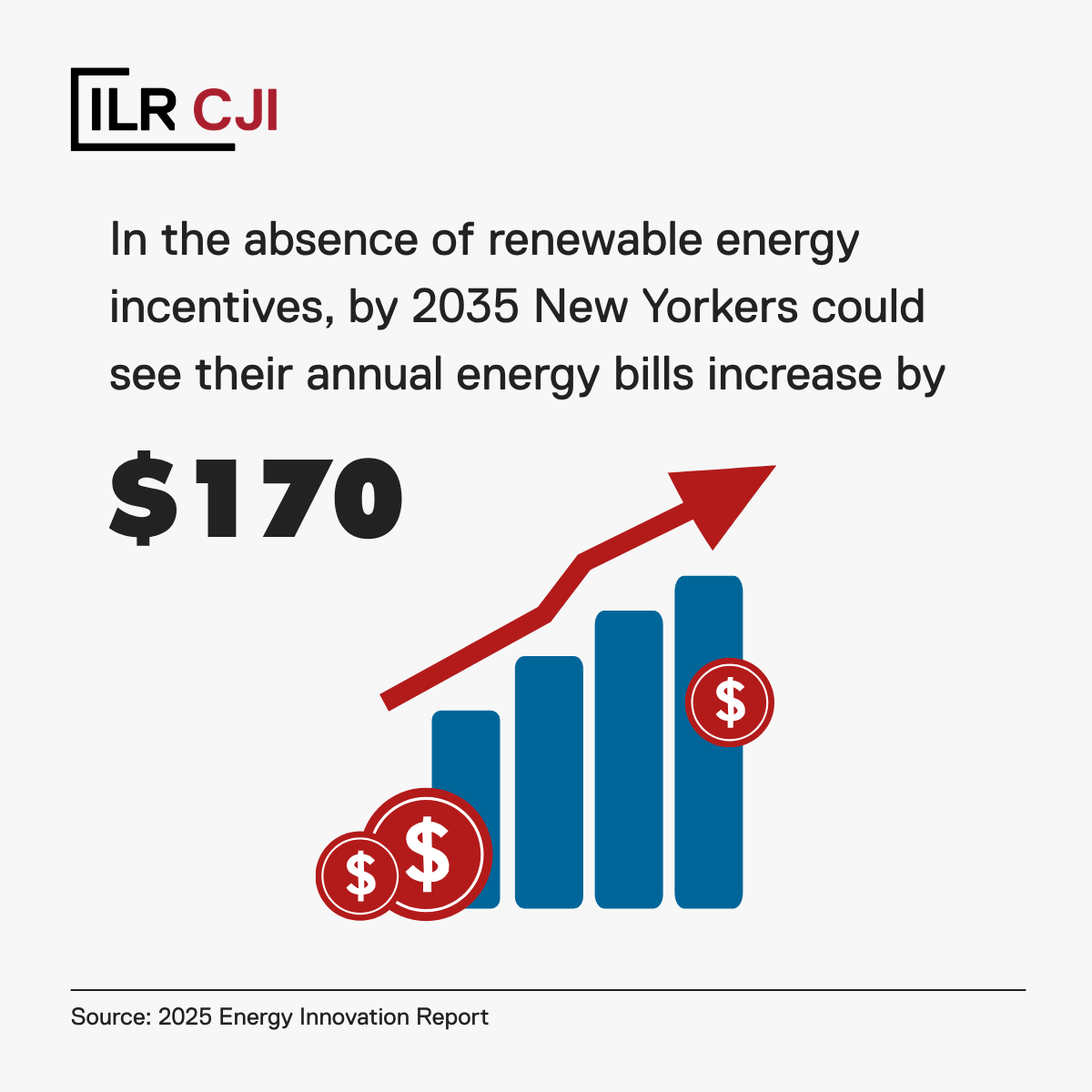
- In the absence of renewable energy incentives, New Yorkers could see their annual energy bills increase by $170 by 2035, according to a 2025 Energy Innovation report, adding to the state’s already high cost of living.
- By 2030, the state must generate at least 39 GW of energy to meet solar demand.
Recommendations
- Update state renewable energy goals with strong labor standards.
- Renew the public mission of the New York Power Authority (NYPA) to meet New York’s energy needs.
- Reimagine utilities to address the affordability crisis and expedite the clean energy transition.
- Address New York’s housing affordability crisis.
- Expand transportation options available to New Yorkers.
- Implement cap-and-invest to fund climate action.
- Pass a green public buildings bond.
- Make energy more affordable for hardworking New Yorkers.
- Protect the rights of New York’s private-sector workers to a safe and healthy workplace.
- Prepare the next generation of climate workers, and make good climate jobs accessible to frontline communities.
Research Impact
With these targeted interventions, the state can advance its climate and labor commitments to significantly reduce emissions, create and protect high-quality union jobs and ensure projects are implemented equitably.
New York established itself as a leader on climate mitigation through the passage of the 2019 CLCPA, but has pulled back on its most ambitious targets in recent years. The state can do more to ensure its most energy-vulnerable residents and workers are not left behind by the law’s implementation. In the absence of federal leadership, the next phase of New York’s equitable, worker-centered climate mitigation plan requires focused state-led intervention to support the CLCPA’s goals.
The 10 recommendations identified in this report present key legislative and programmatic interventions that can strengthen New York’s commitment to climate and labor action.
Authors:
Lynda Nguyen, Climate Jobs Institute associate; Iris Packman, Climate Jobs Institute senior research & policy development associate; Nathan Lamm, Climate Jobs Institute senior research support specialist; Tover Feist ’26, contributing student author; Eric Plankey ’27, contributing student author

CONTACT:
Lara Skinner
Director
lrs95@cornell.edu
The Climate Jobs Institute is guiding New York and the nation’s transition to a strong, equitable and resilient clean energy economy that tackles the climate crisis, creates high-quality jobs, confronts race and gender inequality, and builds a diverse and inclusive workforce.