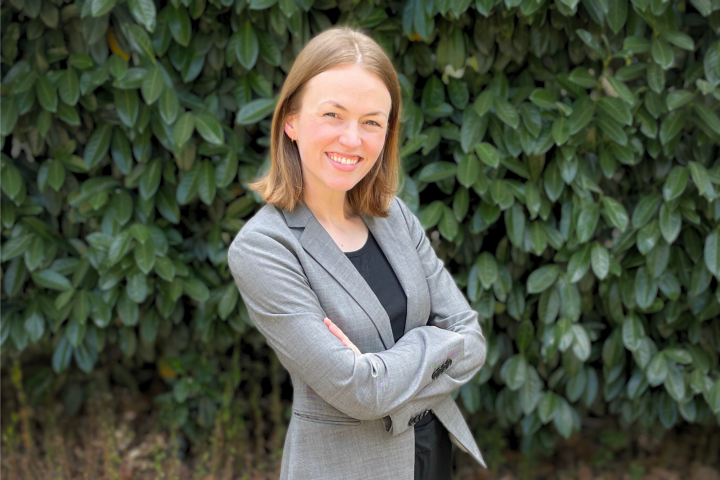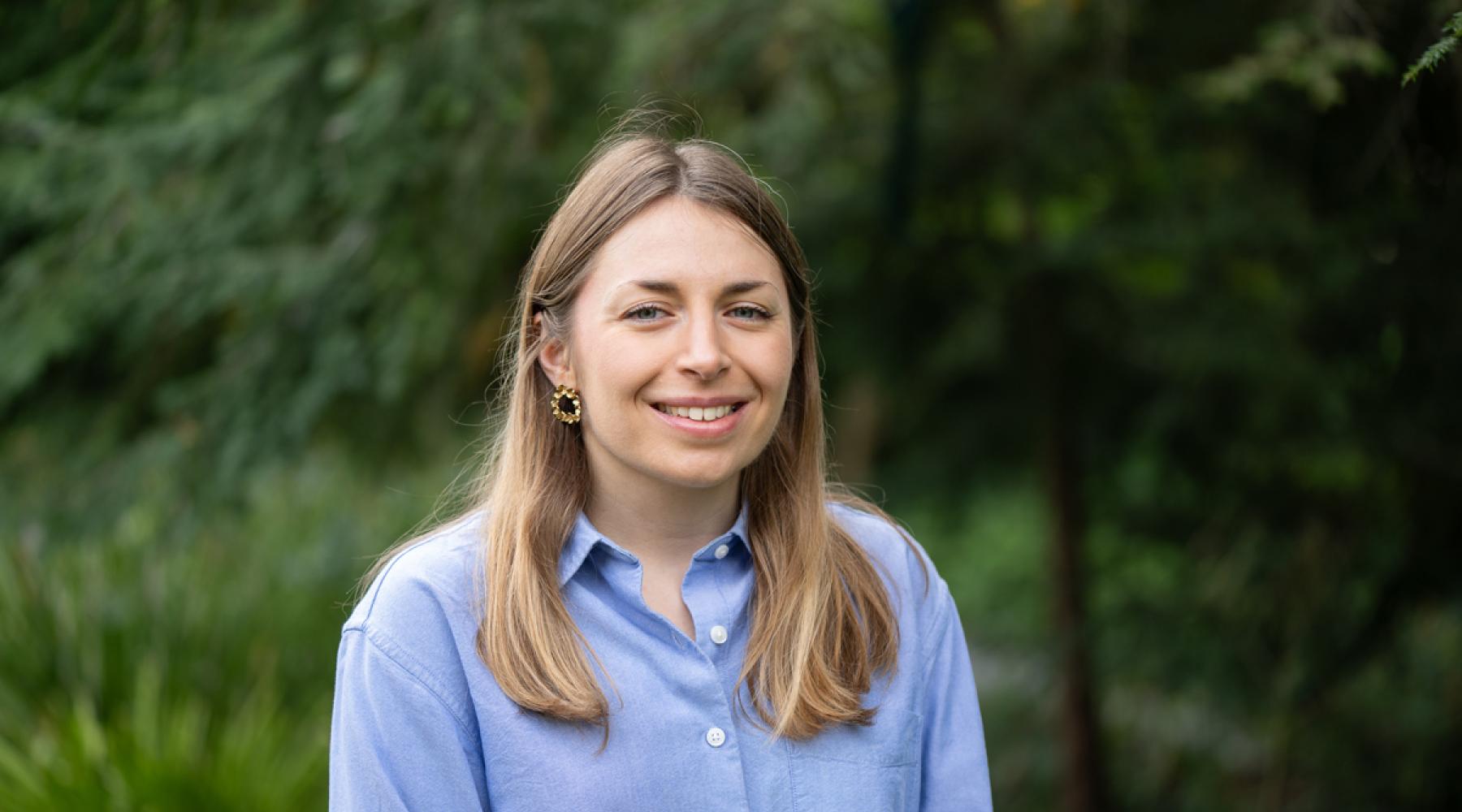
Get to Know: Anaïs Fabre
Anaïs Fabre joined the ILR faculty in summer 2026 as an assistant professor in the Department of Economics. Her interest in how geographic and socioeconomic factors affect access to higher education is based on her own journey through applying to college and becoming a researcher. She studies not only barriers to higher education but how those barriers impact the economy of entire regions. She hopes her work will influence policy and inform the design of platforms for college applications and admissions.
What is your research about?
Broadly, I work on the economics of education. I am interested in understanding how different barriers to access to higher education affect individuals’ educational decisions and, ultimately, the accumulation of human capital in the economy. One of the barriers I study relates to the geography of the higher education market: I show that many students live far from colleges and that moving away from home is costly, which limits investment in human capital. Overall, I show that the spatial distribution of colleges has long-run consequences for spatial skill sorting and regional inequalities.
I also study informational frictions, documenting that students’ college application decisions are affected by misperceptions, such as misperceptions regarding admission probabilities.
Of course, I am also interested in identifying ways to address these barriers. I study how to design college application platforms and assignment algorithms to improve students’ educational outcomes.
How did you become interested in your field?
I grew up in a rural area in France. When the time came to apply to college, I realized that the options I was interested in were located very far from where I grew up. I ultimately gave up on attending my dream college because of this. I also realized how difficult it was to get information about the different options available, and how much knowledge of the higher education system depended on one’s socioeconomic background. I did not yet know that becoming a researcher was a career option, but I remember thinking that these barriers surely had consequences for individuals’ choices, and potentially much broader economic implications. Later on, I discovered that these were questions I could actually study as a researcher.
What impact do you hope your research will have?
I hope to improve our understanding of barriers to access to higher education and how their effects extend to the broader labor market. Ultimately, I hope this knowledge will inform policies. In my work, I, for example, investigate the impact of different scholarship designs on educational attainment and inequalities across local labor markets. I also want to highlight that college application and admissions platforms can be leveraged to improve students’ educational outcomes through better-designed admissions processes and greater access to information. Some of my co-authors and I have collaborated with the Ministry of Education in Chile to evaluate an information campaign implemented directly within the college admissions mechanism.
What attracted you to the ILR School?
ILR stood out to me because it brings together rigorous economic research with a strong focus on policy-relevant questions. My research is motivated by questions about inequality and how policies can shape people’s opportunities, so I am particularly excited about being in a community where these questions are central. I was also drawn to the opportunity to interact with people working across different disciplines and approaches.
What are you most excited for about your time at ILR?
I am most excited about the people I will get to meet and the conversations I will have. I am looking forward to being part of a new community and learning from people with a variety of perspectives and research interests.
How will you be part of Cornell’s “Any Person, Any Study”?
As a first-generation college graduate, I know the struggles of thinking that you do not belong in college. My parents are farmers, and for a long time I felt that I was out of place in an academic environment. Since then, I have come to understand that this background could become a strength, as it gives me a different perspective. I am very proud to join an institution which celebrates this kind of diversity, and I hope I will be able to convey to students the idea that everybody has something interesting to share and that we can all learn from each other.