Get to Know: Justine Modica
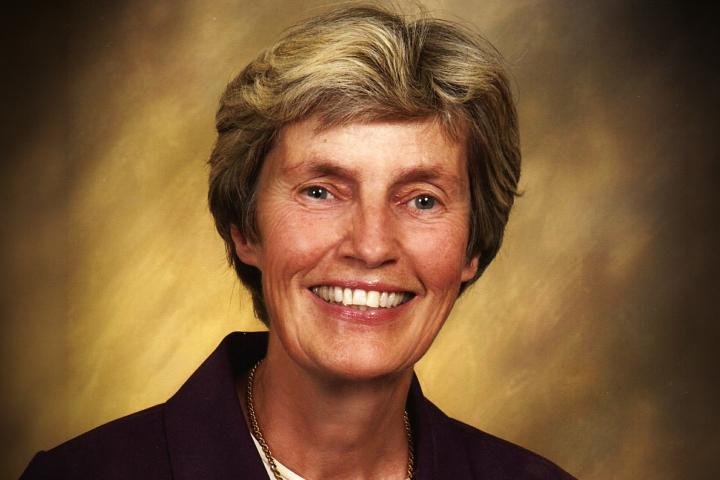
Justine Modica joined the ILR faculty in the summer of 2025 and is an assistant professor in the Department of Global Labor and Work. She is working on a book about child care workers and excited to be teaching ILR 1100: Introduction to US Labor History. She hopes her research will teach both child care workers about the history of their field and policymakers about what has and has not worked in the past.
What is your research about?
I’m a scholar of care work and, more broadly, reproductive labor: the work that makes productive labor possible. The book I’m writing focuses on child care workers and how child care expanded as a labor issue in the second half of the twentieth century as women across race, class, and marital and parental statuses entered the workforce in growing numbers. I look at how unwaged mother work transformed into wage work and how the people who took up that work, child care workers, challenged the undervaluation of their labor in the marketplace.
How did you become interested in your field?
I came to the child care labor question from two directions: that of parents and that of workers.
I spent much of my graduate school career fighting to get my graduate institution to provide better financial support for graduate workers with dependents. Alongside other graduate workers, I did a lot of research on how the lack of child care support disproportionately affected women. We showed how child care funding was a gender equity issue. So, as I was training as a gender historian, I was thinking a lot about whether reproductive freedom is possible in the absence of adequate resources. I also had worked as a nanny for a year after college and had first-hand experience with the ways employers sometimes use the ambiguity of care as wage work to get more work for less pay.
As I was exploring dissertation topics, I was thinking a lot about who benefitted from the privatization of social welfare and how child care – work that undergirds the entire American economy – became one of the worst paid jobs in the U.S. and yet also fundamentally unaffordable for many families.
What impact do you hope your research will have?
More than anything, I hope my research will offer child care workers a window into the history of their field and the radical efforts of their forebears to shape the child care industry in ways that would offer a wage befitting the social value of their work. But I also hope it will offer policymakers and activists in the labor movement a sense of what has and hasn’t worked in the past. And, of course, I hope it will help labor historians better understand a very large and fundamental segment of the modern workforce.
What attracted you to the ILR School?
The students, of course! I love that I get to teach students who have entered college ready to think about labor and industrial relations. And I still can’t get over how cool it is that there are five labor historians in my department, not to mention the many colleagues who are interested in similar questions from different disciplinary and methodological vantage points. It’s the best place to be for the research and teaching that I do.
What are you most excited for about your time at ILR?
I can’t wait to start teaching ILR 1100: Introduction to US Labor History. I’ve been thinking about it all year. There’s so much rich scholarship, old and new, that I’ve been able to explore as I’ve prepared for the course. I can’t wait to dig into this history with students.
How will you be part of Cornell’s “Any Person, Any Study”?
As a first-generation student, I felt really overwhelmed when I first got to college. I remember mispronouncing words in class and other students turning around to be like "what are you saying?" and I was completely mortified. But I was a reader and so many words I had read I had never heard pronounced aloud.
After I graduated, I first worked as a nanny for a year and then I took a job as an admissions officer and liaison to first-generation students in the Dartmouth admissions office. After a couple of years, I moved to New Orleans where I ran a college completion program for first-generation college students. That was an incredible job that I loved very much. I got to support students in all different aspects of the transition to college: financial, social and academic.
I left that job for graduate school in part because I felt I could have more impact on students as a professor. I hope all my students know that everyone can succeed here, even if you feel totally unprepared at first. There will be many new experiences that will embarrass you or make you feel overwhelmed. That’s just college, everyone’s going through some level of un-belonging even if they come off as having everything together. I hope you’ll come see me in office hours if you’re feeling that way. We can laugh about your misadventures together and talk about strategies to make you feel better equipped to succeed.
If you could share one piece of advice with your students, what would it be?
You don’t have to read every word. Plan how much time to allocate to a course’s readings each week. When there’s more to read than you have time available, read like a pirate and pilfer the content you need. Read the intro and conclusion of every article or chapter and then read the topic sentences of every paragraph. The main arguments are in the intro and conclusion, and the sub-arguments are in the topic sentences. You might choose to read some paragraphs more carefully than others because you want to see evidence an author is using to make the point they articulate in the topic sentence. Make little notes in the margins to remind yourself of key points or things you want to circle back to in discussion section.
Besides your work, what’s something that you’re passionate about?
I love making stuff: quilts, furniture, embroidery, dioramas. I get bored with any single art form, and I like pretty, useful objects. I just rewired an old lamp I found at a flea market.
What is a favorite piece of advice an inspiring figure in your life?
You’re always going to feel like an imposter so you might as well enjoy the performance.
What was the best part of your college experience?
I was a nerd, so I loved my history classes. They were the best part of my week.
What’s something people are surprised to learn about you?
I used to do roller derby. My derby name was Tara Meniscus.