Bringing Sociology to Organizational Behavior: Pamela Tolbert Reflects on Her ILR Career
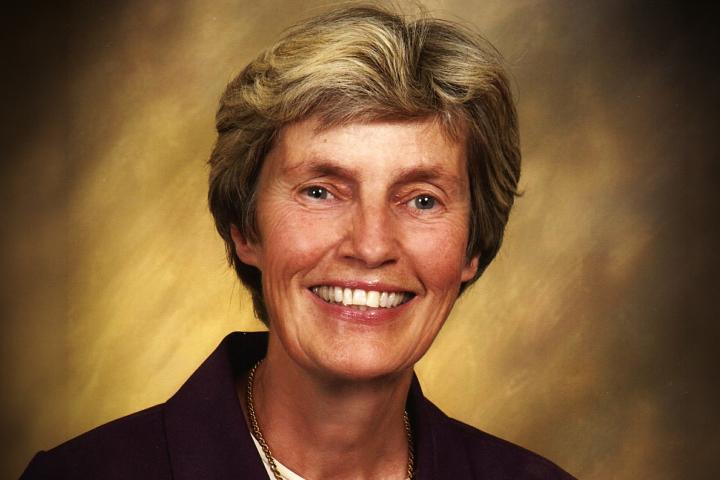
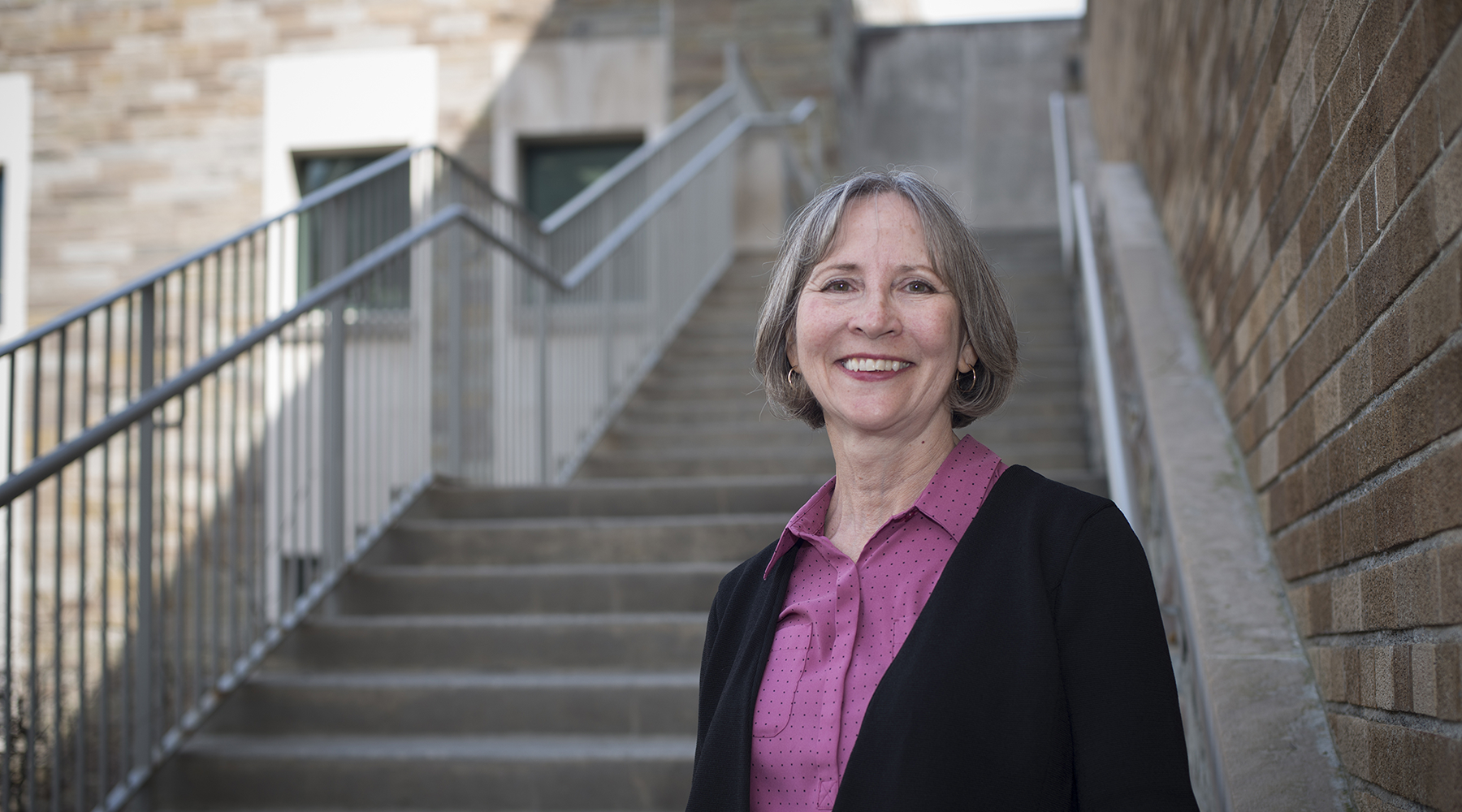
Pamela Tolbert recently retired after a career at the ILR School that has featured research, teaching, mentorship and more. Known for leading the development of institutional organizational theory, Tolbert became the Lois S. Gray Professor of ILR and Social Sciences in the Department of Organizational Behavior in 2010.
In this Q&A, she reflects on what shaped her career and looks back on her research and teaching experiences.
What inspired you to become a professor?
To be honest, my career choice was practical. Late in my junior year, it hit me that I would be working for the rest of my life and needed to decide what I wanted to do. I’d majored in sociology because I found it interesting, without a thought of a career. (I think that was typical for many people at that time. College students now are much more conscious about making post-college plans, often long before they start their freshman year.)
I considered several occupations, including a librarian, schoolteacher or social worker. I had worked in a library throughout my undergraduate years; my mother and aunt were both teachers; and, as a sociology major, I’d had some exposure to social work. Hence, they came to mind first. However, in one of my sociology classes, I came across a little factoid: occupations dominated by women are characterized by significantly lower wages than other occupations. Since these occupations all had a high proportion of women, and I wanted to be able to support myself, I started to think of other possibilities.
As an undergraduate, I’d discovered a talent for academic study (something that my high school teachers would never have guessed), and being a professor seemed likely to offer autonomy and intellectual challenges – both highly appealing to me. At that time, only about 25% of professors were women, and I liked the idea of contributing to occupational gender desegregation. The Women’s Movement was in full swing at this time, and in retrospect, I can see how this affected my career decisions. I was lucky – it turned out to be a great career choice for me, and I’ve enjoyed my work immensely.
What motivated you to study Organizational Behavior?
When I started graduate school, I wanted to study urban sociology using qualitative methods, based on a few classes I’d had as an undergraduate. Then I took a seminar on organizational sociology in which we read a book by James Coleman, “Power and the Structure of Society,” a very slim volume that outlined the historical rise of the modern corporate form of organizations. It discussed a key problem in studying organizations: Since they’re composed of people with some shared aims they want to achieve through the organization, but also typically with conflicting aims, what determines the organization’s actions and whose aims does it serve? (Some might say the leader always decides, but I’m sure almost everyone who’s been in a leadership position would take issue with that.) Coleman made a persuasive case that organizations – not individuals – are key political and economic actors in society, so to understand the world, you need to understand the forces that drive organizations. This provocative little book convinced me of the importance of studying the processes and consequences of organizational decision-making.
In addition, my doctoral program’s required courses in quantitative analysis led me to appreciate the utility of identifying and analyzing large-scale patterns as the basis of research. So, my research interests and approaches changed substantially during graduate school. That’s why I encourage graduate students to take a range of classes, especially early in their graduate program, even if they don’t seem directly relevant to what they think they want to study.
What have been the defining moments of your career?
Apart from deciding to become a professor, I’d count choosing my Ph.D. advisor, Lynne Zucker at UCLA, as a defining moment. Although I thought I knew what was involved in academic work, in fact, I was extraordinarily naive. From my vantage point as an undergraduate, it looked like professors prepared lectures, delivered them to students, and then went back to their offices, presumably to think deep thoughts and prepare more lectures. That seemed like a great job. Perhaps because my family had no professors, I didn’t quite grasp the critical role of research and publishing – a serious gap in my understanding. I was lucky that Lynne took me under her wing and mentored me patiently. She was incredibly supportive throughout my graduate career and after I left UCLA. With another of her former students, I’m now co-editing a volume of papers reflecting some of her contributions to organizational research.
Perhaps the most important turning point was taking my first job at ILR. I’d entered graduate school expecting to find a job in a sociology department. But when I started my job search, sociology departments were in a hiring slump, and competition for jobs in the discipline was fierce. Business schools, though, were growing quickly and many were interested in hiring sociologists and psychologists whose work was relevant to management. I was hesitant about teaching in a business school because I felt that teaching MBAs would be different from teaching sociology students, and because I worried that I’d be pressured to do only research that had practical implications for managers. (I think the first assumption was accurate, though now I’d say the second was a little overblown.)
The ILR School seemed like a good fit for me. The faculty appreciated the differences between the various social sciences within the school and valorized being recognized as a scholar in your home discipline. That was reassuring to me, and the opportunity to interact with people from related disciplines and thus to learn about research on work and employment in those fields was quite appealing. And there were many people at Cornell outside the ILR School – in sociology, communications, business and elsewhere – whose work was related to mine. It’s been a rich intellectual environment, and again, I was lucky in the choices I made.
In 2016, you were named an Academy of Management Fellow for significant research contributions to the field of management studies. What do you consider your most impactful research, and why?
The work I’m best known for is part of a tradition of organizational research known as “institutional theory.” This tradition takes a key premise of sociology – that people’s behavior largely reflects the influence of social norms, i.e., our knowledge that others expect us to act in certain ways or do certain things – and applies it in explaining organizations’ actions. Prior to the 1970s, most sociological studies of organizations assumed that organizational behavior reflected independent, objectively rational calculations by decision-makers about how to get work done most efficiently, given various contingencies (e.g., the organization’s size, the kinds of technology it used, etc.) These assumptions are more in line with those of classic economics than sociology.
An institutional approach, developed in the late 1970s by some Stanford sociologists, posits that decision-makers are rarely autonomous; rather, they are often keenly aware of what other organizations are doing and are heavily influenced by that in their decision-making. It’s connected to older work by social psychologists on conformity, but applying this work to an organizational level was novel.
I used this theoretical approach in my master’s thesis, a study of the spread of civil service rules among city governments from the late 1800s through the 1930s. The thesis ultimately resulted in my first publication, co-authored with Lynne Zucker. Our results indicated that early in the history of civil service reform, city characteristics that made having well-trained, carefully selected personnel especially useful – e.g., being larger, providing more municipal services and having a more highly educated population – were good predictors of the adoption of civil service laws. However, over time, these characteristics became relatively unimportant in influencing adoption, and the best predictor became the number of other cities that had adopted. We argued that as the reform became more commonplace, having civil service procedures was seen as a mark of “good city management” and pressure to adopt them became more important than the effects of other characteristics.
It was difficult to get this paper published, I guess because it flew in the face of the assumptions of a lot of earlier organizational research. But ultimately, that led it to get a fair amount of attention, in part because it suggested some implications of theoretical ideas that others had posed for empirical research.
Is there a piece of research that maybe didn’t get the same amount of attention but was particularly meaningful to you, or that you thought was really interesting or surprised you?
Several topics I’ve studied don’t draw on institutional theory, at least not explicitly. These include work on the relation between professions and organizations, how occupations and organizations jointly shape individuals’ careers and how the gender composition of groups affects organizational outcomes (e.g., the size of the gap in average men’s and women’s earnings in an organization). Publications in each of these streams haven’t been completely ignored, but they aren’t cited as often as work I’ve done that focuses on institutional theory. Maybe because of this, I have a particular fondness for them.
What was it like to be named the school’s first Lois S. Gray Professor of ILR?
I was honored to be recognized by the ILR School and Cornell University with a chaired professorship and delighted to be associated through it with Lois Gray. I had met her before I received the chair, but I came to know her much better afterward, and to appreciate what a remarkable woman she was. We shared an interest in arts organizations, and oddly enough, both of us grew up in Oklahoma. We had some interesting chats on both of those subjects.
In 2016, my husband and I visited Cuba during a period of warming in relations between it and the U.S., and we ran into her at JFK airport. She was also going to Cuba, traveling on her own to visit a workers’ group there. She must have been about 92 and was still going strong. I was impressed and inspired by her vigor.
How did you grow/change as a teacher?
In my second year, I was assigned to teach the big introductory class in Organizational Behavior to about 300 undergraduates in the old 305 Ives Hall. As a newly minted sociology Ph.D., I assumed that, of course, everyone would be interested in sociological theories. I think it’s fair to say that it was pretty much a disaster. But I figured out quickly how to engage with the mix of interests of ILR students, as well as how to manage crowds, which is critical to teaching a big class. One student, Ben Diamond, stopped by my office many years later – as he was dropping off his own son for his freshman year – to say that as time went by, he realized that he’d learned a lot in that class. That was kind and comforting. I’m still in contact with him.
It’s a challenge to think about what kinds of research topics are likely to be interesting and relevant to different levels of students and how to share existing academic research in ways that make it both comprehensible and useful. My aim has been to not only give students a sense of common research findings but also get them to think about limits and problems of the research. I’ve wanted to make them good consumers of research and to develop a critical view of information sources in general.
Is there something in particular about ILR that you will miss?
I’ll miss the interesting conversations with students and colleagues that often come up in chance meetings. I’ve had some great colleagues at ILR over the years, as well as some incredibly smart students, and having the opportunity to bat around ideas about events in the world is fun. Supervising graduate students has led me to learn a lot about different subjects – things they want to study. I’m surprised to realize that I’ll probably miss going to research talks. These often seemed like one more obligation to fit into my schedule, but thinking about and debating research is stimulating – and not something that happens often outside of academia.