Overview
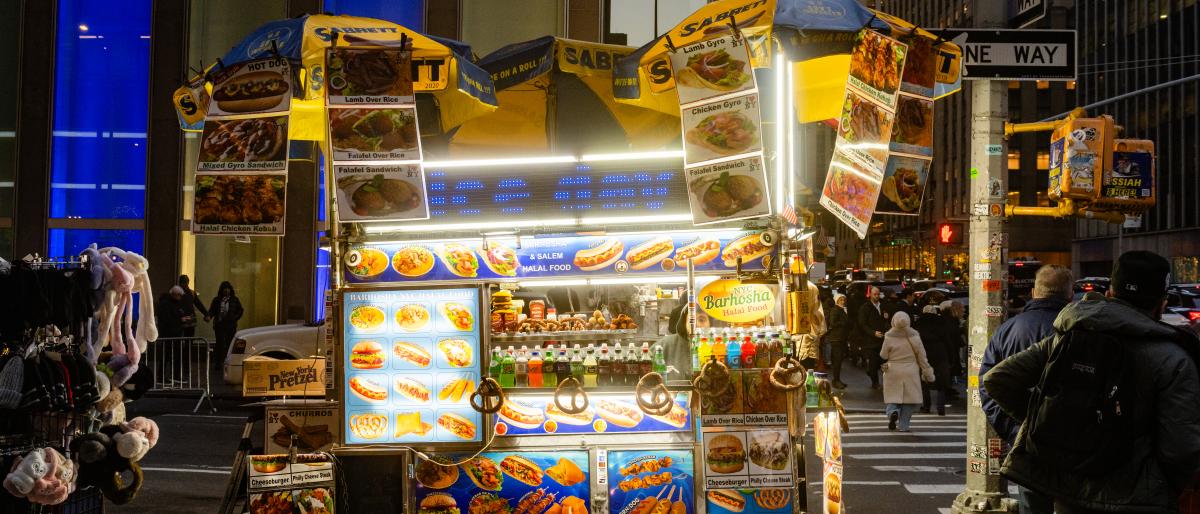
Street vending has long been an important entry point to the local labor market for immigrants in New York City. Thousands of New Yorkers build their livelihoods by serving the tourism industry and providing fresh food to our communities. Recently, New York City engaged in a series of reform efforts aimed at reducing barriers to obtaining vendor permits and limiting the criminalization of street vending. This report evaluates the regulatory environment faced by street vendors, investigates the implementation of these reform efforts, and examines the disparate impacts and costs of vending enforcement.
Key Findings
- Heavy and duplicative regulatory environment: Perhaps no industry in New York City faces regulation from as many agencies and departments as street vending. The result is duplicative efforts to regulate vendors and high exposure to ticketing.
- Costly and ineffective enforcement: While many enforcement efforts in New York City that involve issuing citations and fines generate revenue, all available evidence indicates that street vendor enforcement operates at a significant deficit.
- Extreme racial disparities in the impacts of ticketing vendors: Comparing where violations occur (mostly in wealthy white neighborhoods) to where those receiving tickets live (mostly in poor immigrant communities) unveils a clear pattern of racialization.
- Reform efforts have failed to meet targets.
Report Conclusion
Street vending is a vital source of employment for the most vulnerable populations in New York City. Vending is an essential service that provides fresh food and supports the all-important tourism industry throughout the city. The recent efforts to expand access to vending opportunities through expanding access to licenses, streamlining enforcement by centralizing it under a single agency, and shielding vendors from police enforcement – which can expose them to immigration consequences – all represent important reform steps.
This report found New York City has a long way to go in meeting these goals.
Research Impact
This report was used by the NYC Council and the Street Vendor Project in the push to modernize the city’s street vending laws and permitting system. Since the report’s release, numerous laws have been passed to fix the deficiencies outlined in the report.
The report was featured in an article by The City Reporter, called “Vending Enforcement Slams Poor Minorities in White Neighborhoods.”
AUTHORS:
Andrew Wolf, Department of Global Labor & Work, assistant professor; Dylan Hatch, ILR M.S. ’25

CONTACTS:
Patricia Campos-Medina
Executive Director
pec1@cornell.edu
Risa Lieberwitz
Academic Director
rll5@cornell.edu
The Worker Institute engages in research and education on contemporary labor issues to generate innovative thinking and solutions to problems related to work, economy and society. The institute brings together researchers, educators and students with practitioners in labor, business and policymaking to confront growing economic and social inequalities, in the interests of working people and their families. A core value of the Worker Institute is that collective representation and workers’ rights are vital to a fair economy, robust democracy and just society.