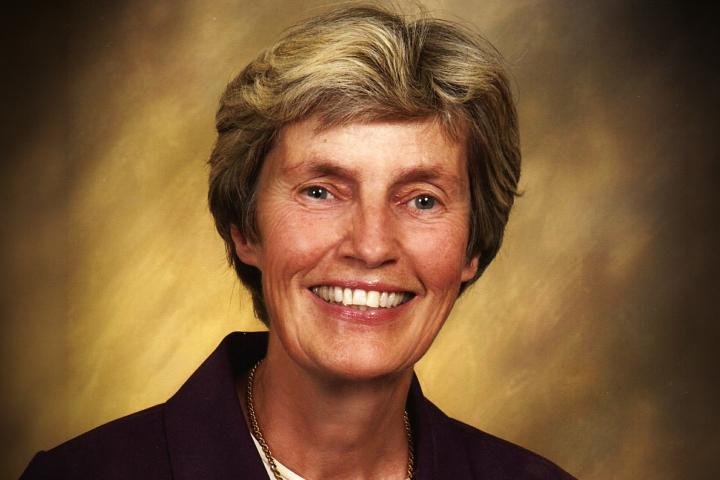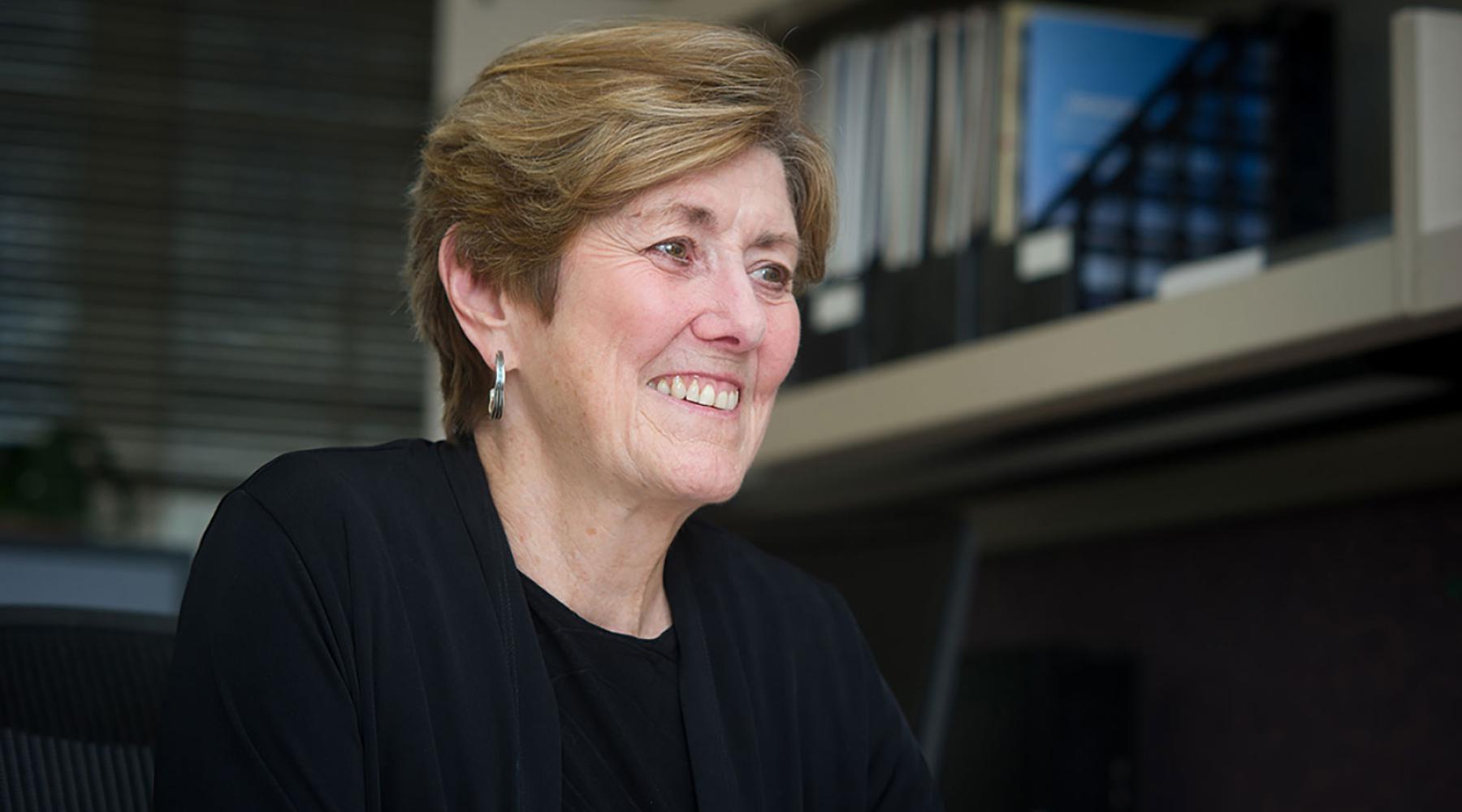
Rosemary Batt Reflects on Notable Career at ILR
After 30 years at the ILR School, Rosemary Batt retired prior to the 2025-26 academic year. Instead of an ending, the Alice Hanson Cook Professor of Women and Work, Emerita, views it as just another phase of her career – one that will bring an exciting element of renewal to her research.
Batt, an expert on private equity firms, plans to continue her research and policy-oriented writing while balancing it with more time for family and friends.
Below, Batt reflects on her long and notable career at the ILR School.
Q: More than 20 years passed between obtaining your undergraduate degree at Cornell and becoming an assistant professor in the Department of Human Resource Studies. What experience did you gain during that time, and how did it lead to you becoming a professor?
I went to Cornell as an undergraduate because I wanted to expand my knowledge and intellectual understanding of the world. I spent my junior year in England furthering my understanding of the European roots of American culture. I wasn’t career-oriented but rooted in the values of my Catholic upbringing: I wanted to make the world a better place, but I didn’t know how. I tried out many avenues – Civil Rights law; Latin American anthropology to understand the conditions pushing migrants to the U.S.; and community and labor organizing with women in low-wage service work. While Cornell provided me with the intellectual foundations I needed, my ‘walkabout’ gave me a much broader experiential education based on meeting people from diverse class, ethnic, and racial backgrounds. After a break, I was ready for graduate school to bring together my understanding of ‘real world’ problems with an interdisciplinary approach to research and policy. The combined experience made the ILR school a perfect fit for my first academic job. I joined ILR in 1995 and stayed until June 2025.
Q: In recent years, your research has focused on financialization in the healthcare industry. What has motivated you to study that?
My current research builds on three decades of research in the ‘industry studies’ tradition. That approach utilizes industries as a ‘laboratory for research’ because each industry emerges from a unique set of institutional conditions, including specific technologies, markets, regulations, business strategies, groups of workers with specific skills, and unions. The research is ‘problem-centric,’ holistic, and interdisciplinary – designed to explain how and why a given problem emerged and how it can be resolved. While in graduate school at MIT, I worked with Eileen Appelbaum to produce a book that used the industry studies approach to capture changes in manufacturing brought about by globalization – The New American Workplace: Transforming Work Systems in the United States (ILR Press, 1994).
I then turned to the process of industry restructuring in services, with a focus on one of the leading examples of deregulation and restructuring – the telecommunications industry. At the time, that industry was undergoing massive labor-management conflict as the Communication Workers Union mobilized to protect a largely male (technical) and female (customer service) workforce. Women were being relocated into large tele-mediated ‘call centers,’ where mass production concepts were applied to service work, which became increasingly routinized. The call center model allowed companies across industries to outsource and offshore their customer-service centers – the subject of my research in the 2000s. I led a 19-country comparative research project on the ‘global call center industry,’ as the industrialization of service work spread across the globe, putting downward pressure on wages and challenging the ability of unions to protect workers’ jobs and livelihoods.
The third phase of work on financialization seems like a non-sequitur, but this research built on our understanding that globalization was driven not only by advances in technology but also by the deregulation of the financial sector – which allowed finance capital to be globally mobile and fuel the process of globalization in manufacturing and services. My colleague Eileen Appelbaum and I observed that our field of management and labor studies excelled at understanding labor market institutions and product market changes (as in globalization) but had failed to explore the important role of capital markets and financial actors in the transformation of Main Street companies. This omission became salient when the Great Recession hit in 2008, leading us to immerse ourselves in a new arena of knowledge, which led to the publication of our 2014 book, Private Equity at Work: When Wall Street Manages Main Street. We learned how financial actors were taking advantage of regulatory loopholes to extract wealth for themselves at the cost of workers, managers, companies and communities. ‘Financialization’ means that actors increasingly view companies as financial assets to be bought, managed for cash, and sold, without regard to the impact on other stakeholders.
From there, we began to focus explicitly on healthcare because that is where financialization may lead to patient harm and even death, as our case studies have shown. Over the past decade, we have examined the process by which fragmented laws and lax regulatory enforcement have allowed a wide range of financial and industry actors to exploit public funds for private gain. Our new book, Healthcare in the Age of Finance Capital, will be published by Princeton University Press in 2026.
Q: What do you consider your most impactful research, and why?
I think that our research on financialization was slow to be accepted because the ideas were controversial and we trespassed across different disciplinary domains. Over time, however, the evidence on the damage caused by irresponsible financial actors has grown and the ideas have become more widely accepted. Our research has informed Congressional investigations into private equity, proposed legislation to curb abuses, and passage of a law supported by both Republicans and Democrats to stop Surprise Medical Billing driven by private equity owners. States are also passing laws to curb the worst excesses of private equity and other Wall Street actors.
Q: You have written over 100 books, book chapters and articles, and have collaborated at length with Eileen Appelbuam, co-director of the Center for Economic Policy Research. What is it about that partnership that has been so effective and led to so many publications?
I met Eileen when I was a graduate student in the early 1990s. We were both interested in industry restructuring, and we agreed to search for foundation grants and work together. We shared similar intellectual interests, an interdisciplinary research approach that brought together quantitative and qualitative research, and a focus on studying real world problems to inform public policy. Over time, we learned how our different backgrounds – Eileen in economics and me in institutional and organizational research – were very complementary. While there were periods when we did our own separate work, we always found ways to continue our collaboration, especially for our work related to financialization.
Q: What changes have you seen at Cornell from your time here as a student, studying history, to your time as a professor?
The fundamentals of Cornell as an institution are solid, but the current period has challenged them in profound ways. I’m hopeful that the current debates over free speech and academic freedom will do what they are supposed to do: Provide a conversation for all people to express their concerns while reaffirming the core values of the university as a place of free inquiry, knowledge creation, and education.
In my time as a professor at the ILR School, I have seen many positive developments – four of which I’ll highlight.
First, with at least 40% of faculty retiring in recent years, we have a new generation of scholars who are focused on important problems in the world of work broadly conceived; they are using sophisticated methodologies to inform that research and are translating that work into accessible venues for greater impact. In addition, the new faculty demonstrate the school’s commitment to multidisciplinary research – with solid expertise in economics, history, law, sociology, and psychology, as well as interdisciplinary fields such as management, industrial relations, and organizational behavior.
Second, our ongoing efforts to bridge departmental boundaries and the research and outreach sides of the school have borne fruit. I see more cross-departmental collaboration and intellectual discourse as old disagreements and conflicts from the 1960s and 1970s faded. The number of interdisciplinary research and outreach institutes has grown markedly. When I arrived, there were a handful; now there are 15 covering a wide array of thematic areas: Climate Jobs, Compensation, Conflict Resolution, Criminal Justice, Employment and Disability, Global Labor, Human Resources, Labor and Employment Law, the Hospitality Industry, Labor Dynamics, Workplace Inclusion and Diversity – as well as the Worker Institute and Co-Labs in Buffalo and Ithaca. And over half of these initiatives are led by faculty in ILR Centers based in New York City and Buffalo.
Third, the school's global reach has expanded substantially. The Global Labor and Work Department now includes faculty with expertise in every continent and many countries: China, India, Southeast Asia, Japan, North Africa and the Middle East, many European countries, Canada, and Latin America. And while historically, many faculty had individual collaborations with international scholars, the build-out of International Programs – with many student and faculty exchanges in the global north and south – has enriched the school’s visibility and relevance.
Fourth, our commitment to teaching excellence has accelerated. When I arrived in the 1990s, the school’s ‘Teaching Committee’ was just forming, and I participated. Since then, the committee has helped establish new standards for teaching portfolios for tenure promotions. In 2025, at the annual McPherson Honors and Awards dinner, we gave out six awards to faculty members, graduate teaching assistants, and staff; and 21 student awards; and honored eight student ‘global scholars’ and 23 students who completed honors’ theses – the most ever.
Q: What’s on your retirement “things to do” list? As you head into retirement, what are some of your thoughts about the career you’ve had, and the legacy you’re leaving at both ILR and in your field?
It took me several years to consider retiring because the ‘R’ word is often associated with retreat and irrelevance. I’ve learned that all depends on what people do with retirement. For me, I value the 30 years I spent at the ILR School. I’m grateful for the relationships I’ve developed and the knowledge and skills I’ve gained. I don’t want to lose those relationships, and I want to take what I’ve learned and put it to good use in arenas beyond academia. Retirement provides the chance to leave behind tasks I no longer want to do in order to create new space for new adventures. I want to continue with my research and policy-oriented writing while balancing it with more time for friends, family, hiking, traveling, and exploring.
I see my life in three phases: My first walkabout, my specialized academic career, and now a new walkabout into unknown territory. I feel I’m entering an exciting period of renewal.
Q: Is there something in particular about ILR that you will miss?
I most value the relationships I’ve built with colleagues and students over many years. I will miss colleagues, the rich conversations I’ve had with them – often impromptu after a class or running into people in the hallways. Place-based relationships are essential for building a meaningful work-life balance and community. The COVID pandemic undermined that, but I think the current faculty are spending more time at the ILR School, workshop attendance is up, and I hope that that continues to be true.