Labor Relations at a Crossroads: Festschrift for Harry Katz
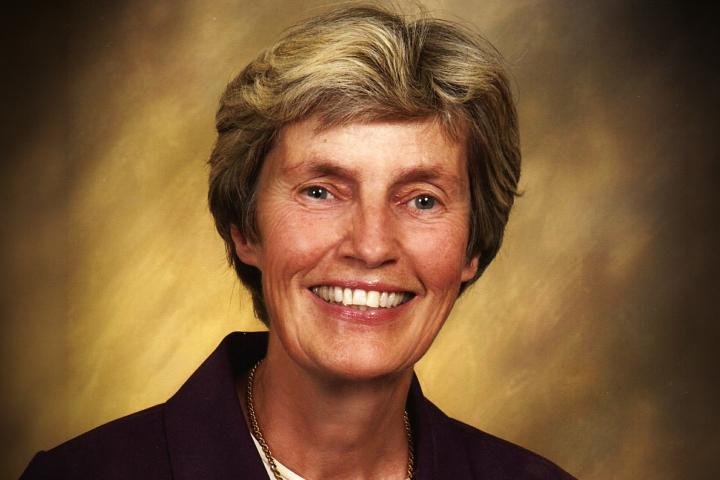
Harry Katz, the Jack Sheinkman Professor of Collective Bargaining at the School of Industrial and Labor Relations, was honored at a conference the weekend of April 11-12 as fellow scholars, colleagues and mentees presented papers that draw on his work by extending the context in which his insights are applied, his methods used and theoretical assumptions made.
A former dean of the ILR School and the current director of the Scheinman Institute on Conflict Resolution, Katz’s work has had a significant and lasting impact on the field of labor and employment relations.
“It was a tremendous weekend celebrating Harry Katz and his many contributions to the field of industrial relations, to Cornell University and to the ILR School,” said Alex Colvin, Ph.D. ’99, the Kenneth F. Kahn ’69 Dean and Martin F. Scheinman ’75, MS ’76, Professor of Conflict Resolution. “It was a wonderful opportunity to welcome back to campus many alumni from our Ph.D. program who studied under Harry, as well as collaborators and co-authors from across Harry’s distinguished career. Many of those in attendance found their passion for industrial relations through working with and learning from Harry.”
The conference, “Labor Relations at a Crossroads: Festschrift Honoring Professor Harry C. Katz,” was organized by Katz’s former students – Colvin; Ariel Avgar, Ph.D. ’08, the David M. Cohen Professor, Labor Relations, Law, and History; and Danielle van Jaarsveld, MSc ’00, Ph.D. ’04, professor of Organizational Behaviour at the University of British Columbia.
The festschrift featured 14 papers presented in seven sessions over two days, with discussions led by several ILR professors, including Colvin; Avgar; Rosemary Batt, A&S ’73, the Alice H. Cook Professor of Women and Work Emerita; and Dionne Pohler, the David and Alexandra Lipsky Professor in Dispute Resolution and Labor Relations.
The papers presented at the conference addressed a range of topics, including dispute resolution, labor conflict, employee voice and well-being, union organizing, immigrant labor, liberal market economies and artificial intelligence in the workplace. The authors have been invited to submit full papers for publication in a special issue of the ILR Review.
“The field of labor relations is at a crossroads,” said Avgar. “For his entire career, Harry has always been at the leading edge of core industrial relations research. The conference gave us the opportunity to discuss where the industry had been, and to see the seeds that Harry has planted over the course of his career, and to have vibrant discussions about where the field is headed.”
One key contribution of Katz’s research has been to advance multi-level analysis of the institutions and processes of labor relations, distinguishing national, sectoral and company-level dynamics. This includes his pathbreaking studies of labor relations in the automobile and telecommunications industries, as well as his international and comparative work examining bargaining decentralization and “converging divergences” in national industrial relations systems.
A second stream of Katz’s research has been to advance the theorization of strategic choices by management and labor unions, and their role in broader trends of union decline and revitalization. His analysis of work restructuring in the American economy in the 1980s, co-authored by MIT’s Thomas Kochan and former ILR Dean Robert McKersie, established the importance of employers’ strategic choices for industrial relations, while another piece of research with Batt and Jeffrey H. Keefe of Rutgers University focused on the revitalization of the Communications Workers of America.
“Harry was my dissertation advisor,” said Avgar. “So, in a very real sense, he is largely responsible for the fact that I have made the industrial relations field my intellectual home. I feel very fortunate to have learned many lessons from Harry, but when I think about the dozens of Ph.D. students and the thousands of undergraduate and graduate students who have learned from him, I’m struck by the scale and magnitude of his influence. His impact can be seen in careers shaped, institutions strengthened and a field continually renewed.”