Q&A with Adam Schoenbachler
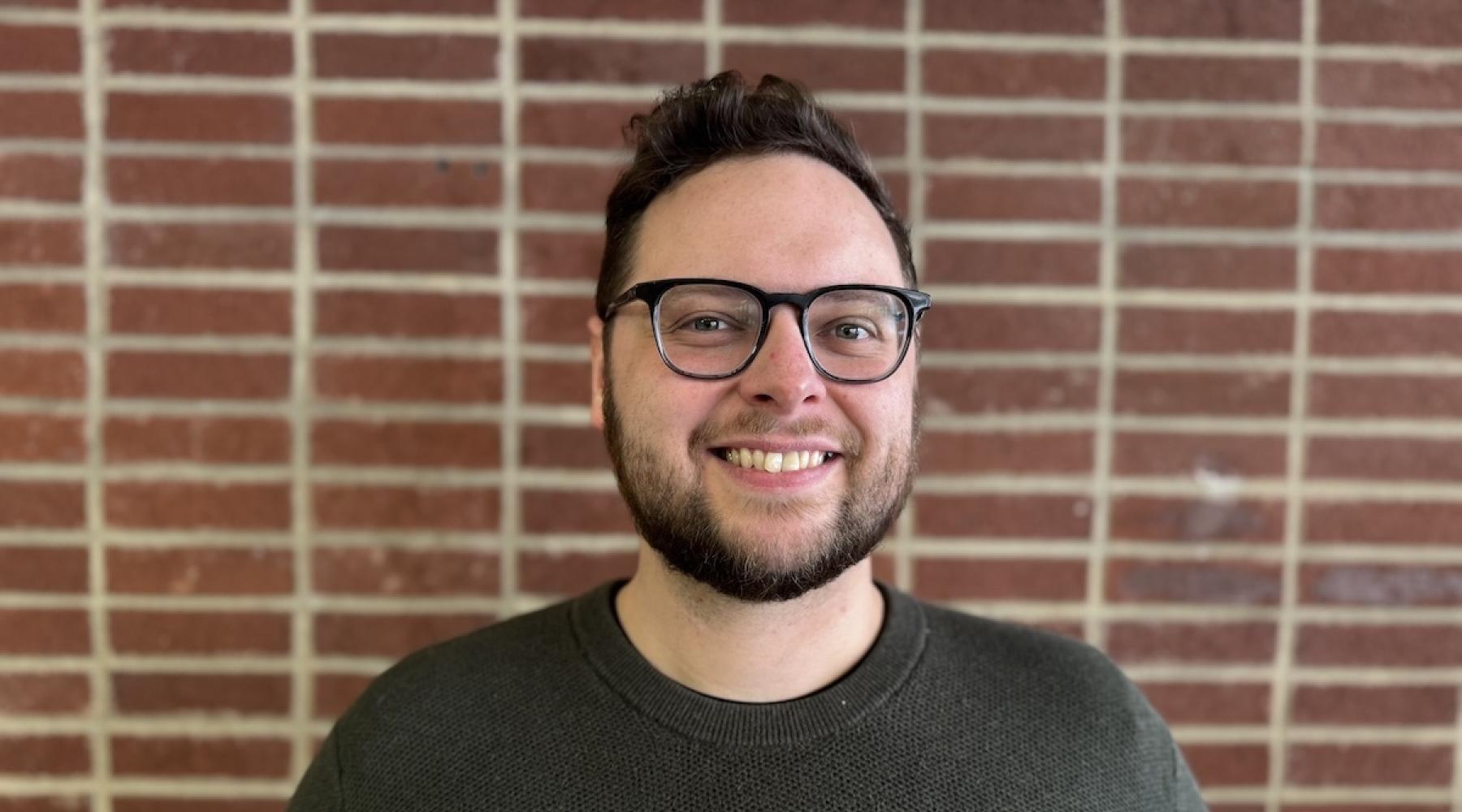
With roots in Alabama that shaped his interest in individuals who are both artists and service workers, Adam Schoenbacher is a new Future of Work fellow in the ILR School and a postdoctoral associate in ILR’s Global Labor and Work Department. In this Q&A, he reflects on an ethnography he completed of Nashville’s honky-tonk entertainment district, and looks forward to new projects at the ILR School.
What are your research interests, and how did they evolve?
As a sociologist, I study the experience of precarious work by investigating how institutional contexts – like organizational dynamics, occupational communities, technology and local culture – shape modern labor regimes and the well-being of workers. I’m especially interested in the experiences of precarious service workers and artists in the southern U.S., where a long history of anti-union sentiment, institutional racism and libertarian state policies provide few openings for improving the lives of workers. These interests came together in an ethnography of Nashville’s honky-tonk entertainment district, where I observed the occupational communities of cover band musicians and high-volume bartenders navigating complex and contradictory employment across more than 40 honky-tonk bars.
I came to study service workers and artists largely because of my own biography. I grew up in the northwest corner of Alabama, in an area called The Shoals. There, a celebrated music recording history, the local university and a cheap cost of living fostered a thriving music and arts scene. After college, I briefly shelved my considerations of graduate school and returned home with bohemian ambitions to start a band with friends from high school. Supporting myself by working in a local coffee shop, I found a strong community of hybrid artist-service workers whose hardships and strengths stuck with me. I eventually returned to school, where I found sociology was a fantastic basis for understanding both the risky yet hopeful careers of artists and precarious service work.
What have been the most significant challenges and/or surprises as you’ve researched these topics?
Ethnography is exhausting! It was a marathon of organizing late-night participant observation, interviews, web scraping, transcription and data analysis. Speaking with workers about their struggles and failures can be emotionally draining, too.
I am constantly surprised by the kindness of my interviewees and their willingness to give their time freely.
From your peer-reviewed, published research, are there any papers of which you are particularly proud?
Earlier this year, I published my first solo-author paper, titled “Tipping Regimes: Organizational Dynamics and Labor Control Mechanisms on Nashville’s Honky-Tonk Row,” in “Social Problems.” In this paper, I explored how honky-tonk bars employed three distinct types of labor regimes to secure the effort of their tipped workers: communal, competitive and techno-bureaucratic. By examining these regimes, I demonstrate the varying degrees and methods of control exerted over tipped workers in small to medium-sized organizations.
What does ILR offer that attracted you to the Future of Work initiative?
I appreciate the interdisciplinary and collegial atmosphere at ILR. It offers a wealth of perspectives on worker-management relations from various disciplines, enriching my understanding.
The Future of Work initiative will provide me with invaluable time to develop my research program, publish work from my dissertation and collaborate on an exciting new project.
During your ILR Future of Work fellowship, who are you working with and what questions are you exploring?
I am collaborating with Virginia Doellgast and our research team to investigate the significance of worker voice in the AI-driven restructuring of the telecommunications and video game development industries.
Our primary objective is to understand how workers and unions in these sectors are responding to automated management systems and generative AI. Consequently, we are conducting a comprehensive range of inquiries, including:
- Determining the extent of AI tool adoption in these industries
- Exploring the potential differential impacts of AI tool use on various worker groups
- Investigating the effects of AI tools on different job-quality and worker well-being outcomes
- Analyzing diverse strategies employed by employers and their impacts on workers
Beyond your academic efforts, how do you like to spend time?
Outside of my research, I enjoy writing music, making coffee and cooking. I also like to hike with my partner, Nikki. We have enjoyed exploring trails and gorges in the Finger Lakes Region!
I also collect vinyl records, musical instruments and animals. We have two cats, two goldfish that Nikki rescued from the Tennessee State Fair and a feisty bearded dragon named Charlie.