Future of Work Fellow Brings Technology Lens to Worker Struggle
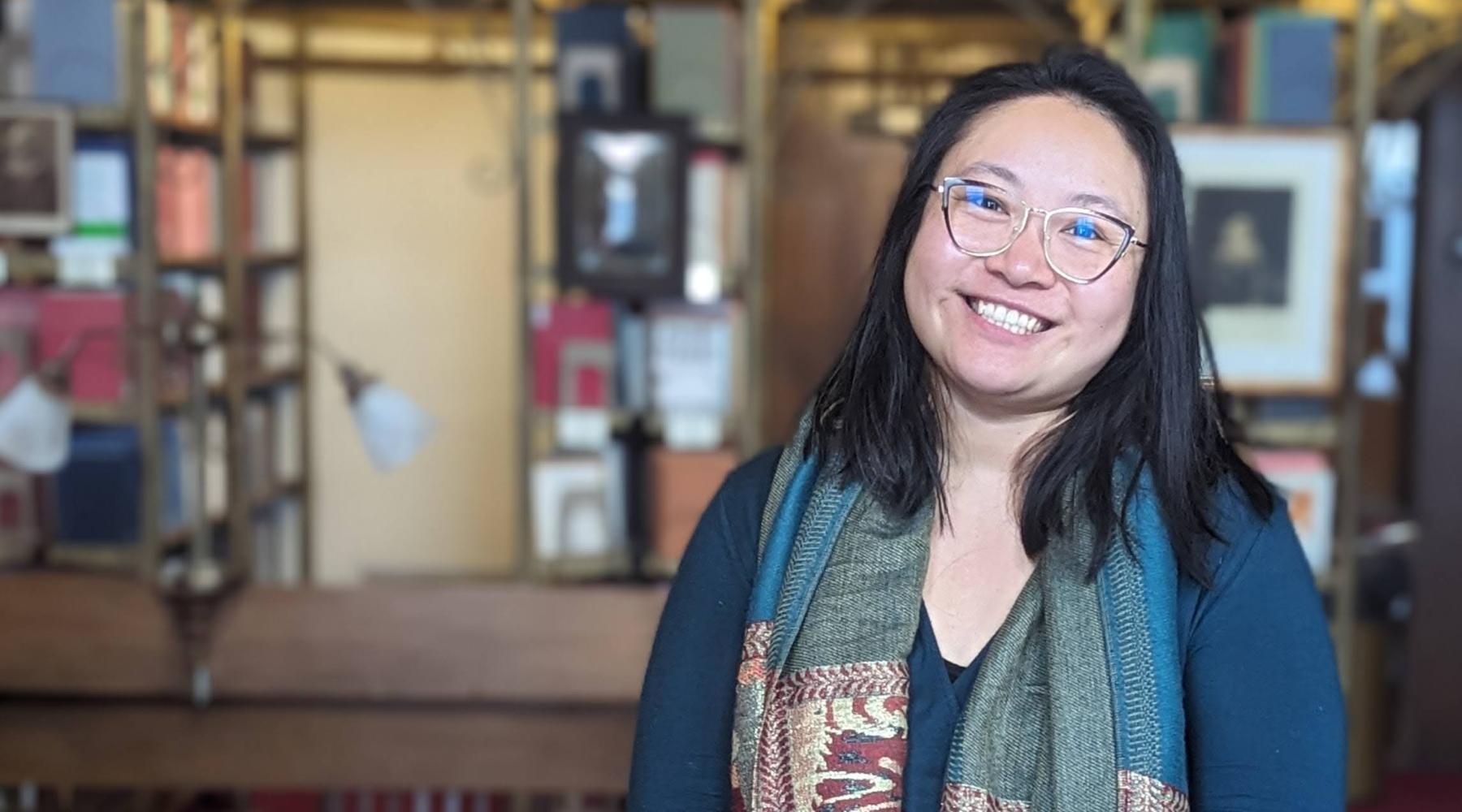
This spring, Joy Ming, Ph.D. ’25, will begin a position as an assistant professor in the newly established AI and Society Department at the University at Buffalo, but that won’t stop the research she’s doing as a Future of Work fellow for ILR’s Center for Applied Research on Work.
Designed to promote strong collaboration between newer researchers and resident faculty members in studying impactful topics related to the future of work, Ming’s fellowship was funded by Todd Gershkowitz ’86 and began in September. Since then, Ming has continued the research she initiated with Ariel Avgar, Ph.D. ’08, during her time as a doctoral candidate in the field of information science at Cornell.
“Normally, the Future of Work fellowships will be for a year, but Joy was offered a tenure-track job, and obviously, we needed to support her in accepting that position,” Avgar said. “However, the benefit of this program is that it gives us the opportunity to build these collaborative relationships so that when a young researcher leaves to begin their career at another university, they stay connected with us and stay involved in the field. So, it really benefits both parties.”
According to Avgar, Ming’s background in computer science enables her to bring valuable insights and lessons from that domain, which are necessary as ILR scholars continue to study emerging technologies in the workplace.
“Our current research together is a really good bridge-building exercise, because there’s a lot on technology use in the labor relations and employment relations space,” said Avgar, director of ILR’s Center for Applied Research on Work. “And ILR is complementing that by bringing insight from the worker perspective. It’s the combining of the two where there’s a lot of power.”
Last spring, Ming was part of a collaborative team that included Avgar, as well as researchers at Cornell Tech and Weill Cornell Medicine, that received the best paper award at the Association for Computing Machinery’s Conference on Human Factors in Computing Systems.
The study, “Exploring Data-Driven Advocacy in Home Health Care Work,” examined how technologies used to monitor frontline home health care workers can be leveraged not to surveil workers, but to help them build solidarity and improve their working conditions.
As a fellow, Ming’s research has continued in this same vein, studying how AI is being introduced in the workplace and how workers are responding to it, specifically in the home health care industry.
“We’re at a point in time where a lot of these new technologies are just being created, so we have an opportunity to potentially affect the way they’re being deployed and the way that workers will interact with them,” Ming said.
Some examples of technology currently being developed include interactive voice assistants that support workers in client homes, helping them make informed decisions or ask questions; AI that matches workers with clients, allowing for more efficient distribution of work; and AI tools in client homes that serve as companions.
“There are all these new things that are being introduced right now into client homes and into home care workplaces,” Ming says. “So, understanding how workers feel about these things being in the workplace, and also how it changes their work, is really important.”
Ming began her college career at Harvard, where she planned to focus on global health. However, a computer science course her first year showed her that she could combine two seemingly disparate areas of study.
“I had the opportunity to do computer science in a global health setting by building applications for community health workers,” Ming explains. “I was excited about this intersection of being able to build systems and change things at the system level, while also being able to impact people all over the world and improve their lives.”
As an undergraduate and a Fulbright fellow, Ming worked on technology projects with nurses and hospitals in India, Ghana and around the United States. It was her work in these rural settings that led her to believe the best way technology could be utilized in health care was by helping providers improve their working conditions.
As a result, Ming centered her dissertation project, “From Surveillance to Solidarity: Reimagining Data-Driven Technologies In Home Health Care Work,” on home care workers in New York state, focusing on how technology impacts their lives by making their work more challenging, but could also be potentially used to help identify wage theft or document the amount of “invisible” work they do.
Ming has continued that course of research with her Future of Work fellowship and will carry it with her to Buffalo.