Cornell's AI-Ready Workforce Initiative
ILR School Professors Explore How AI Can Assist With the Interview Process
Cornell Researchers Are Reimagining How We Measure AI-Ready Talent
For decades, human resources (HR) teams have looked to resumes, credentials, and interviews to answer a hard question: Can this person actually do the job? As artificial intelligence (AI) reshapes nearly every role, this question has become even more challenging.
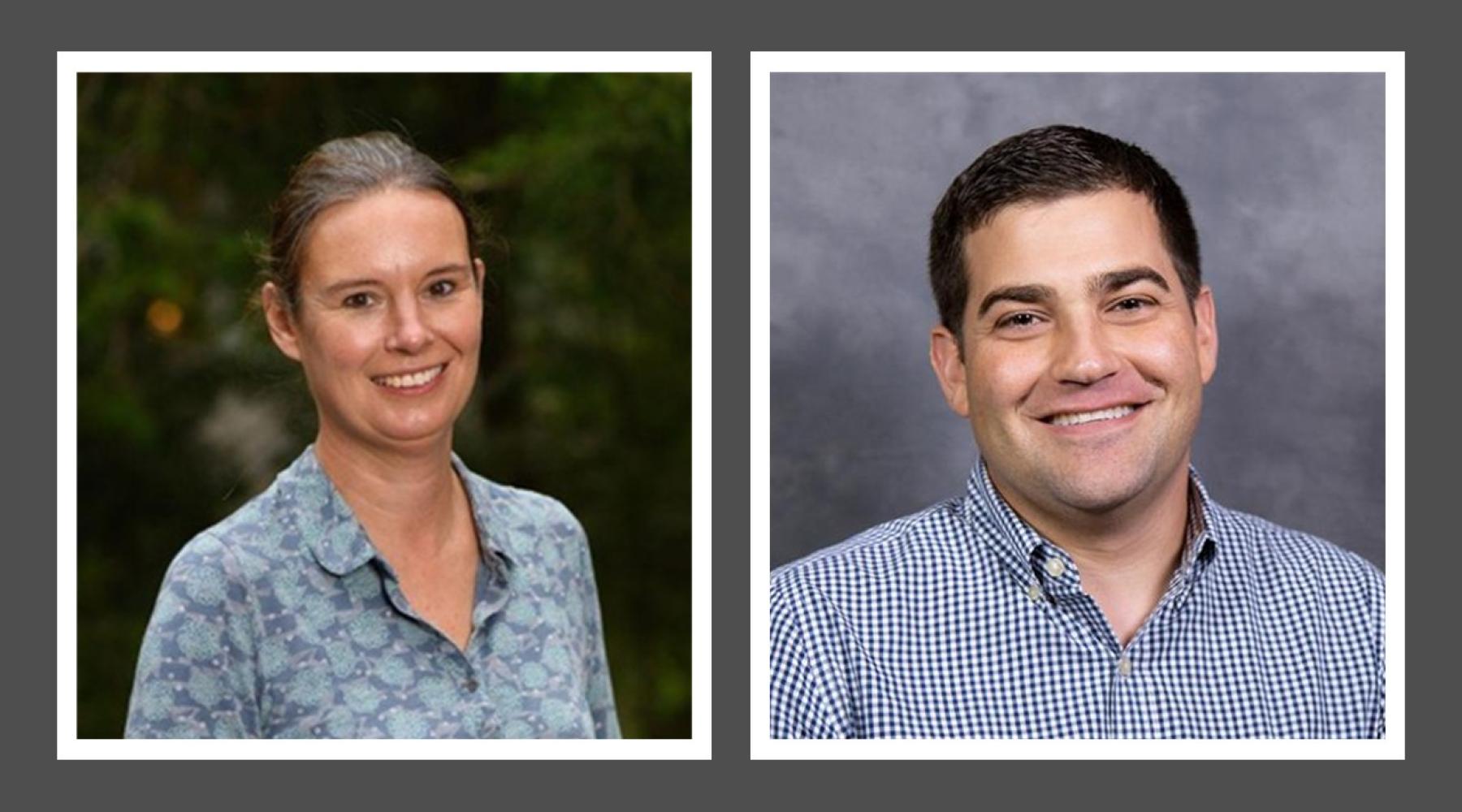
Cornell University has created a team of researchers to tackle this problem. Their work through the AI-Ready Workforce Initiative recently earned an honorable mention from the Laude Institute, along with a $100,000 seed grant — recognition of a project that uses AI to turn job duties into practice activities candidates can work through before ever sitting down for an interview. The team is led by Rene Kizilcec, associate professor of information science at Cornell Bowers, and includes ILR School’s very own JR Keller and Michèle Belot.
The Problem They're Solving
The initiative starts from a simple but uncomfortable observation: Organizations don't have reliable evidence of who can use AI well, learn from it, and improve over time. Skills-based hiring, for all its promise, is still fundamentally static — credentials and job histories describe where someone has been, not what they can do right now. And the relational skills that matter most in AI-mediated work, like building trust, communicating under pressure, and repairing misunderstandings, are notoriously hard to observe at any real scale.
Instead of relying on self-reported skills or one-off interviews, the Cornell team builds case-based work simulations. Participants confront realistic, role-relevant scenarios complete with source materials, constraints, and deliverables, while AI helps generate the cases and organize the evidence. Trained human reviewers still own the interpretation and scoring. The result is a far richer, more inspectable record of how someone actually thinks, adapts, and delivers — the kind of evidence that can genuinely inform hiring, promotion, and internal mobility decisions.
JR Keller: Bridging Research and Real-World HR Practice
JR Keller, an Associate Professor of Human Resource Studies at Cornell's ILR School, brings a research lens grounded in the practical realities of talent management. On the Laude-recognized project, that expertise feeds directly into a very concrete HR problem: helping workers transition into new roles in the AI economy by converting real job duties into practice activities candidates can try out ahead of an interview.
For HR practitioners, this matters because it reframes the hiring funnel itself. Instead of asking candidates to describe their AI skills on a resume, the approach lets them demonstrate role-relevant capability before the interview even happens — giving both candidates and employers a clearer, earlier signal of fit. Keller's work helps translate that idea into assessment frameworks organizations can eventually put into practice, whether for hiring decisions, promotion pathways, or workforce-wide upskilling programs.
Michèle Belot: An Economist's Eye on Labor Market Signals
Michèle Belot, the Frances Perkins Professor of Industrial and Labor Relations and Professor of Economics at Cornell, adds a labor economics perspective to the project. Her joint appointment in the ILR School and the College of Arts and Sciences positions her to think carefully about how a tool built to ease job transitions actually plays out in the labor market — how employers signal what they value, how workers respond, and how practice-based candidate evaluation might reshape hiring and mobility more broadly.
Belot's involvement underscores an important truth: helping workers move into new AI-economy roles isn't purely a design or measurement problem. It's also an economic one. If turning job duties into pre-interview practice activities gives candidates a more accurate, current way to demonstrate capability, that has real implications for who gets hired and how quickly people can move between roles — potentially opening doors for workers whose resumes don't capture what they can actually do.
A Shared Framework for AI-Ready Work
Together with colleagues from Cornell's Bowers College of Computing and Information Science, the ILR School, and the Future of Learning Lab, Keller and Belot are helping shape a three-part framework for what it means to be “AI-ready”:
- AI Fluency — the ability to delegate tasks to AI, describe problems clearly, discern good outputs from bad ones, and act diligently on AI-assisted work.
- Relational Fluency — building trust, communicating under pressure, and sustaining collaboration in an AI-mediated workplace.
- Adaptive Flexibility — picking up new skills, responding to feedback, and improving performance across repeated attempts.
Each simulation is designed around a common six-step work pattern: plan, prepare, collaborate, verify, adapt, and deliver. This structure gives reviewers a consistent, granular way to link behavioral evidence back to specific competencies, rather than relying on a single opaque score.
Why This Matters for HR Now
For HR leaders, the appeal of this work goes beyond academic interest. The broader initiative is explicitly designed to support multiple talent decisions: hiring and promotion, upskilling and internal mobility, and organization-wide tracking of AI-readiness over time. The Laude Institute's recognition — and the $100,000 seed grant that comes with it — signals that this line of research is moving from concept toward real pilots. Because practice-based evaluation can be repeated and refined, it can also reveal something resumes never will: how quickly and effectively a candidate adapts when given feedback.
Kizilcec, Keller, Belot, and their colleagues were one of two Cornell teams to receive a Laude Institute honorable mention this cycle — the other, led by computer science professor Rachee Singh, is developing AI agents to train and assist surgeons in remote telesurgery. Together, the two projects reflect a broader push at Cornell to translate AI research into practical, real-world tools, with the Keller-and-Belot-backed effort focused squarely on the future of work and hiring.
Keller and Belot's contributions reflect something HR professionals increasingly recognize: helping candidates and workers succeed in an AI economy requires more than checking a box on a job application. It requires rethinking how job duties are communicated, practiced, and evaluated in the first place. As this project moves from seed funding to real-world pilots, it's worth watching closely — both for what it teaches us about AI-ready talent, and for what it teaches us about evaluating talent more broadly.
Learn more about the AI-Ready Workforce Initiative at ai-ready-workforce.ai.cornell.edu.