
Community Context Shapes Corporate Response to Violence in Street Protests
When violence takes place during street protests, how do corporate leaders respond?
According to new research by Forrest Briscoe, professor of organizational behavior at the ILR School, the answer depends on other community characteristics that people can use to help interpret the reasons for that violence. In particular, Briscoe focused on whether the community has a long history of protests turning violent regardless of the issue being protested – and, separately, whether the community has a history of events that validate the protestors’ main grievance.
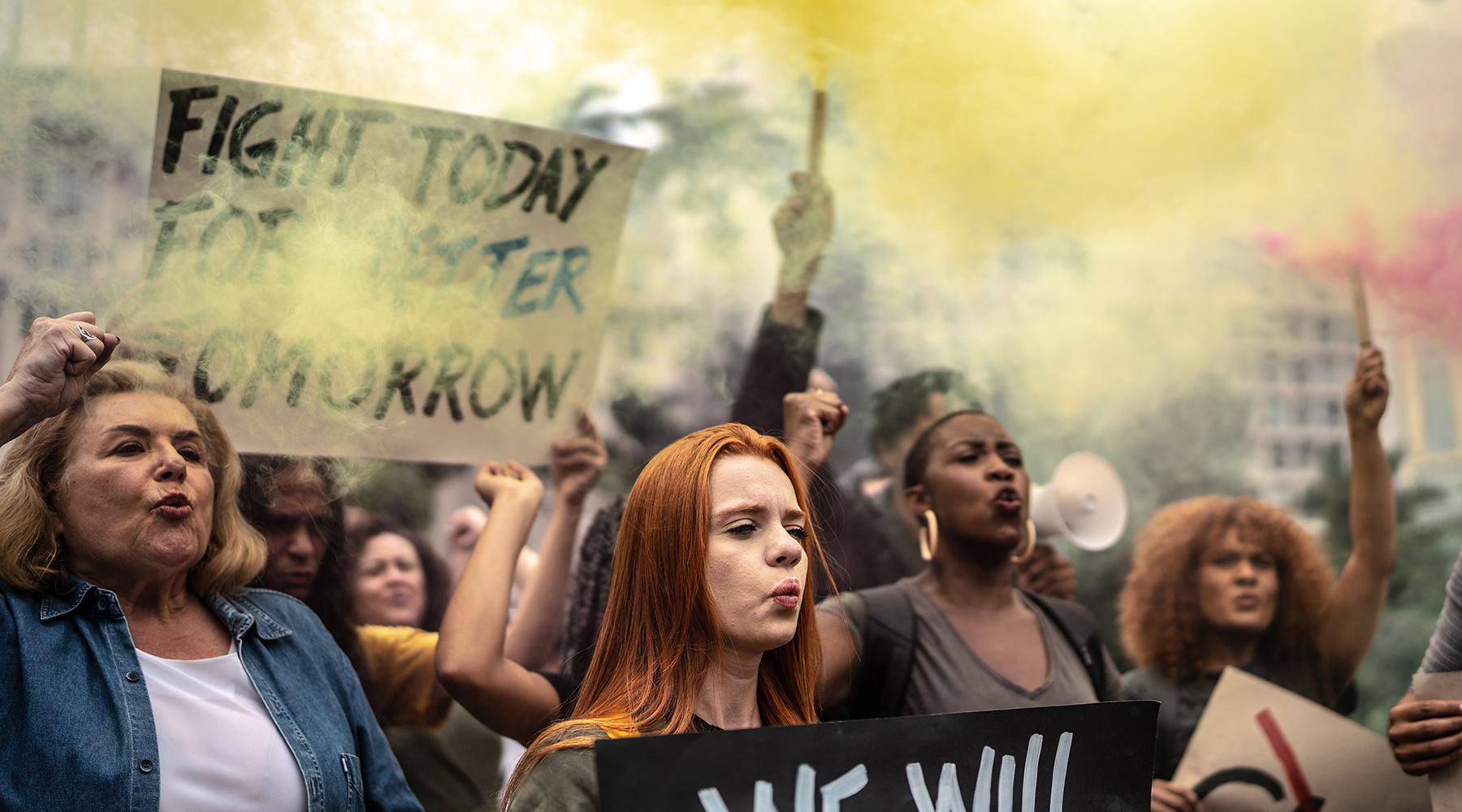
Examining announcements of corporate diversity actions during the 2020 Black Lives Matter (BLM) movement, Briscoe and his co-authors Mark DesJardine (Dartmouth) and Muhan Zhang (Chinese Univ. of Hong Kong) asked how reported violence in protests was associated with increased local corporate diversity action announcements. Communities with more reported protest violence saw increased corporate diversity action announcements if the community had a minimal history of violence in previous non-BLM protests.
Their findings were published in “Interpreting Violence: How Community Context Shapes Corporate Responses to Street Protests,” appearing in the June issue of Administrative Science Quarterly.
“When we started studying corporate responses to BLM street protests, I was frankly unsure whether our findings would generalize beyond the unique time of those protests,” said Briscoe, who holds the Maurice and Hinda Neufeld Founders Professorship in Industrial and Labor Relations. “Yet activism and, unfortunately, violence are both on the rise globally, and business leaders are increasingly needing to respond one way or another.
“This suggests our study’s key insight may apply more broadly – that is, when business leaders try to decide how to respond to violence in communities, they will ask themselves what they think is driving the violence and use community context to help answer that question.”
In his research, Briscoe often explores how companies and institutions evolve to reflect a changing society and how social movements influence organizations.
“We first became interested in this question of how a business interprets violence after our earlier research found that businesses responded more to local street protests when those protests were very large,” Briscoe said. “We wondered if the same would be true for protests that included violence. While a larger protest signals that more community members care about the issue being protested, a more violent protest sends a mixed message – one that depends greatly on what the receiver of the message thinks caused the violence. This led us to theorize that business leaders trying to interpret violence will ask themselves how that violence fits into the history of the community where the protest took place.”
The research team hypothesized that business leaders’ responses to local protest violence will hinge on their perceptions of whether the violence is justified. Furthermore, the team believed that a key factor business leaders will consider is the historical conditions of the communities where the protests occur and where their companies are headquartered.
In their research into BLM protests, they found that in a community with a history of protest violence across different causes, the new instances of violence were viewed as a continuation of social disorder, making the movement appear less legitimate to community stakeholders, and discouraging business leaders from taking supportive action.
Conversely, a history of events – such as police shootings of Black citizens – that validated community grievances made protest violence seem a more plausibly justified response to systemic issues, and made local companies more likely to announce action in support of the protest’s underlying social cause.
“This study reveals something new about how business leaders made sense of the last decade’s historic social movements,” Briscoe said. “At the same time, on a human level, it’s important to recognize that the context of our study – the BLM movement in America – was transformative for many people, bringing people together in unprecedented numbers in support of racial equality, but also revealing painful, enduring divisions in our society.”