Good Intentions, Rising Pay: Cornell at The Conference Board's Executive Compensation & Talent 2026
Diane Burton and Brian Dunn on how the everyday mechanics of pay-setting quietly push executive compensation upward, and what committees can do about it.
Most executive pay programs are built by careful people following accepted practice. Benchmark against peers. Target the market median. Tie a big share of pay to equity. Each step is defensible on its own. Together, they can produce an outcome no one set out to design: pay that ratchets up year after year.
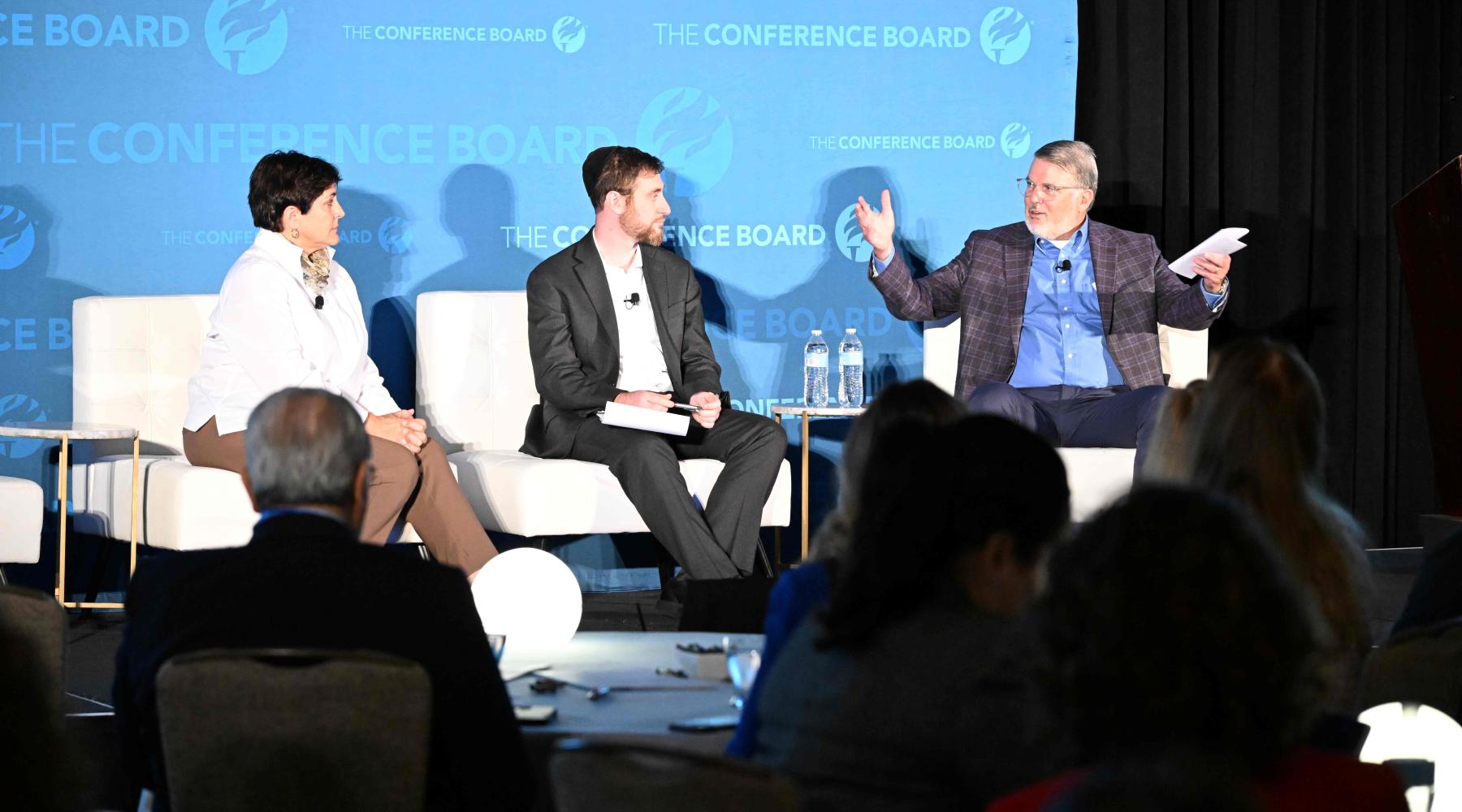
That tension was the focus of a panel at The Conference Board's Executive Compensation & Talent 2026 conference, held September 24–25 at the New York Marriott Downtown. Cornell University's M. Diane Burton and Brian Dunn took the stage to ask a question every compensation professional should sit with: what if some of our standard practices are part of the problem?
The session
When and where: Thursday 1-1:35pm, September 24, 2026 Grand Ballroom, Third Floor, New York Marriott Downtown, 85 West Street, New York, NY 10006
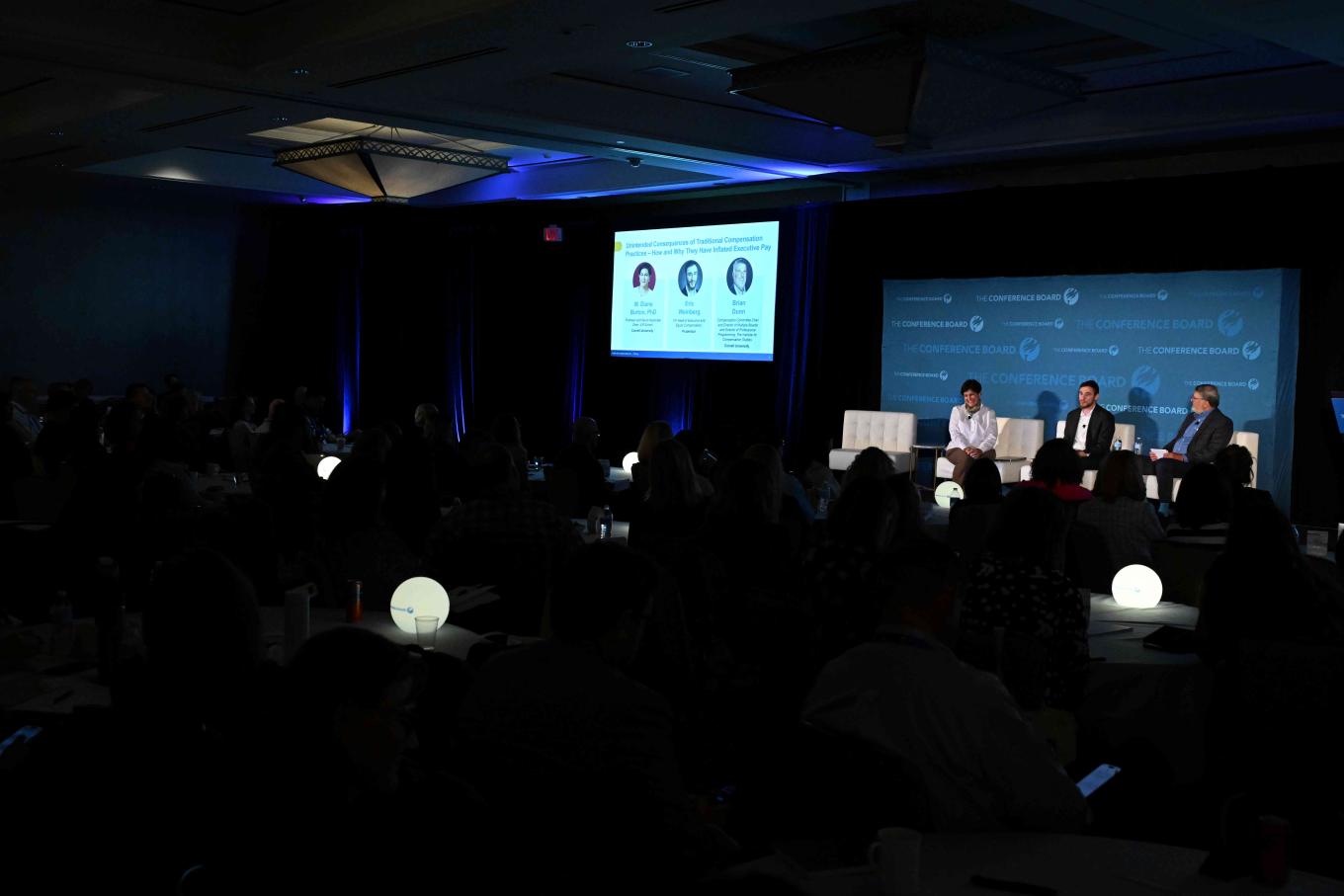
The panel, Unintended Consequences of Traditional Compensation Practices: How and Why They Have Inflated Executive Pay, brought together research, boardroom and practitioner views:
- M. Diane Burton, PhD, Professor and Senior Associate Dean, ILR School, Cornell University
- Brian Dunn, Compensation Committee Chair and Director of multiple boards, and Director of Professional Programming, Institute for Compensation Studies, Cornell University
- Eric Weinberg, VP, Head of Executive and Equity Compensation, Prudential
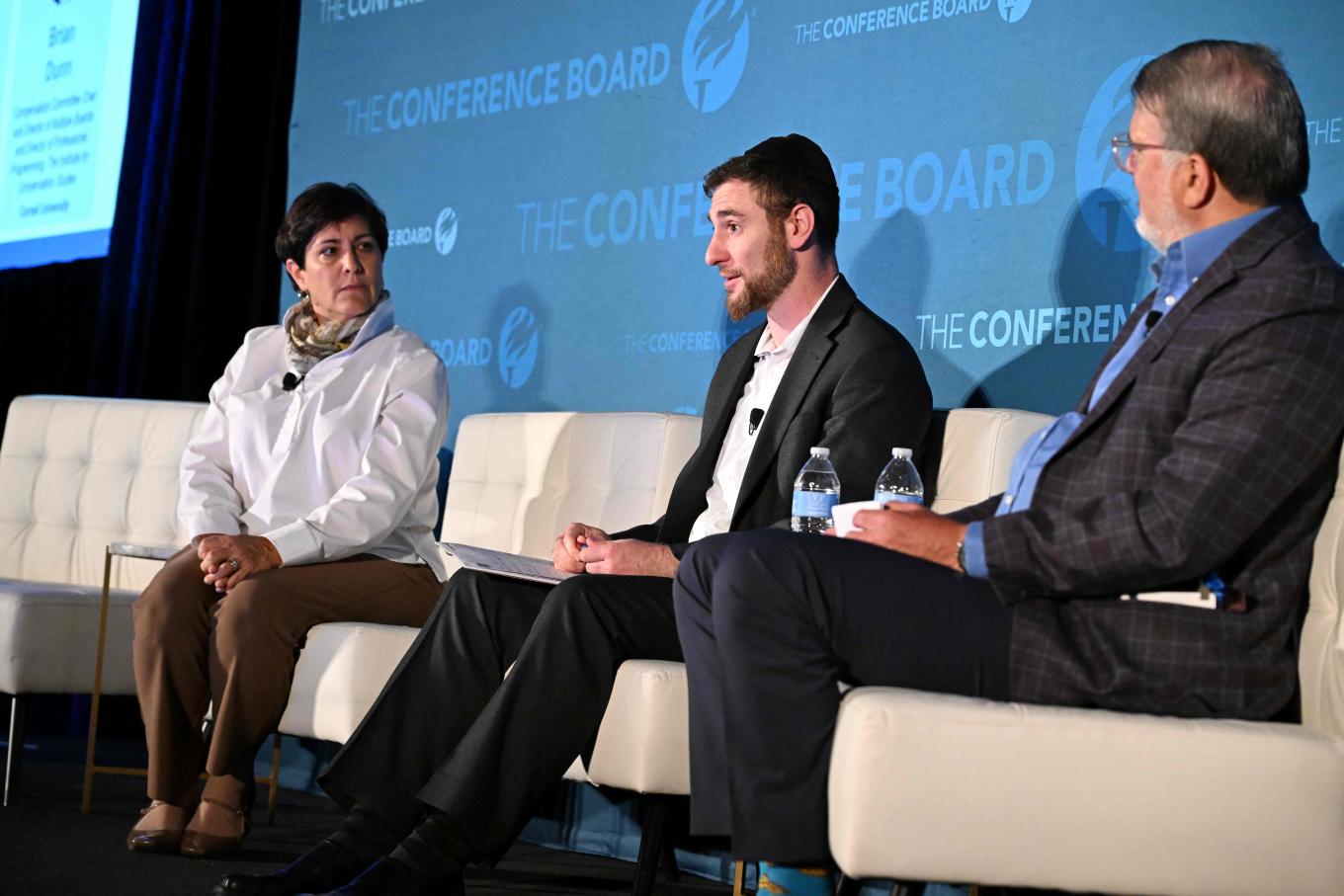
Panelists were able to provide a diverse set of views. Diane brought a research lens on how organizations set pay; Brian spoke from the committee chair's seat, where these decisions get made; and Eric spoke to how the in-house team designs and runs the programs.
Where the upward pressure comes from
Peer groups drift upward. Companies tend to pick peers that are larger, more prestigious or better paid than they are. Benchmarking against that group raises the target before any pay decision is made.
Few boards target below the median. If every committee aims for the 50th percentile or higher, the median itself keeps climbing. Each company's reasonable choice feeds the next year's survey data.
Equity values compound. Grants sized as a dollar value, plus rising share prices and less than ambitious targets, can push realized pay well past what the committee pictured at grant.
Disclosure fuels comparison. Public proxy data made pay more visible. It also gave executives and their advisors a clear view of what everyone else earns.
“All the parties think they are doing the right thing, but every decision in the process seems to favor the ‘home team’; in other words there are no healthy sceptics to a set of assumptions that have, over time, directly resulted in a escalation of executive pay beyond what would have happened in an arm’s length negotiation.” Brian Dunn, Compensation Committee Chair and Director of Professional Programming, Cornell Institute for Compensation Studies.
What compensation and talent leaders can do
The goal isn't to throw out benchmarking or equity. It's to use them with open eyes. Questions worth bringing to your next committee cycle:
- Would our peer group look the same if we built it from scratch today?
- Why are we targeting this percentile, and what would change if we didn't?
- Do we look at realized and realizable pay, not just grant-date values?
- How does executive pay track against pay across the rest of the workforce?
- Are we treating market data as an input or as the answer?
Continuing the conversation
Thank you to The Conference Board and Programming Manager Megan Cresitello for hosting, and to Eric Weinberg for his practitioner insight. The Cornell Institute for Compensation Studies continues this work through research and professional programs.