Cornell University mobile logo
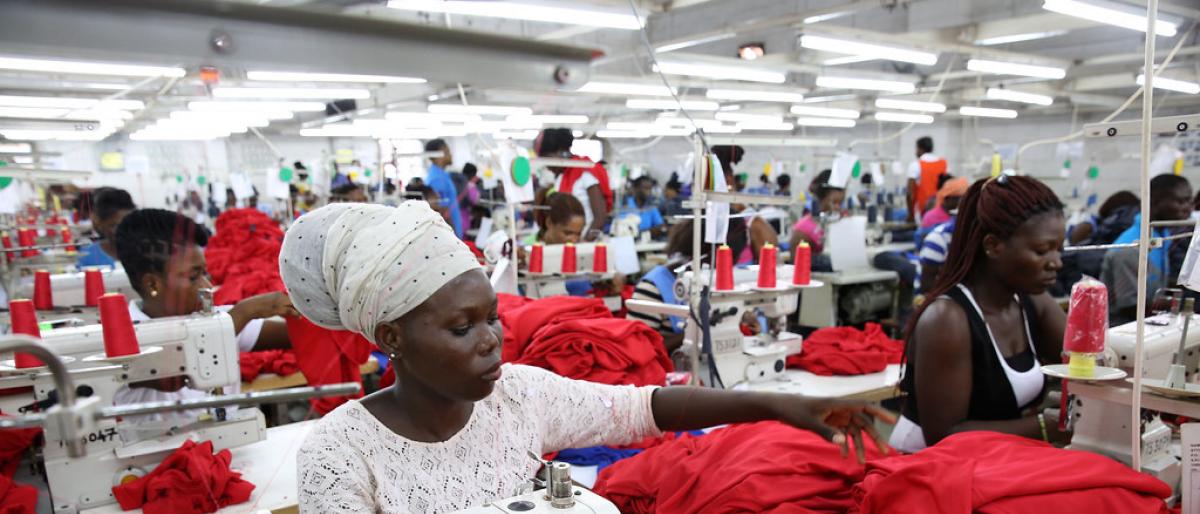
Dignity factory workers producing shirts for overseas clients, in Accra, Ghana

Cooling Before It Got Cool: Case Studies in Heat Adaptation in Southeast Asian Factories

Heat Adaptation in Apparel Factories

A new examination of how apparel factories are adapting to extreme heat while investing in cooling, automation, and climate resilience strategies.

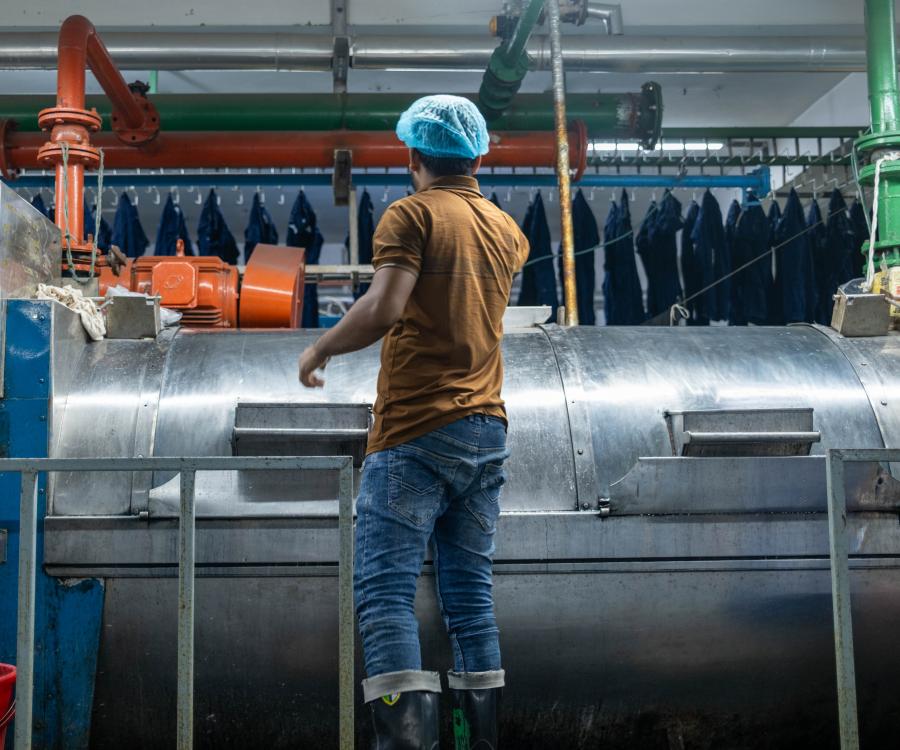
A thermal image of a worker at a station in a garment factory, showing the high heat levels through brighter orange colors at their workstation.
Read more

The Dindigul Agreement to End Gender-based Violence and Harassment

Has It Worked?

This is GLI’s official final assessment of the Dindigul Agreement to End Gender-Based Violence and Harassment at a South Indian apparel factory that could be a model for other factories around the world. 

Large room of garment factory workers
Read more

Global Labor Institute's Climate-Labor Work

GLI Climate-Labor Research

See all of our analyses on the intersection of labor rights and climate change.

GLI climate workers webinar
Read GLI's Climate-Labor Work

Measuring Supply Chain Due Diligence

Labor Outcomes Metrics

Read about the Global Labor Institute's new quantitative metrics that measure labor outcomes—actual impacts for workers.

Workers in Bangladesh
Read more about Measuring Supply Chain Due Diligence

Latest Research and Events

Book "Private Regulation and Labor Standards in Global Supply Chains" Published

NCP Executive Director Sarosh Kuruvilla's book examines the practice of private regulation in respect of labor standards in global supply chains.
Sarosh Kuruvilla Book Cover
Book "Private Regulation and Labor Standards in Global Supply Chains" Published

New Conversations Project Partners with ILO on Grant

Improving working conditions in the dangerous and largely unregulated commercial fishing industry is the focus of the project.
An industrial fishing boat
New Conversations Project Partners with ILO on Grant

Private Regulation of Labor Standards in Global Supply Chains

This paper, published as a chapter in the International Labor Organization's 2021 volume: Decent Work in a Globalized Economy, shares Professor Sarosh Kuruvilla and the New Conversations Project's new research on the limited progress of private regulation over a decade in multiple countries
Garment workers in an Indonesian factory
Private Regulation of Labor Standards in Global Supply Chains

“Repeat, Regain or Renegotiate?” NCP Working Paper No. 2 asks What's the future of apparel?

Cornell NCP's Jason Judd and Lowell Jackson plot the decades-long, pre-pandemic trajectories of apparel industry consolidation, automation, e-commerce, sourcing patterns, and governance of labor practices against three possible scenarios for the industry in the post-pandemic era. This paper also appears as an ILO Better Work Discussion Paper.
Ho Chi Minh map
“Repeat, Regain or Renegotiate?” NCP Working Paper No. 2 asks What's the future of apparel?

Is private regulation working? Book launch with Sourcing Journal on May 25

New Conversations Project and the Sourcing Journal presents a live book launch and debate on Sarosh Kuruvilla's new book, Private Regulation of Labor Standards in Global Supply Chains on Tuesday, May 25.
Sarosh Kuruvilla Book Cover
Is private regulation working? Book launch with Sourcing Journal on May 25

GLI Sourcing Journal Series

The New Conversations Project is publishing a limited series in the Sourcing Journal on latest research findings related to private regulation. These pieces are designed to de-code important new academic research for actors in the global supply chain.
Sourcing Journal Logo
GLI Sourcing Journal Series

In The News

Media Mentions

How Climate Change Will Shape Fashion Supply Chains in 2026

Vogue
“The technology to cool workers is not complicated, and the costs are manageable in most countries,” said Jason Judd, executive director of ILR’s Global Labor Institute, sharing his expertise about how the garment industry is addressing climate change and heat stress in factories.
How Climate Change Will Shape Fashion Supply Chains in 2026

Justice for Jeyasre: how a brutal murder led to a better deal for garment workers in India

The Guardian
Sarosh Kuruvilla, academic director of the Global Labor Institute, provides an analysis of the Dindigul labor agreement and comments on why Natchi Apparels may be having difficulty finding new clients.
Justice for Jeyasre: how a brutal murder led to a better deal for garment workers in India

Can the fashion industry adapt to a warming world?

Context
“Workers toiling in 35 or 40 degrees Celsius and high humidity is the return of the literal sweatshop,” says this article about the garment industry and climate change, co-written by Jason Judd, executive director of the Global Labor Institute. The article cites the institute’s “Higher Ground?” report and offers solutions.
Can the fashion industry adapt to a warming world?

2030 is Nearly Here. Can Fashion Still Make Good on Its Climate Promises?

Sourcing Journal
“This is not a technical problem but a political one” said Jason Judd, executive director of the Global Labor Institute, about the fashion industry’s progress with adapting to climate change.
2030 is Nearly Here. Can Fashion Still Make Good on Its Climate Promises?

The COP30 Deal Won’t Solve Fashion’s Climate Problems

The Business of Fashion News
Jason Judd, executive director of the Global Labor Institute, recommends that the fashion industry should “get their act together” with regard to heat and climate change, “because workers are suffering from heat stress and, in turn, so are margins.”
The COP30 Deal Won’t Solve Fashion’s Climate Problems

Do the Labor Provisions in Trump’s Southeast Asian Trade Deals Have a Point?

Sourcing Journal
Kelly Fay Rodriguez, visiting lecturer at ILR’s Global Labor Institute and former special representative for international affairs at the Department of State, analyzes the importance of labor provisions in trade agreements and discusses how these provisions can best be enforced.
Do the Labor Provisions in Trump’s Southeast Asian Trade Deals Have a Point?