Cornell University mobile logo
Five people crossing polluted stream over narrow bridge.

The Climate Crisis and the Work in Global Supply Chains

GLI is a global leader in studying the intersection of climate change, work and global supply chains. We have produced several major reports and policy briefs since 2023, quantifying the impacts of extreme heat and intense flooding for workers and their organizations, employers, governments and investors.

It is possible to draw a straight causal line between GLI analyses such as Higher Ground? (written with Schroders), Hot Air and Cooling Before It Got Cool, and the early successes on heat stress: apparel brands and governments drafting standards, new approaches at ILO Better Work and the International Accord, campaigns like those from CCC and ACT, and increasing media attention to this issue.

Below, you will find all of our analyses on the climate-labor intersection, briefs for different audiences and media mentions.

GLI climate workers webinar

Analyses and Reports

Cooling Before It Got Cool: Case Studies in Heat Adaptation in Southeast Asian Factories

A new examination of how apparel factories are adapting to extreme heat while investing in cooling, automation, and climate resilience strategies.
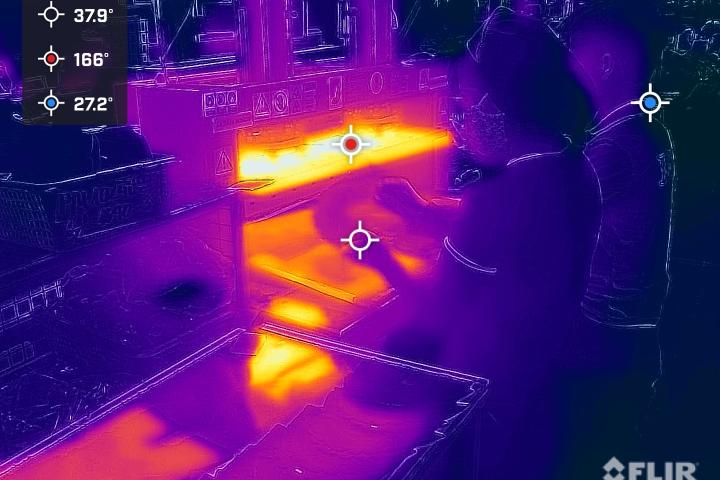
A thermal image of a worker at a station in a garment factory, showing the high heat levels through brighter orange colors at their workstation.
Cooling Before It Got Cool: Case Studies in Heat Adaptation in Southeast Asian Factories

GLI and the IFC-ILO: The Heat is On: How heat stress impacts the apparel industry, jobs, and worker health

This report, co-produced by GLI and the International Finance Corporation, with input from the International Labour Organization’s Better Work team, build upon past GLI research and examines the impacts of heat stress and flooding on the apparel industry.
The fron page of "The Heat is On" report. A woman stands with a yellow fabric over her head, and the title "The Heat is On: How heat stress impacts the apparel industry, jobs, and worker health" is on a dark maroon background. The logos of Cornell University, the Global Labor Institue, and the Facility for Investment Climate Advisory Services sit on the bottom of the page on a white background.
GLI and the IFC-ILO: The Heat is On: How heat stress impacts the apparel industry, jobs, and worker health

Warming to the Idea? Labor Governance and Extreme Heat in Apparel Production

This policy brief builds upon past GLI research and our recent report co-produced with the IFC and the ILO's Better Work program. It presents new findings on the impacts of extreme heat and the adaptation responses from employers, workers, their governments and buyers in the global apparel and footwear industry.
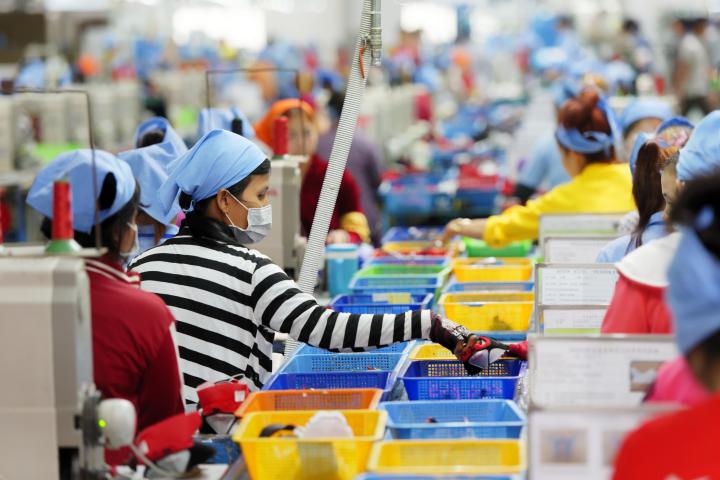
Cambodian workers are seen in a local footwear manufacturing plant, with containers of materials in multiple colors sitting in front of workers wearing bandanas and many wearing masks as well.
Warming to the Idea? Labor Governance and Extreme Heat in Apparel Production

Schroders and GLI publish stewardship framework on climate risk resilience and adaptation: 'Engaging with companies on Just Resilience: An Investor Toolkit'

From Schroders (and GLI) comes the first ever climate adaptation guidance for investor engagement with firms: "Schroders has begun applying the toolkit for its engagement with apparel brands and plans to expand its application to other exposed sectors, including food and construction."
A person stands holding a red umbrella in floodwaters. In white text, it says "Engaging with companies on Just Resilience: An Investor Toolkit | April 2025."
Schroders and GLI publish stewardship framework on climate risk resilience and adaptation: 'Engaging with companies on Just Resilience: An Investor Toolkit'

Hot Air: How will fashion adapt to accelerating climate change?

This report looks at 23 global apparel production centers and analyzes how heat and flooding have already changed and gotten worse over the past two decades, and recommends changes and adaptations for the already-supercharged climate.
Birds' eye view of people crossing in a crosswalk.
Hot Air: How will fashion adapt to accelerating climate change?

Higher Ground? Fashion’s Climate Breakdown

In partnership with Schroders, we report the impacts of climate change on global apparel production. In our first report, we track climate change impacts at the global, national, and factory levels. Our second report examines company-level climate risk, cost, and financing for adaption and just resilience.
Textile workers in Ho Chi Minh City, Vietnam
Higher Ground? Fashion’s Climate Breakdown

“Repeat, Regain or Renegotiate?” NCP Working Paper No. 2 asks What's the future of apparel?

Cornell NCP's Jason Judd and Lowell Jackson plot the decades-long, pre-pandemic trajectories of apparel industry consolidation, automation, e-commerce, sourcing patterns, and governance of labor practices against three possible scenarios for the industry in the post-pandemic era. This paper also appears as an ILO Better Work Discussion Paper.
Ho Chi Minh map
“Repeat, Regain or Renegotiate?” NCP Working Paper No. 2 asks What's the future of apparel?

Media Mentions

Sourcing Journal: 'As US Tariff Pressure Grows, Can Bangladesh Still Manifest a Just Transition?'

Sourcing Journal
Jason Judd and New GLI Visiting Fellow Sarah Krasley are quoted heavily in this piece on Bangladesh, US tariff policy, and a just transition. Krasley: "Automation and reskilling pathways are critical components of just transition strategies."
Sourcing Journal: 'As US Tariff Pressure Grows, Can Bangladesh Still Manifest a Just Transition?'

Nike Repeatedly Raised Concerns About Repression in Cambodia. It Expanded Its Factory Workforce There Anyway.

Pro Publica
Brands increasing their orders from Cambodia while raising concerns about labor rights are “obviously mixed messages,” Jason Judd said. “And one message, the purchase order, has a lot more weight than the other. Until those are credibly threatened, the government has no reason to act.”
Nike Repeatedly Raised Concerns About Repression in Cambodia. It Expanded Its Factory Workforce There Anyway.

CBS News: 'Forget tariffs — this U.S. shoe company vows not to hike its prices'

CBS News
Jason Judd, describing the impacts of tariffs on consumers: "That pain will lessen as terms and sourcing patterns change, but the longer-term costs per family will still be around a $425 increase per year."
CBS News: 'Forget tariffs — this U.S. shoe company vows not to hike its prices'