The Incursion of Private Equity into New York State Home Care
The Cornell ILR Worker Institute's event, The Incursion of Private Equity into New York State Home Care, examined how private equity (PE) firms are increasingly extracting profits from New York's home care system and the consequences for home care workers. In their opening remarks, Patricia Campos Medina, Executive Director of the Worker Institute, and Cornell ILR Professor Rosemary Batt situated the discussion within a broader movement against healthcare profiteering. Batt explained how PE firms acquire companies through debt-financed buyouts, extract profits through financial restructuring and cost-cutting, and resell them within a few years, often leaving them financially distressed or bankrupt. Therefore, the model’s expansion into home care is particularly concerning given the industry's thin margins, low wages, weak labor protections, being predominantly a female workforce of color. Unlike previous research focused on patients and public spending, the Worker Institute’s two-year participatory research project, supported by the Robert Wood Johnson Foundation, centered the often-overlooked home care workers caught in the middle.
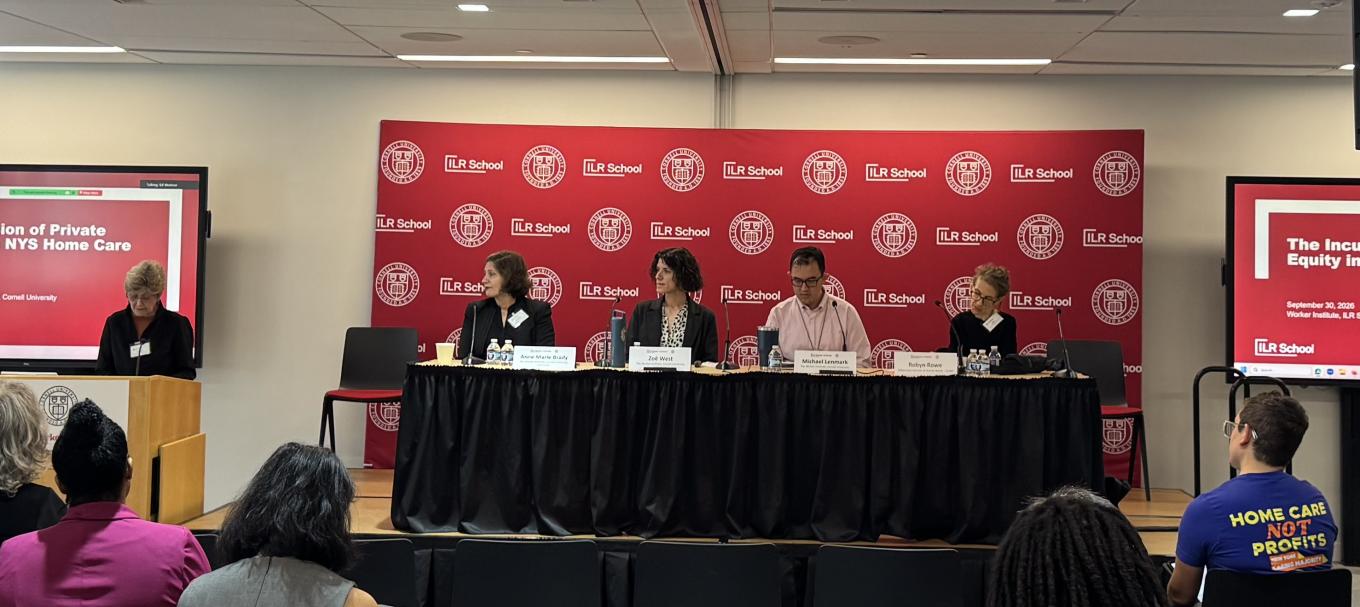
The first session, moderated by Anne Marie Brady, Research Director for Worker Rights and Equity at the Worker Institute, presented the findings of two reports by the rest of the research team: Zoë West, Michael Lenmark, Robyn Rowe, and Sanjay Pinto. The first report examined PE’s expansion into NY homecare, and the policy landscape that enabled it. Despite low Medicaid reimbursement rates, PE firms have been attracted by growing demand, predictable revenue, and a fragmented market, allowing them to consolidate smaller agencies into national chains for greater operational efficiencies and resale value. This growth has put a substantial share of public dollars under PE control, especially with the 2025 consolidation of the Consumer Directed Personal Assistance Program (CDPAP) under PE-owned Public Partnerships LLC (PPL). Data on PE deals illustrated the short-term, debt-driven model. The research identified more than 80 PE-related transactions involving NY home care agencies since 2007, with agencies typically resold within five years, sometimes passing between PE firms while retaining local branding that conceals these changes from consumers and regulators.
This expansion unfolded amid decades of Medicaid privatization and cost containment. As Medicaid-funded care shifted from institutions into homes, New York State turned to private managed care organizations (MCOs) to administer funding and control spending. This arrangement reduced transparency, encouraged cuts to services and provider payments, and compounded weak labor protections and enforcement that allowed PE firms to benefit.
Drawing on interviews with 40 home care workers and key informants, the second report found that PE owners perpetuate and in some cases exacerbate already poor working conditions. The research highlighted how agencies, rather than relying on layoffs, over-recruit to maintain a surplus labor pool, leaving workers with unpredictable hours, involuntary part-time employment, and persistent income insecurity. Interviews revealed how managerial negligence and PE-driven cost-cutting through automation of scheduling, communication, and training have left workers isolated, with inadequate information about clients’ needs and little supervisory support. Compounding these problems, agencies frequently fail to address complaints of harassment, abuse, and unsafe working conditions, leading some workers to regard such experiences as unavoidable aspects of their jobs.
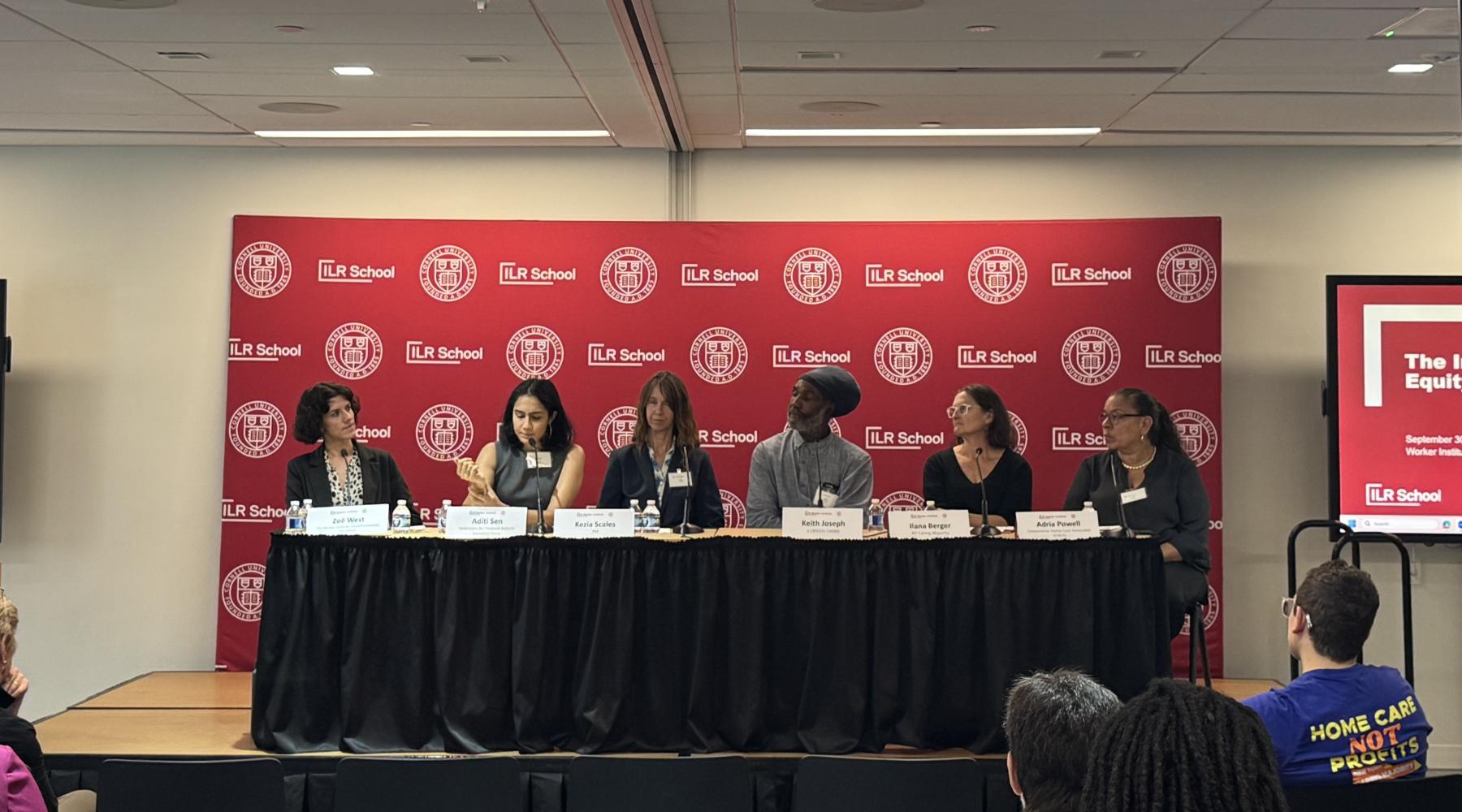
These findings raised a broader policy question: how can New York State improve labor standards across the industry while preventing financial actors from extracting profits at the expense of workers and care recipients? That questions carried into the second panel, moderated by West, which brought together Aditi Sen of Americans for Financial Reform, Kezia Scales of PHI, Keith Joseph of 1199SEIU United Healthcare Workers East, Adria Powell of Cooperative Home Care Associates (CHCA), and Ilana Berger of New York Caring Majority.
The panel explored how public funding, labor protections, alternative ownership models, and collective organizing could help build a more equitable home care system. Sen called for stronger labor standards, greater oversight of complex PE ownership structures, and restrictions on financial practices that divert Medicaid funding away from care. Building on this, Scales argued that reforms must ensure public funding translates into actual gains for workers, citing New York’s 2022 home care wage increase as an example of how poorly coordinated policies can fail to improve workers’ wages.
Other panelists focused on shifting power toward workers and care recipients. Joseph criticized MCOs for diverting resources away from care, emphasizing that workers' firsthand knowledge must be incorporated into decisions about care delivery. Powell presented Cooperative Home Care Associates (CHCA), an agency with a worker-owned cooperative model, as an alternative that institutionalizes worker voice and invests in job conditions and care quality. However, she stressed that mission-driven agencies remain disadvantaged by reimbursement systems that prioritize low costs, underscoring the need for policies that reward investments in workers and care quality. Berger, drawing on the New York Caring Majority's organizing efforts around the PPL transition, emphasized that meaningful reform depends on building coalitions among workers, care recipients, and families to demand a more equitable and publicly accountable home care system.
Taken together, the webinar suggested that confronting private equity requires more than restricting financial extraction: it requires addressing the historical devaluation of care labor and restructuring the institutions that sustain it. Across the research and panel discussions, speakers emphasized that stronger regulation and public investment must be accompanied by greater worker voice and collective organizing power.