Beyond the Crisis: Building Power with Care Workers at the Heart of Strategy
Future of Care Work Convening Recap
Click on photo below for link to video
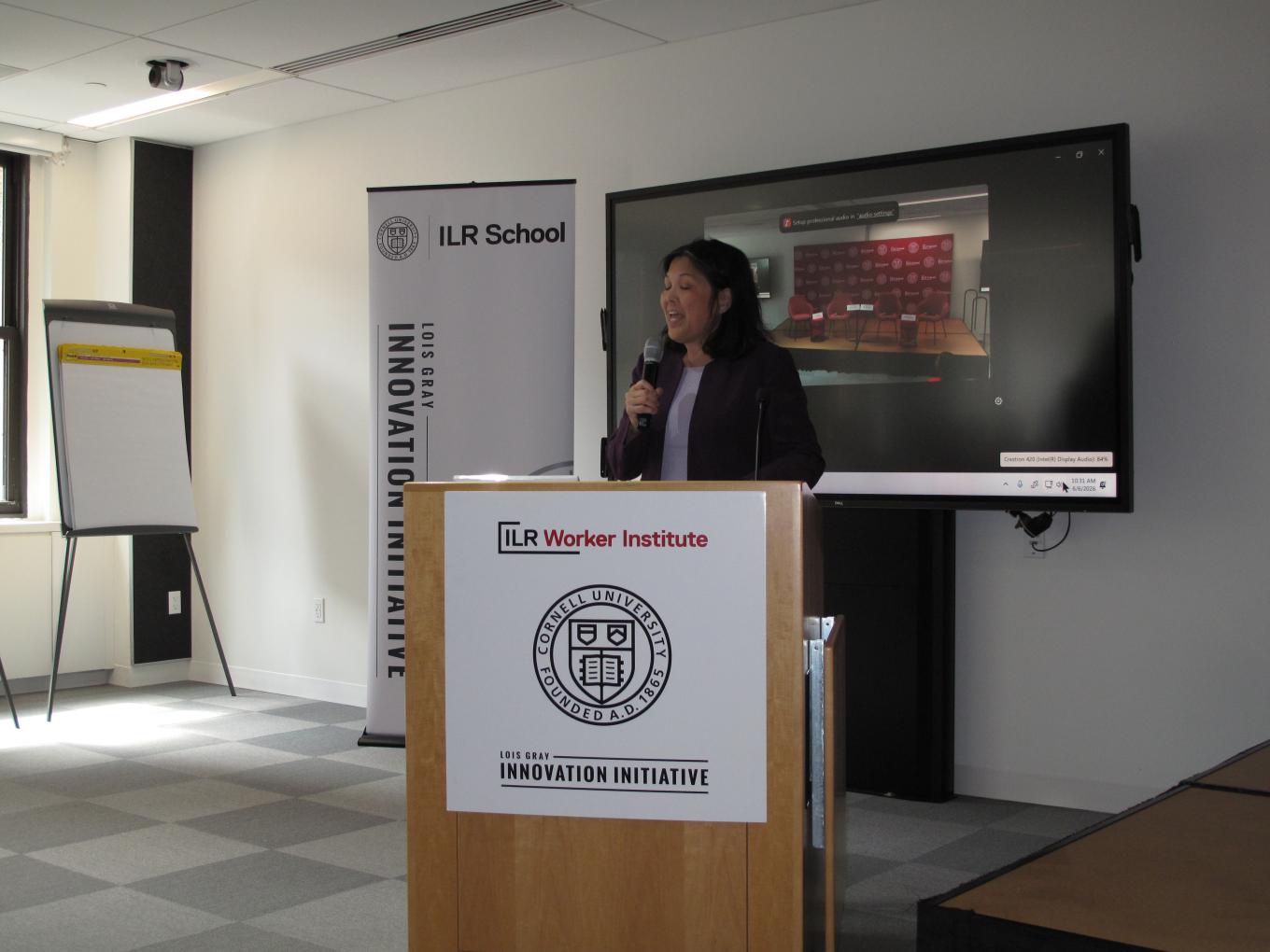
In her keynote speech, Julie Su, the first-ever Deputy Mayor of NYC for Economic Justice, framed the challenge as fundamentally one of political choice and power. Drawing from her mother's experience securing a union job—and the economic security that came with it—Su argued that stability, good wages, and dignity for working people are outcomes societies choose to create. Therefore, amid an affordability crisis and widespread disruption, which disproportionately affect care workers despite the essential nature of their labor, meaningful change requires structural choices that shift power toward workers. For Su, the work of building that change begins in spaces like this convening, where new ideas and strategies can emerge collectively. The tools to rebalance power already exist; the challenge is to build the conditions under which workers can exercise real voice, agency, leverage, and decision-making power.
Click on photo below for link to video
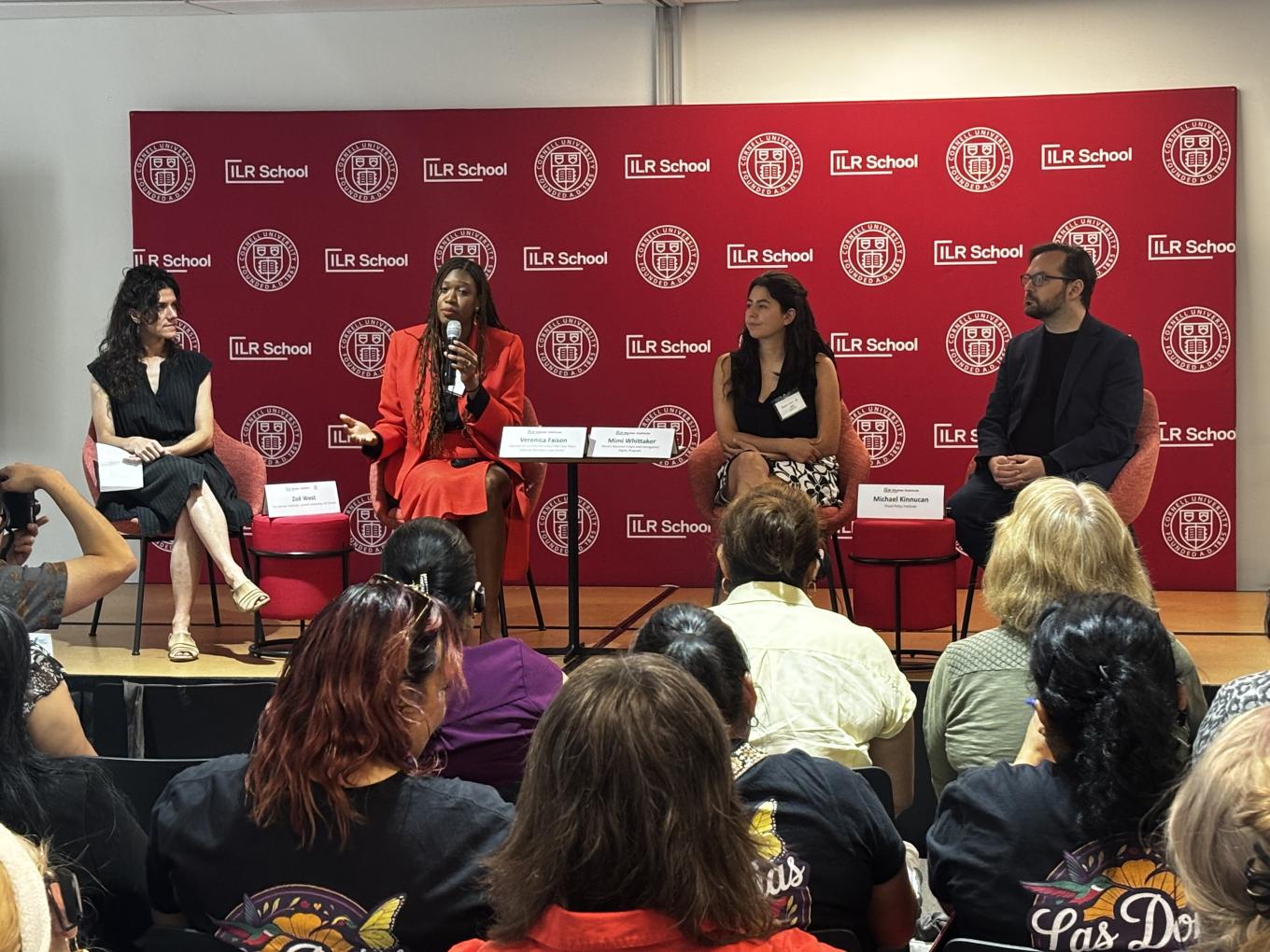
The first panel, "Mapping the Challenges," examined more closely the political and economic challenges confronting care workers in the current political moment, as the Trump administration escalates attacks on immigrants, workers’ rights, and access to Medicaid and healthcare. Moderated by Zoë West of the Worker Institute, the panel brought together Mimi Whittaker of Legal Aid at Work, Veronica Faison of the National Women's Law Center, and Michael Kinnucan of the Fiscal Policy Institute. While approaching care work from distinct perspectives—labor law, gender and racial justice, and public policy—the speakers converged around a shared insight: today's attacks are exploiting and exposing vulnerabilities that have long existed within our care work system.
Throughout the discussion, panelists traced those vulnerabilities to the historical devaluation of care labor. Whittaker situated current attacks on labor standards and care workers' rights within a longer history of racialized and gendered exclusions from labor protections, while Faison highlighted how Medicaid cuts, anti-immigrant policies, and reductions in public benefits disproportionately burden care workers, who are overwhelmingly women, immigrants, and people of color. Amid attacks on Medicaid home care, Kinnucan challenged advocates to move beyond defending home care as a cost-saving measure and instead make a direct moral case for care: caregivers deserve meaningful compensation because their work sustains society. A key policy question running throughout the discussion was, therefore, how advocates should respond to the current moment of disruption in relation to the systems that preceded it. The panelists framed the past as a point of departure—both a lens through which to understand the historical roots of today's challenges and a launchpad for imagining a more equitable future for care work.
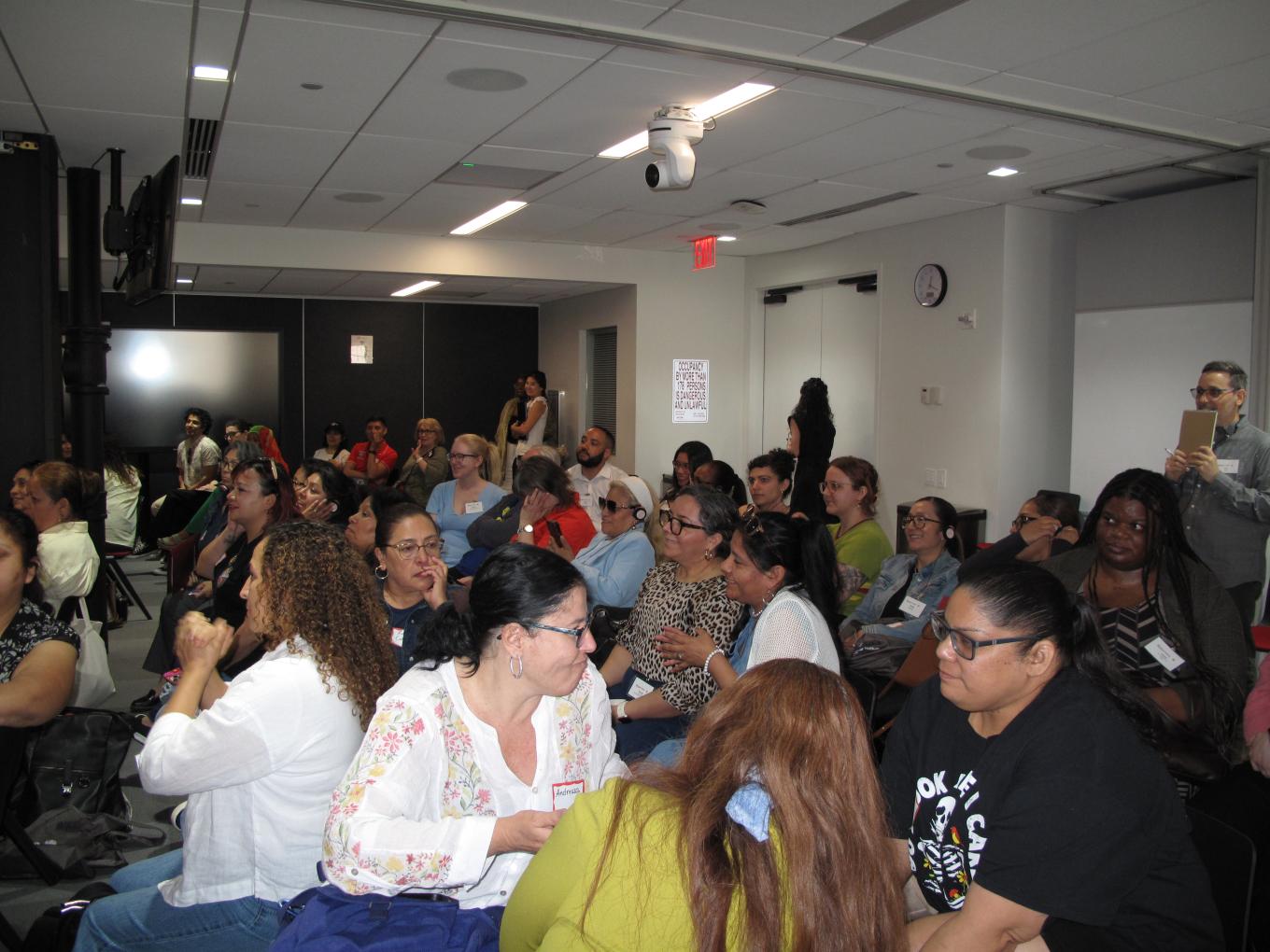
These themes carried directly into the "Movement Vision" session, moderated by Patricia Campos-Medina and Arianna Schindle of the Worker Institute. Framed around the idea of building "Earth 3"—a concept borrowed from Ai-jen Poo that points to a future we must build beyond both a flawed past and the current authoritarian moment—the session focused less on what must be resisted and more on what should be built. Speakers including Miguel Bautista of SEIU 775, Tammie Miller of the Family Child Care Providers Chapter of the United Federation of Teachers, and Monae Archibeque of OLÉ New Mexico argued that meaningful transformation requires more than expanding access to services, but also requires rethinking the underlying values and assumptions that shape the care system itself.
Together, the speakers envisioned a care system grounded in dignity, universality, democratic participation, and the recognition of care as a collective social good. Bautista called for universal systems of care and healthcare that are not tied to employment, income, or immigration status, and Miller emphasized that such systems should be understood as fundamental human rights rather than benefits that must continually be fought for and defended. Archibeque reflected on New Mexico's experience expanding universal childcare, emphasizing that expanding access alone is insufficient if workers remain underpaid and undervalued.
Taken together, the sessions suggested that protecting care in times of disruption requires confronting the assumptions that have historically devalued care work, expanding the political imagination beyond what currently exists, and centering the voices of care workers themselves in shaping what comes next. The challenge facing the care movement, speakers argued, is not only how to survive this moment of disruption, but how to use it as an opportunity to build something better.