
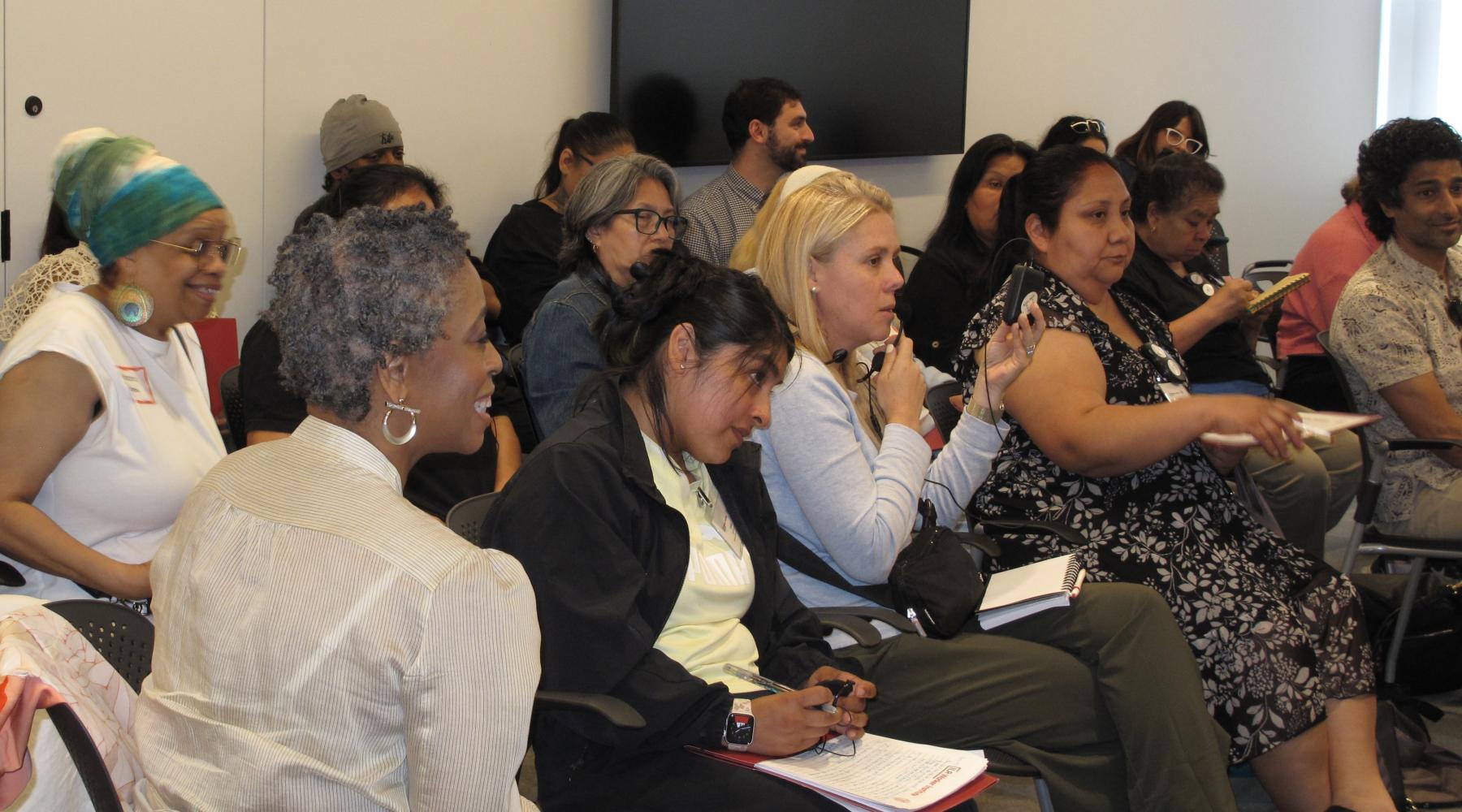
Building Trust with a Common Vision to Empower Care Workers
Future of Care Work Convening Recap
Home Care and Healthcare Workers Coming Together
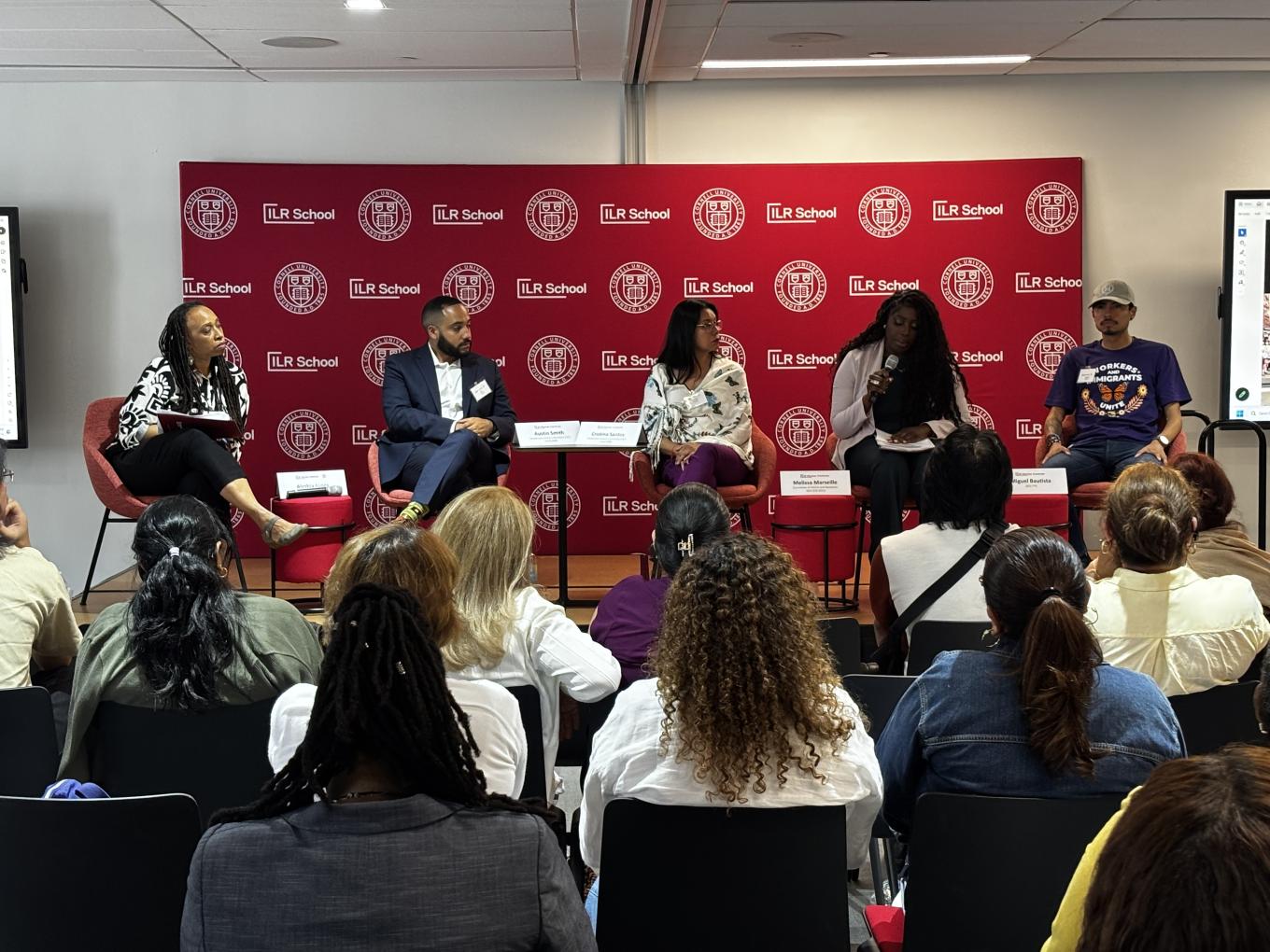
This session explored how homecare and healthcare workers are responding to the escalation of attacks on immigrants, workers’ rights, reproductive rights, and Medicaid under the second Trump administration. The panel was moderated by Alethia Jones (CUNY School of Labor and Urban Studies), and the panelists included Austin Smith and Cristina Santos (Co-leads, Healthcare Justice Committee at UnidosMN), Dr. Melissa Marseille (National Secretary-Treasurer, Committee of Interns and Residents-SEIU [CIR-SEIU]), and Miguel Bautista (Research and Policy Analyst, SEIU 775). While the panel primarily focused on the fight to protect immigrant workers, attacks on gender-affirming care, abortion, and Medicaid were also discussed.
The panelists described a range of strategies their unions and organizations were wielding to confront the current political moment, including: creating trainings integrated into organizing strategy; pushing for workplace protections through organizing campaigns, collective bargaining, and labor-management meetings; building partnerships between labor unions and community organizations; organizing for protections at the state and local level; and taking legal action.
Each speaker emphasized the foundational importance of building trust and empowering workers. This process begins with gathering information—what do workers want their union to do? What are they seeing and hearing at their workplace and in their community? For example, SEIU 775 launched an online survey of their members in 2025 and found that an overwhelming majority of members supported their union taking a stance and fighting back, with members reporting experiencing anxiety and stress related to attacks on immigrants and wanting their union to offer Know Your Rights (KYR) trainings. SEIU 775 went into action, providing KYR trainings for members, partnering with immigrant rights organizations to advocate for stronger policies and to connect members to legal resources, negotiating workplace protections through collective bargaining, and creating an Immigration Member Action Team.
Working groups dedicated to immigration defense can provide members with direct support by connecting them with legal services, gathering and translating resources into their native languages, keeping track of policy changes, and holding trainings and workshops. The panel emphasized that these groups should be member-led and that regular meetings should always set aside time for workers to compare their experiences across different workplaces, share strategies, ask questions, and voice their concerns.
As UnidosMN was offering general Know Your Rights community trainings in Minneapolis-Saint Paul, they connected with participating healthcare workers who created a group focused on protecting patients and workers against ICE in hospitals. The group connected workers across different hospitals to share information on hospital policies, collaborated with local healthcare worker unions, and then created a training tailored specifically for healthcare workers. The training centered on the idea that everyone deserves care—including those who are stigmatized and criminalized in our society—and that because nurses are the most trusted profession in the country, they can leverage that privilege and influence to protect the safety of the most vulnerable. With the onset of Operation Metro Surge, UnidosMN and local healthcare unions served as a bridge and resource for workers to meet across different hospitals and learn from each other, developing campaigns at their worksites to strengthen hospital policies for protecting patients and workers from ICE.
Panelists also described how employers are often resistant to actually implementing policies protecting workers and patients from the Trump administration, despite their supportive rhetoric. In each case, workers had to pressure their employers to put their words into action. Hospitals are very risk-averse, preemptively complying with the Trump administration out of fear of lawsuits and loss of funding. However, this has failed to prevent further interference from the federal government, leading unions and worker groups to push for policies that prohibit their employer from working with ICE or allowing them into non-public space without a warrant; require that the employer notify the union of any ICE activity; and guarantee immigration leave for workers who need to attend appointments related to their immigration status. CIR-SEIU developed a model ICE policy and organized alongside community groups to get the policy approved at LA County hospitals and in the Bronx. Yet when LA County approved, but did not actually implement, a policy to keep ICE out of LA County hospitals and protect patients, CIR’s Protect Our Patients Taskforce held press conferences, organized actions, and lobbied officials until it was officially implemented; in the Bronx, CIR similarly applied a public pressure campaign to win protections. CIR then shared the model policy with members nationally, encouraging them to bring the demand to their employers and local officials. CIR members also took direct action when the Trump administration began attacking gender affirming care, leading protests in LA, NYC, and Washington in collaboration with community allies.
Internal political differences among workers can be difficult to overcome and some members may not agree with the union's position on immigration or other issues. Panelists suggested that the best approach to changing hearts and minds is to personalize these political issues and to educate members on the long history of immigrant workers at the core of the labor movement. In Minneapolis, people who may have agreed with Trump’s immigration policies saw the reality of what those policies meant for their neighbors and communities during Operation Metro Surge. In Washington, SEIU 775 developed a workshop on the strong immigrant legacy in SEIU and the labor movement. Getting workers to tell their stories, providing historical examples, inoculating against divide and conquer tactics, and identifying who is profiting from these attacks on immigrants can all strengthen the argument that immigrant justice and the labor movement benefit, rather than distract, from each other.
Panelists also discussed strategies for achieving changes to immigration policies by putting pressure on government officials and politicians. In the face of a Republican trifecta on the federal level, the panelists spoke about doubling down on the local and state level. In Washington state, SEIU 775 played a key role in the passage of the Immigrant Worker Protection Act. CIR has used its political power to win a state-funded Abortion Clinical Training Program in New York, as well as a bill to fully fund a Health Care Affordability Fund in New Mexico to protect patients and workers in the face of Medicaid cuts. CIR is also an organizational plaintiff in a lawsuit they recently won, with a judge vacating and declaring unlawful a set of restrictive immigration policies, including the $100,000 fee that Trump imposed on H-1B visas.
Childcare Workers Standing Up Together for Pay Justice
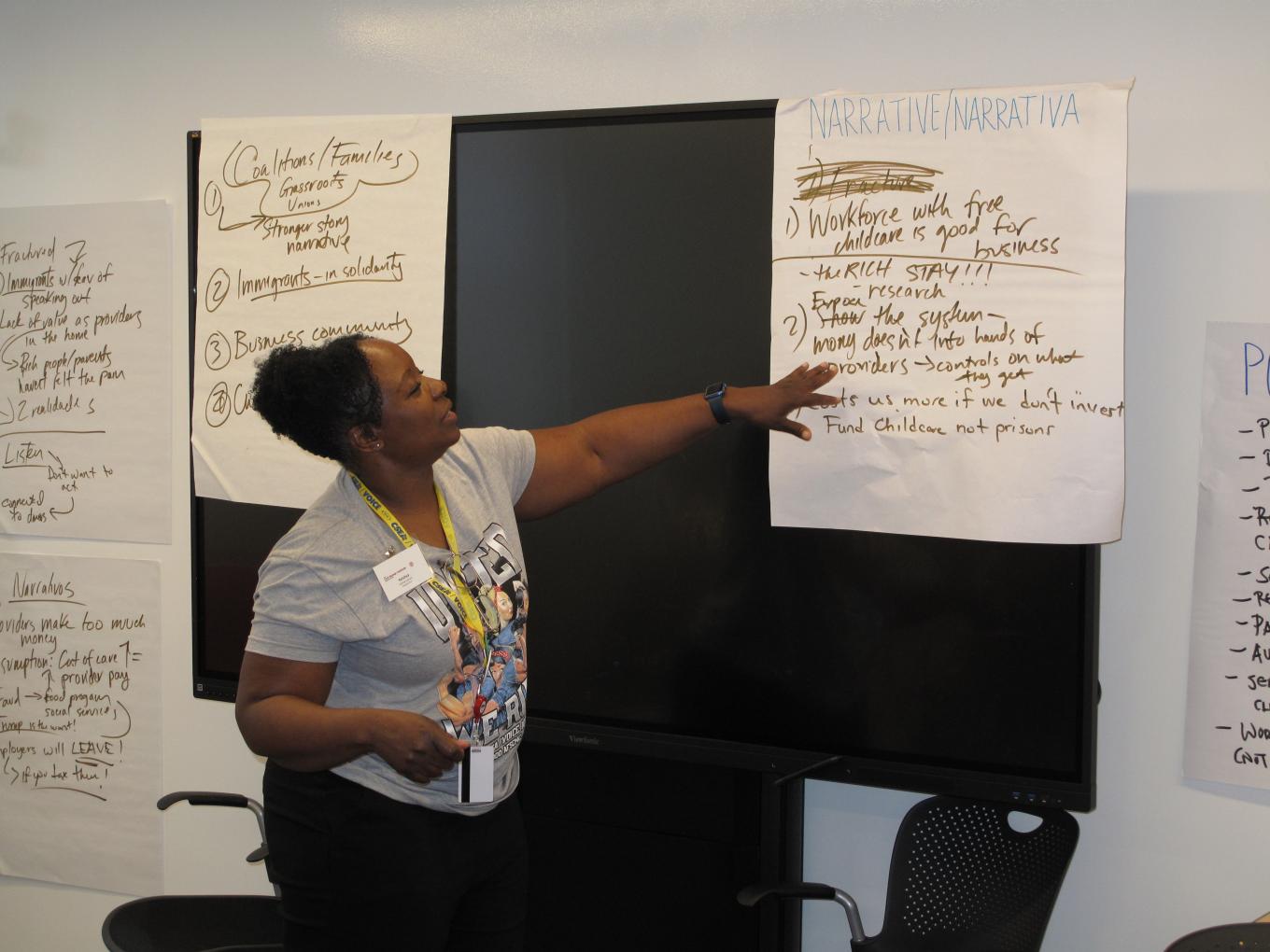
In their afternoon session, childcare workers, advocates, and labor organizers put their heads together to formulate ideas on how to build diverse, resilient coalitions, leverage power, increase political will, and develop compelling, effective narratives for campaigns. The opening panel discussion brought together organizers and workers from across the childcare sector, including Jocelyn Mazurkiewicz (NYS Union Childcare Coalition), Brynn Seibert (Child Care Division Director, SEIU Healthcare Illinois, Indiana, Missouri, and Kansas), Monae Archibeque (Political Director, OLÉ New Mexico), and Zakiyah Shaakir-Ansari (Co-Executive Director, Alliance for Quality Education and member of the Providers Organizing for Power [POP]). Each of the speakers tackled one of the overarching themes, touching on their own field experiences regarding coalitions, power, political will, and campaign narratives.
Each of these topics tied into a more focused discussion on the roadblocks to pay justice within the childcare field and the path toward equitable universal childcare for all. Most importantly, the discussion drew inextricable ties between these two organizing agendas. Speakers emphasized that mobilization around universal childcare must center workers in its conceptualization and carry-out, as highlighted by OLÉ New Mexico’s Monae Archibeque telling of their long-fought campaign, which ultimately resulted in New Mexico becoming the first U.S. to adopt a free, universal childcare program last year. OLÉ’s work on the campaign started with pushing for wage increases, and it remained a crucial issue throughout the 12-year-long effort. She emphasized that campaigns for universal childcare cannot consider the wages and conditions of workers as an afterthought, but a foundational element in policy creation.
In regards to building worker power, the conversation focused on uniting home-based workers and childcare center workers. As SEIU’s Brynn Seibert illustrated in her union’s efforts to foster sectoral-based worker power, they were able to achieve much more when divisions between work settings broke down. Instead of fomenting divisions between these sets of childcare workers, SEIU bridged the gap and secured vital wage increases and benefits for all of them under a sectoral union model in Illinois.
Each of the panelists talked about the need to foster broad coalitions between stakeholders such as parents and workers, in addition to making connections with labor organizations, community organizations, and politicians. When it comes to piecing together an impactful narrative around these issues, focusing on the public good and economic gains associated with investing in childcare—in addition to personal storytelling—can influence the public and policymakers. Since many of the issues surrounding childcare work stem from a lack of consistent government investment and prioritization, changing the economic status quo for childcare funding remains a crucial piece of the puzzle in ensuring high-quality care for children and dignified employment for workers.
Following the panel discussion, attendees set out to develop their own ideas on each of the overarching themes, working in small groups to think about how they themselves can incorporate some of the ideas around coalitions, power, political will, and narratives into their own organizing work. This vibrant conversation generated plans to counteract harmful narratives about childcare work, seek facetime with legislators, and to invest in workers through skills training and wage increases. Attendees reflected on the possibility of sector-wide efforts, incorporating parents into conversations on childcare worker conditions, and the vital role their work plays in supporting the rest of the economy.
Ultimately, the approach to caring for children and the people who care for them, as Zakiyah Shaakir-Ansari stated, needs to be rooted in abundance. In connection with the broader discussions over the weekend, the future of childcare work does not depend on what workers are told they are allotted, but what they can imagine is possible for themselves, for the children they care for, and their community.