

Cornell University mobile logo
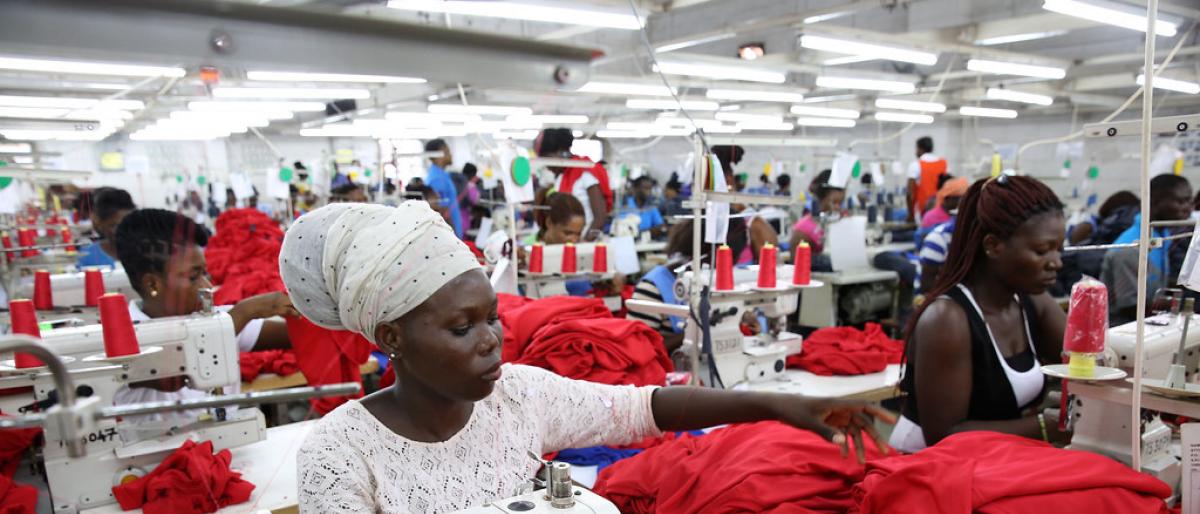
Dignity factory workers producing shirts for overseas clients, in Accra, Ghana

Six Seasons, Four Summers: How to Solve Fashion's High Heat Problem

Read The Report

Cooling investments in Bangladesh’s apparel factories can be commercially viable, with an average payback period of one to four years, according to new research from Cornell University’s Global Labor Institute.
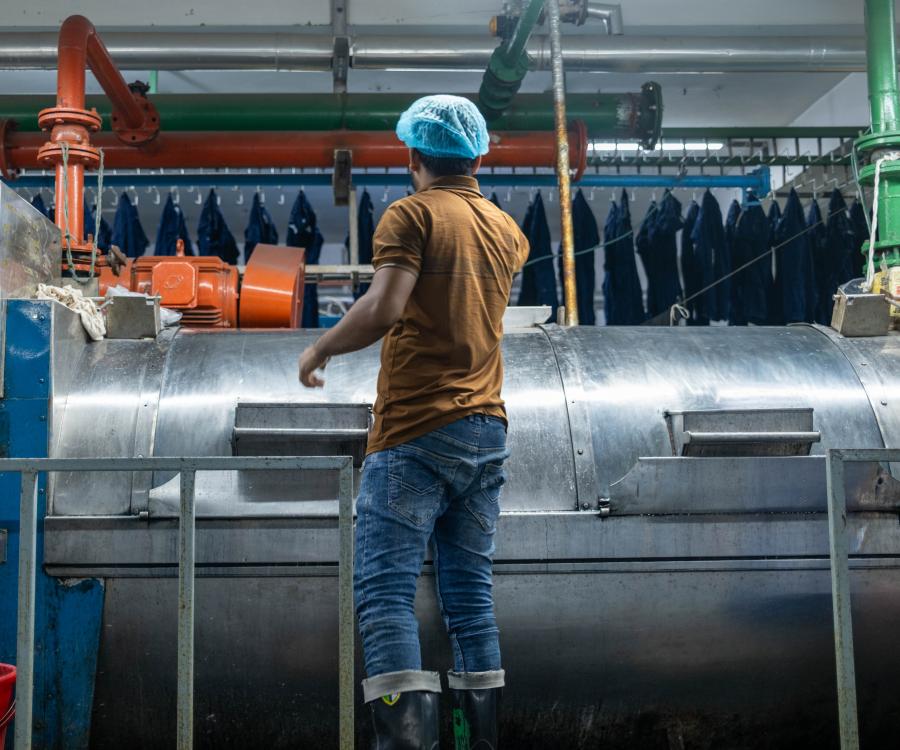
a washing image
Learn More

The Dindigul Agreement to End Gender-based Violence and Harassment

Has It Worked?

This is GLI’s official final assessment of the Dindigul Agreement to End Gender-Based Violence and Harassment at a South Indian apparel factory that could be a model for other factories around the world. 

Large room of garment factory workers
Read more

Measuring Supply Chain Due Diligence

Labor Outcomes Metrics

Read about the Global Labor Institute's new quantitative metrics that measure labor outcomes—actual impacts for workers.

Workers in Bangladesh
Read more about Measuring Supply Chain Due Diligence

Cooling Before It Got Cool: Case Studies in Heat Adaptation in Southeast Asian Factories

Heat Adaptation in Apparel Factories

A new examination of how apparel factories are adapting to extreme heat while investing in cooling, automation, and climate resilience strategies.

A thermal image of a worker at a station in a garment factory, showing the high heat levels through brighter orange colors at their workstation.
Read more

Global Labor Institute's Climate-Labor Work

GLI Climate-Labor Research

See all of our analyses on the intersection of labor rights and climate change.

GLI climate workers webinar
Read GLI's Climate-Labor Work

Latest Research and Events

GLI Welcomes New Board Members

The Global Labor Institute is pleased to welcome seven new members to our advisory board—Kalpona Akter, Mick Bride, Sarah Dadush, Tenisha Elliott, Duncan Scott, Jill Tucker and Mi Zhou. Please visit the Global Labor Institute’s people page to learn more about them.
Anna Burger at podium
GLI Welcomes New Board Members

Global Severance Pay Program Outlined

Global Severance Pay Program Outlined
garment workers in a factory
Global Severance Pay Program Outlined

“Repeat, Regain or Renegotiate?” NCP Working Paper No. 2 asks What's the future of apparel?

“Repeat, Regain or Renegotiate?” NCP Working Paper No. 2 asks What's the future of apparel?
Ho Chi Minh map
“Repeat, Regain or Renegotiate?” NCP Working Paper No. 2 asks What's the future of apparel?

OECD Due Diligence Session -- Sarosh Kuruvilla

GLI’s Sarosh Kuruvilla is sharing our new framework for hard measures of labor outcomes as part of the main OECD session “Assessing RBC due diligence implementation: Reflecting a risk-based approach".
Logo OECD
OECD Due Diligence Session -- Sarosh Kuruvilla

Learning from Crisis: Apparel Industry Expert on Mitigating the COVID-19 Pandemic and Future Crises

View our live Debate: “Learning from Crisis: Apparel Industry Expert on Mitigating the COVID-19 Pandemic and Future Crises"
Icon
Accessibility text goes here and is required
Learning from Crisis: Apparel Industry Expert on Mitigating the COVID-19 Pandemic and Future Crises

"Learning from Crisis: Apparel Industry Expert on Mitigating the COVID-19 Pandemic and Future Crises" Live Debate

Join us on Wednesday, February 8th at 9:00 a.m. for a live debate on the Cornell Global Labor Institute’s third and last paper on COVID-19 supported by the ILO: “Learning from Crisis: Apparel Industry Experts on Mitigating the COVID-19 Pandemic and Future Crises.”
garment workers in a factory
"Learning from Crisis: Apparel Industry Expert on Mitigating the COVID-19 Pandemic and Future Crises" Live Debate

In The News

Media Mentions

The Policy Ask with Jason Judd: “The UK’s Modern Slavery Act is not fit for purpose”

The New Statesman
Q&A featuring Jason Judd, the executive director of the Cornell’s Global Labor Institute, discussing international workers' rights, President Lula, and being "less fox, more hedgehog."
The Policy Ask with Jason Judd: “The UK’s Modern Slavery Act is not fit for purpose”