

Cornell University mobile logo
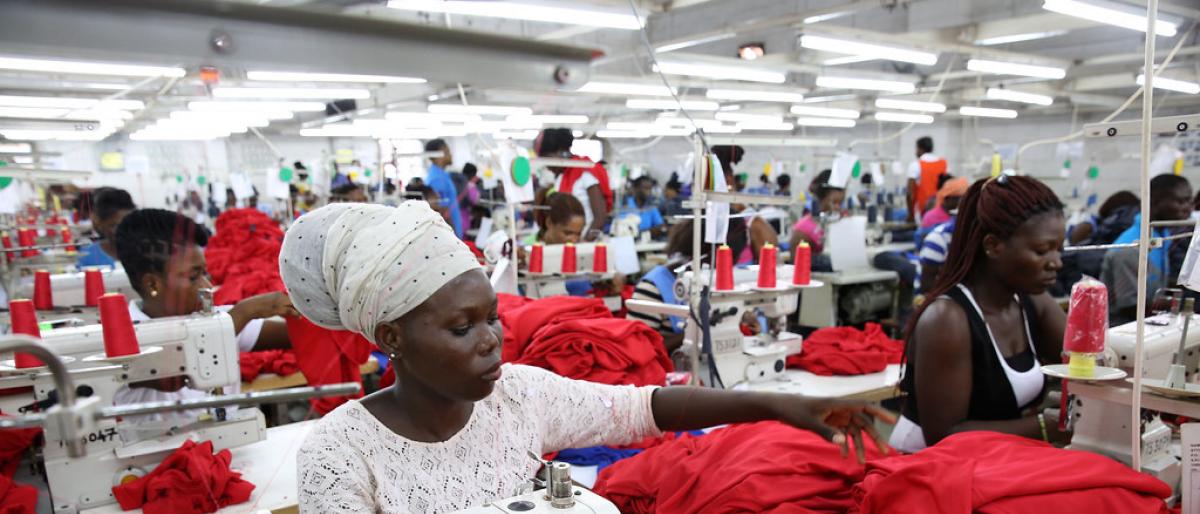
Dignity factory workers producing shirts for overseas clients, in Accra, Ghana

Six Seasons, Four Summers: How to Solve Fashion's High Heat Problem

Read The Report

Cooling investments in Bangladesh’s apparel factories can be commercially viable, with an average payback period of one to four years, according to new research from Cornell University’s Global Labor Institute.
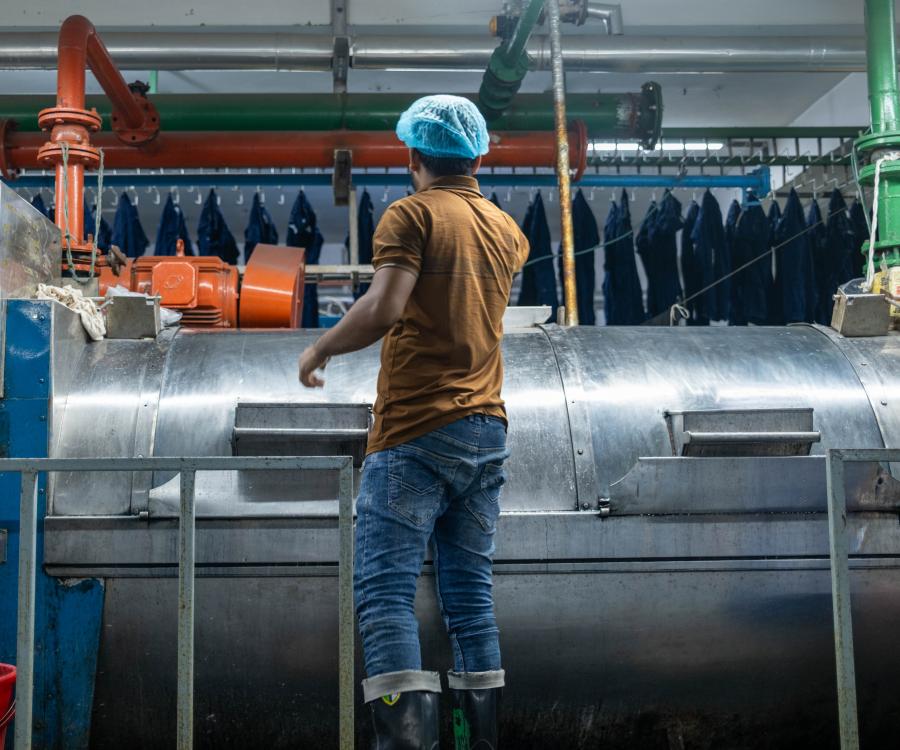
a washing image
Learn More

The Dindigul Agreement to End Gender-based Violence and Harassment

Has It Worked?

This is GLI’s official final assessment of the Dindigul Agreement to End Gender-Based Violence and Harassment at a South Indian apparel factory that could be a model for other factories around the world. 

Large room of garment factory workers
Read more

Measuring Supply Chain Due Diligence

Labor Outcomes Metrics

Read about the Global Labor Institute's new quantitative metrics that measure labor outcomes—actual impacts for workers.

Workers in Bangladesh
Read more about Measuring Supply Chain Due Diligence

Cooling Before It Got Cool: Case Studies in Heat Adaptation in Southeast Asian Factories

Heat Adaptation in Apparel Factories

A new examination of how apparel factories are adapting to extreme heat while investing in cooling, automation, and climate resilience strategies.
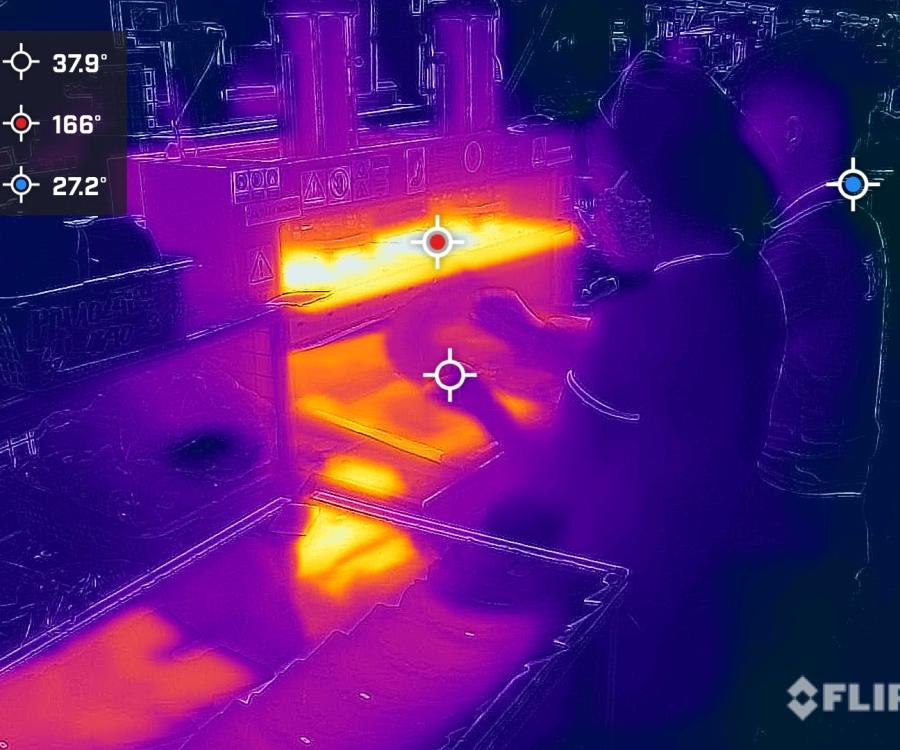
A thermal image of a worker at a station in a garment factory, showing the high heat levels through brighter orange colors at their workstation.
Read more

Global Labor Institute's Climate-Labor Work

GLI Climate-Labor Research

See all of our analyses on the intersection of labor rights and climate change.

GLI climate workers webinar
Read GLI's Climate-Labor Work

Latest Research and Events

GLI Testimony on Trade and Labor for the US International Trade Commission, March 2024

Jason Judd shared findings from recent research and experiences on three under‐explored elements of apparel industry competitiveness: wage‐setting, labor outcomes for workers, and climate vulnerability and adaptation.
ITUC Logo
GLI Testimony on Trade and Labor for the US International Trade Commission, March 2024

GLI 2024 Conference Rolls Up Sleeves to Tackle Global Apparel Production

“The progress of science begins with this sharing of knowledge, expertise and networks, and today we are guests of the Global Labor Institute conference where these three components converge,” said Samira Rafaela at the 2024 GLI Conference on Feb. 2.
Jason Judd at GLI Conference
GLI 2024 Conference Rolls Up Sleeves to Tackle Global Apparel Production

Presentation Angus Bauer, Schroders, and Jason Judd, Cornell University

Higher Ground? Climate breakdown and its impacts for global apparel production.
Icon
Accessibility text goes here and is required
Presentation Angus Bauer, Schroders, and Jason Judd, Cornell University

Presentation Sarosh Kuruvilla, ILR School, Cornell University

Groundhog Day. Or, How do we know what works to improve working conditions and advance labor rights?
Icon
Accessibility text goes here and is required
Presentation Sarosh Kuruvilla, ILR School, Cornell University

Keynote Samira Rafaela, Member of the European Parliament

What do E.U. and U.S. corporate accountability in supply chains look like?
Icon
Accessibility text goes here and is required
Keynote Samira Rafaela, Member of the European Parliament

Didier Reynders Opening Remarks at GLI Conference 2024

Opening Remarks on European Corporate Sustainability Due Diligence. Presentation from the Cornell Global Labor Institute's 2024 Conference: Change or Groundhog Day? What new research tells us about what works in global labor governance.
Icon
Accessibility text goes here and is required
Didier Reynders Opening Remarks at GLI Conference 2024

In The News

Media Mentions

Nike Repeatedly Raised Concerns About Repression in Cambodia. It Expanded Its Factory Workforce There Anyway.

Pro Publica
Brands increasing their orders from Cambodia while raising concerns about labor rights are “obviously mixed messages,” Jason Judd said. “And one message, the purchase order, has a lot more weight than the other. Until those are credibly threatened, the government has no reason to act.”
Nike Repeatedly Raised Concerns About Repression in Cambodia. It Expanded Its Factory Workforce There Anyway.

How Trump’s tariffs could affect Nike and its factory workers

Pro Publica
Jason Judd, executive director of the Global Labor Institute, discusses the impact of tariffs on Nike's workers.
How Trump’s tariffs could affect Nike and its factory workers

Nike says its factory workers earn nearly double the minimum wage. At this Cambodian factory, 1% made that much.

Pro Publica
“Companies have enormous leeway in what they report. It’s enormously difficult to compare within firms across years. Between firms, impossible. Companies are able to pick and choose how they tell their story,” says Jason Judd, executive director of the Global Labor Institute.
Nike says its factory workers earn nearly double the minimum wage. At this Cambodian factory, 1% made that much.

Is It Time For Fashion To Enter Its Heat Pump Era?

Forbes
This piece references new research published by the Global Labor Institute.
Is It Time For Fashion To Enter Its Heat Pump Era?

Cornell researchers call for annual review of Bangladesh RMG wages

The Business Standard
"There is a clear need and room — both political and economic — for an annual wage-setting process in Bangladesh. It's long overdue," says Jason Judd, executive director of ILR's Global Labor Institute.
Cornell researchers call for annual review of Bangladesh RMG wages

Review RMG workers' wages annually, not every five years

The Daily Star
This piece summarizes a study conducted by Jason Judd and ILR's Global Labor Institute that found that, given current inflation rates, garment workers in Bangladesh paid the minimum wage are losing income year after year.
Review RMG workers' wages annually, not every five years