Cornell University mobile logo
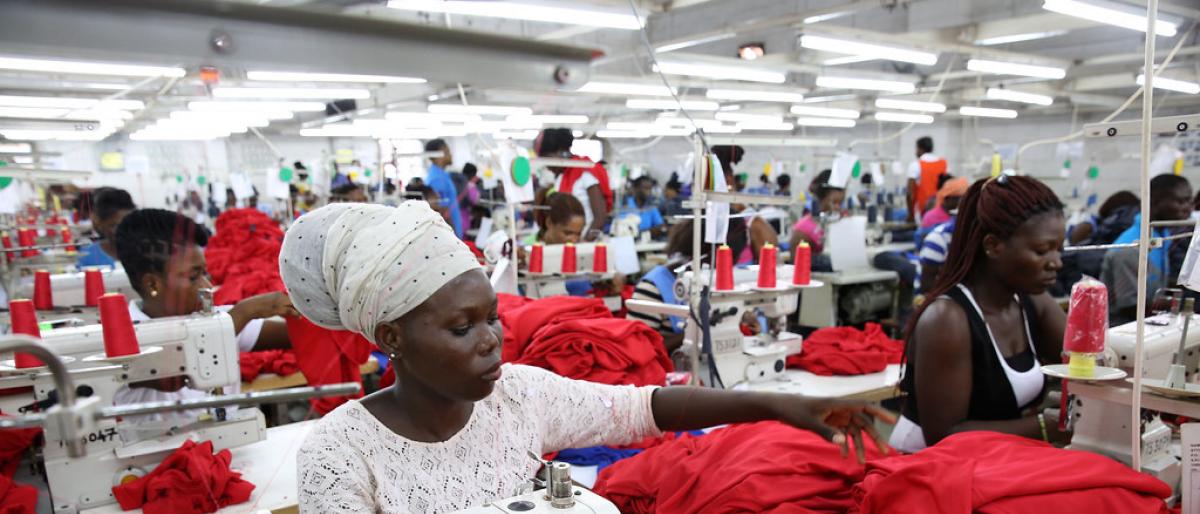
Dignity factory workers producing shirts for overseas clients, in Accra, Ghana

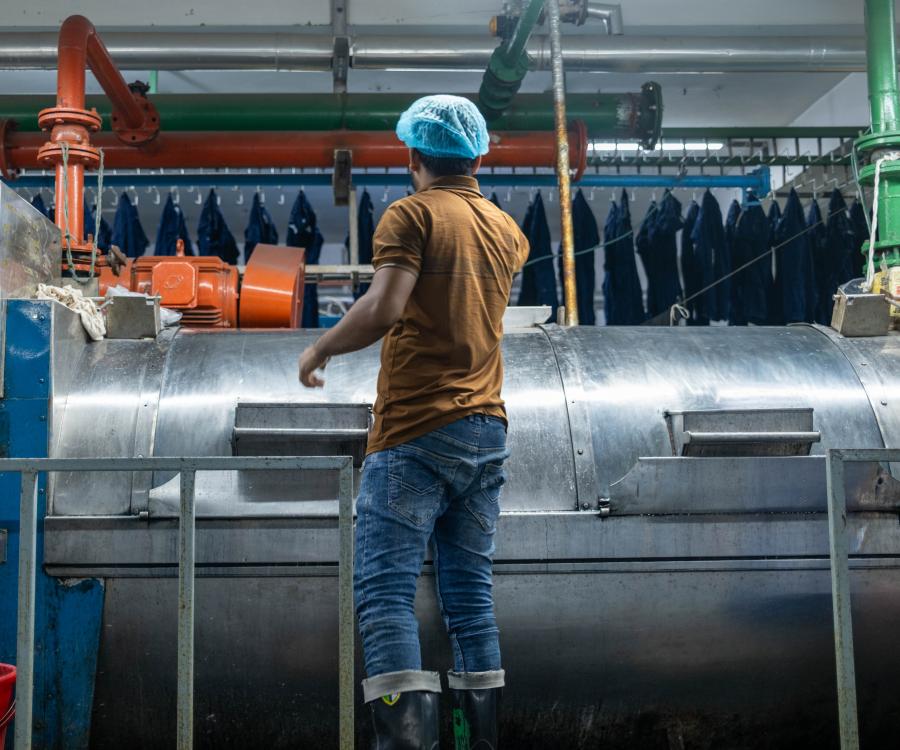
Cooling Before It Got Cool: Case Studies in Heat Adaptation in Southeast Asian Factories

Heat Adaptation in Apparel Factories

A new examination of how apparel factories are adapting to extreme heat while investing in cooling, automation, and climate resilience strategies.

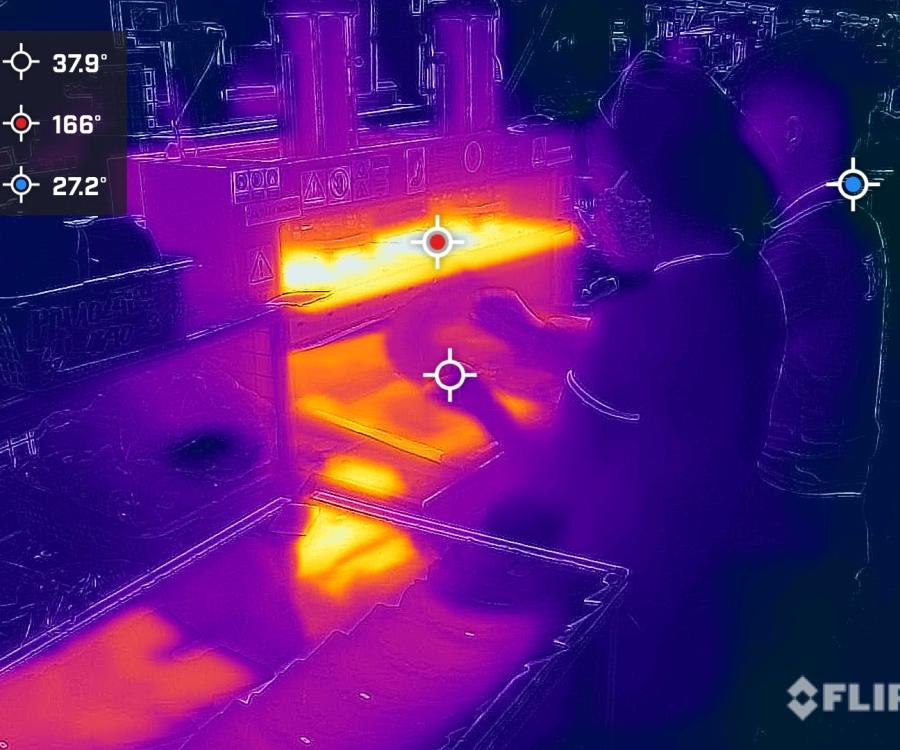
A thermal image of a worker at a station in a garment factory, showing the high heat levels through brighter orange colors at their workstation.
Read more

The Dindigul Agreement to End Gender-based Violence and Harassment

Has It Worked?

This is GLI’s official final assessment of the Dindigul Agreement to End Gender-Based Violence and Harassment at a South Indian apparel factory that could be a model for other factories around the world. 

Large room of garment factory workers
Read more

Global Labor Institute's Climate-Labor Work

GLI Climate-Labor Research

See all of our analyses on the intersection of labor rights and climate change.

GLI climate workers webinar
Read GLI's Climate-Labor Work

Measuring Supply Chain Due Diligence

Labor Outcomes Metrics

Read about the Global Labor Institute's new quantitative metrics that measure labor outcomes—actual impacts for workers.

Workers in Bangladesh
Read more about Measuring Supply Chain Due Diligence

Latest Research and Events

EU Forced Labour Regulations: Visiting Fellow Samira Rafaela Responds to Its Passage

"“This is a proud moment for us all and a big step forward in the fight for global human rights. The Forced Labor Regulation is an ambitious, human-rights-focused law that sets a new standard in the fight against forced labor worldwide."
The European Union flag, with 12 gold stars on a deep blue background
EU Forced Labour Regulations: Visiting Fellow Samira Rafaela Responds to Its Passage

Visiting Fellow Samira Rafaela in the International Labor Rights Case Law Journal

She describes the ways this new law can be used to work to eradicate forced labor in Turkmenistan and its larger place in the new emerging global labor order.
photograph of Samira
Visiting Fellow Samira Rafaela in the International Labor Rights Case Law Journal

Higher Ground? Climate change and apparel production

This brief for apparel brands and manufacturers—based on analyses by the Cornell University Global Labor Institute and U.K.-based fund manager Schroders—looks into fashion’s near future to calculate the possible economic damage caused by high heat, rising humidity, and disruptive flooding.
Flooded buildings and streets
Higher Ground? Climate change and apparel production

Brussels CSDDD Event Readout

Measuring outcomes for supply chain workers is “part and parcel of [European] competitiveness,” says MEP Lara Wolters at a recent GLI, ECCHR, and HRW event
MEP Lara Wolters stands at a lecturn with a Press Club Bussels Europe sign on it, in front of a white banner with black and blue text that says "Press Club Brussels Europe" and "Be Hear. Say it in Brussels" at an event
Brussels CSDDD Event Readout

Event: Corporate Sustainability and Accountability: How is it working for labor rights?

Please join us for this event in Brussels organized by Cornell GLI, ECCHR, and Human Rights watch on due diligence and reporting requirement, like the EU CSDDD and their forced labor ban. Member of European Parliament Lara Wolters will be a part of the two expert panels.
White text saying "Corporate Sustainability and Accountability: How is it working for labor rights?" is on a red-colored image background, and black text on a white background says "October 16, 14:00 - 16:00 CEST, Brussels, Belgium." The logos of ILR Global Labor Institute, ECCHR, and Human Rights Watch are on the bottom of the image.
Event: Corporate Sustainability and Accountability: How is it working for labor rights?

Eliminating Gender-based Violence and Harassment in Global Supply Chains

We present here our analysis of processes and outcomes in year 2 of the operation of the agreement, as a prelude to a more comprehensive evaluation in 2025 when the agreement expires.
Busy factory floor with rows of sewing stations
Eliminating Gender-based Violence and Harassment in Global Supply Chains

In The News

Media Mentions

Bangladesh Sourcing Report Challenges Cheap Hub Narrative

Sustainable Business Magazine
The report “Higher Ground? Report 1: Fashion’s Climate Breakdown and Its Effect for Workers,” which was co-published by ILR’s Global Labor Institute, is referenced in this article about various challenges and solutions for the Bangladesh garment industry.
Bangladesh Sourcing Report Challenges Cheap Hub Narrative

Knitting Industry

A report from the Global Labor Institute, “Higher Ground? Report 1: Fashion’s Climate Breakdown and Its Effect for Workers,” is referenced in this article, which warns that without climate adaptation efforts, Bangladesh’s apparel export earnings could be around 22% lower by 2030 and 68% lower by 2050.
Knitting Industry

Top fashion brands have a supply chain battle against extreme India heat

Economic Times
A report co-created by ILR’s Global Labor Institute, “The Heat is On: How heat stress impacts the apparel industry, jobs, and worker health,” is referenced in this article about problems and solutions related to high temperatures in the garment manufacturing workplace. [Syndicated from Bloomberg]
Top fashion brands have a supply chain battle against extreme India heat

Gap Inc. Expands Human Rights And Gender Equality Efforts

Textile Insights
A report, “The Dindigul Agreement to End Gender-based Violence and Harassment Has It Worked?”, by Sarosh Kuruvilla, ILR professor and academic director of the Global Labor Institute, is referenced in this article.
Gap Inc. Expands Human Rights And Gender Equality Efforts

How Fashion Manufacturers Are Tackling Extreme Heat

Vogue
“You could start easily just by having cheap thermometers and logging to see what your indoor air temperatures and humidity levels are throughout a day and throughout a year,” observes Sarah Krasley, visiting fellow at ILR’s Global Labor Institute, pointing out that inexpensive equipment can provide data about conditions.
How Fashion Manufacturers Are Tackling Extreme Heat

Garment workers face heat risks in Bangladesh as energy cuts curb cooling

The Japan Times
A 2023 study by ILR’s Global Labor Institute is referenced in this article about problems and solutions for cooling garment workers on hot days; the study estimates significant job and income losses for the apparel industry if heat risks are not addressed. [Syndicated from Reuters]
Garment workers face heat risks in Bangladesh as energy cuts curb cooling