Cornell University mobile logo
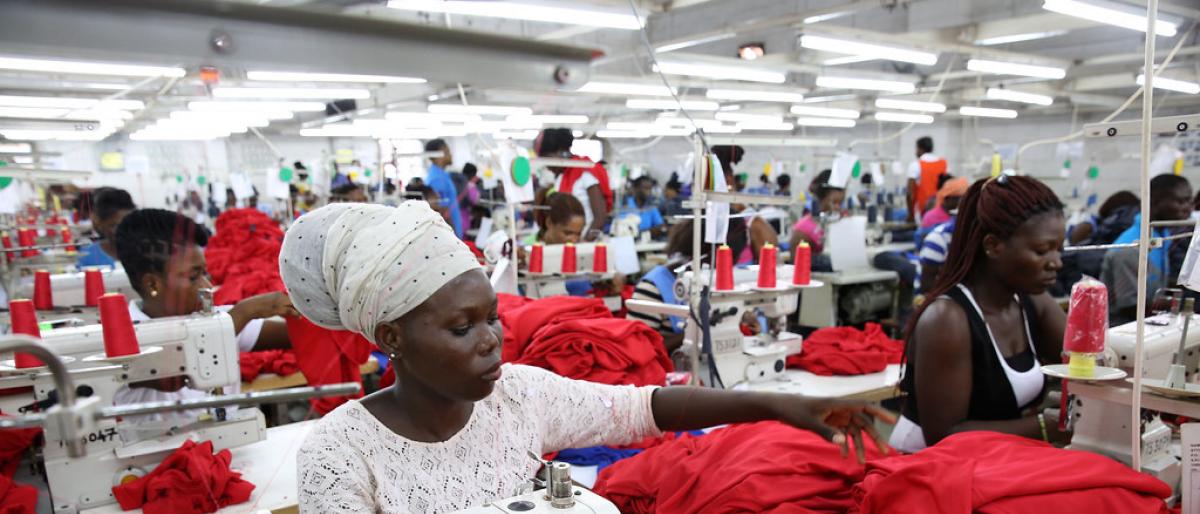
Dignity factory workers producing shirts for overseas clients, in Accra, Ghana

Cooling Before It Got Cool: Case Studies in Heat Adaptation in Southeast Asian Factories

Heat Adaptation in Apparel Factories

A new examination of how apparel factories are adapting to extreme heat while investing in cooling, automation, and climate resilience strategies.

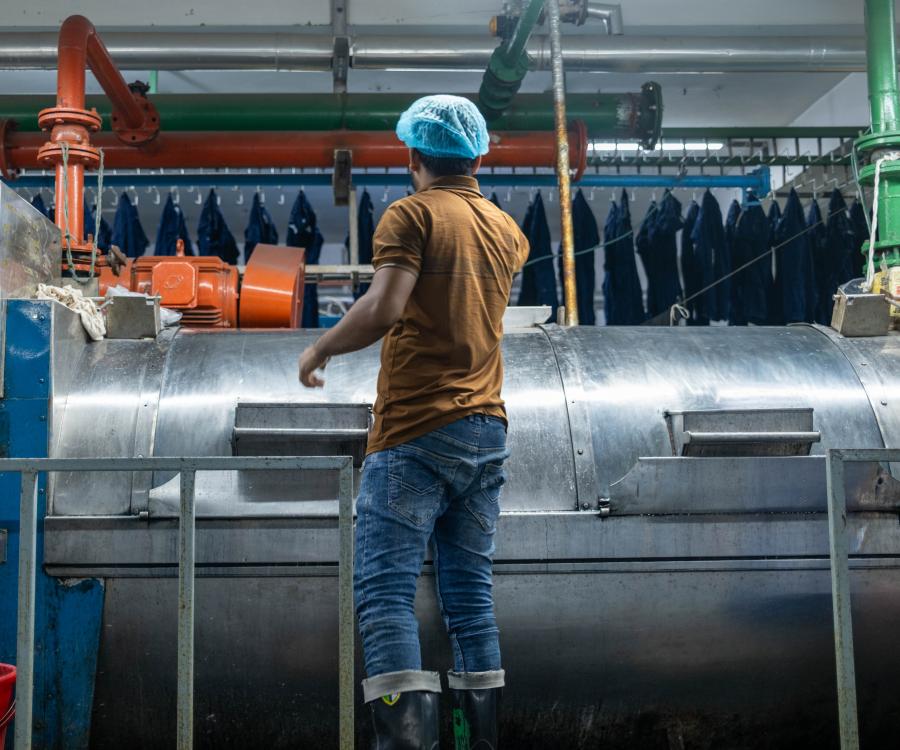
A thermal image of a worker at a station in a garment factory, showing the high heat levels through brighter orange colors at their workstation.
Read more

The Dindigul Agreement to End Gender-based Violence and Harassment

Has It Worked?

This is GLI’s official final assessment of the Dindigul Agreement to End Gender-Based Violence and Harassment at a South Indian apparel factory that could be a model for other factories around the world. 

Large room of garment factory workers
Read more

Global Labor Institute's Climate-Labor Work

GLI Climate-Labor Research

See all of our analyses on the intersection of labor rights and climate change.

GLI climate workers webinar
Read GLI's Climate-Labor Work

Measuring Supply Chain Due Diligence

Labor Outcomes Metrics

Read about the Global Labor Institute's new quantitative metrics that measure labor outcomes—actual impacts for workers.

Workers in Bangladesh
Read more about Measuring Supply Chain Due Diligence

Latest Research and Events

Katalyst Initiative: Human Rights Due Diligence, Making it Mandatory

New Conversations Project expert publishes article for the European University Institute on the movement to implement mandatory human rights due diligence laws
Katalyst Initiative logo, orange text stating katalyst initiative
Katalyst Initiative: Human Rights Due Diligence, Making it Mandatory

Special Issue on Labor Regulation in Global Supply Chains in the ILR Review August 2020 issue

ILR Review, August 2020, is a special Issue on Labor Relations in Global Supply Chains
ILR Review logo. Blue text on globe watermark
Special Issue on Labor Regulation in Global Supply Chains in the ILR Review August 2020 issue

Jason Judd on Fair Fashion Think Tank's Podcast on COVID-19 and the Apparel Industry

NCP Executive Director Jason Judd participates in COVID-19 podcast with the Fair Fashion Think Tank
Fair Fashion Think Tank
Jason Judd on Fair Fashion Think Tank's Podcast on COVID-19 and the Apparel Industry

The Conversation: 'Why apparel brands' efforts to police their supply chains aren't working'

In The Conversation, NCP Executive Director Jason Judd and Academic Director Sarosh Kuruvilla share new research on private regulation in the global apparel trade and the COVID-19 crisis.
Red speech bubble, logo for The Conversation
The Conversation: 'Why apparel brands' efforts to police their supply chains aren't working'

In The News

Media Mentions

Nike says its factory workers earn nearly double the minimum wage. At this Cambodian factory, 1% made that much.

Pro Publica
“Companies have enormous leeway in what they report. It’s enormously difficult to compare within firms across years. Between firms, impossible. Companies are able to pick and choose how they tell their story,” says Jason Judd, executive director of the Global Labor Institute.
Nike says its factory workers earn nearly double the minimum wage. At this Cambodian factory, 1% made that much.

Is It Time For Fashion To Enter Its Heat Pump Era?

Forbes
This piece references new research published by the Global Labor Institute.
Is It Time For Fashion To Enter Its Heat Pump Era?

Cornell researchers call for annual review of Bangladesh RMG wages

The Business Standard
"There is a clear need and room — both political and economic — for an annual wage-setting process in Bangladesh. It's long overdue," says Jason Judd, executive director of ILR's Global Labor Institute.
Cornell researchers call for annual review of Bangladesh RMG wages

Review RMG workers' wages annually, not every five years

The Daily Star
This piece summarizes a study conducted by Jason Judd and ILR's Global Labor Institute that found that, given current inflation rates, garment workers in Bangladesh paid the minimum wage are losing income year after year.
Review RMG workers' wages annually, not every five years

The Policy Ask with Jason Judd: “The UK’s Modern Slavery Act is not fit for purpose”

The New Statesman
Q&A featuring Jason Judd, the executive director of the Cornell’s Global Labor Institute, discussing international workers' rights, President Lula, and being "less fox, more hedgehog."
The Policy Ask with Jason Judd: “The UK’s Modern Slavery Act is not fit for purpose”