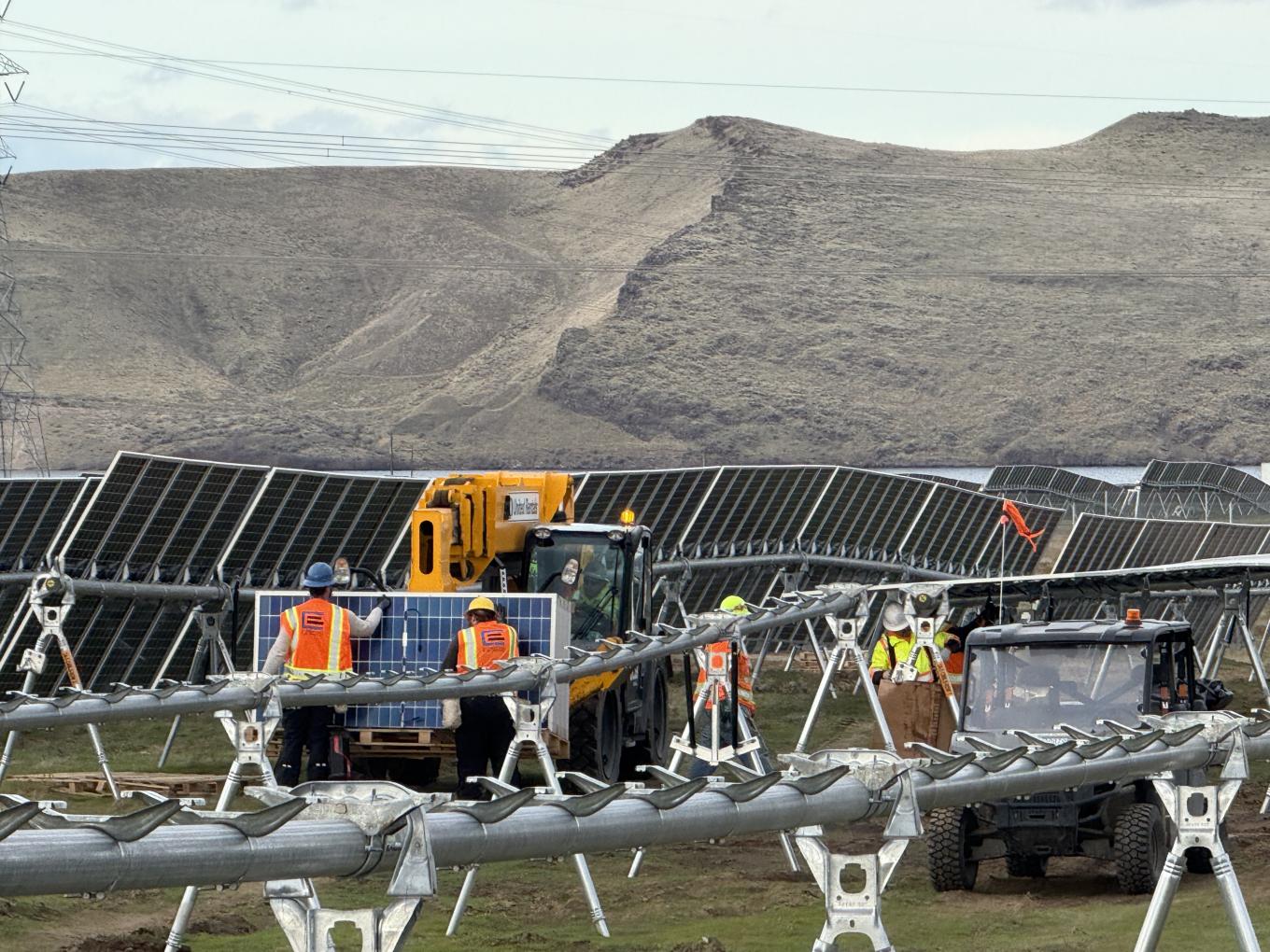

This report, created hand-in-hand with the state’s building trades, provides policy pathways to tackle the climate and inequality crises together by building clean infrastructure, reducing emissions, and bolstering high-quality union jobs accessible to all.

Quick Takeaways
- Oregon has some of the highest renewable energy potential in the country and the third-highest geothermal potential among all 50 states.
- Inefficient, ineffective siting and permitting processes are among the biggest barriers to Oregon's green transition, largely due to the role of the Bonneville Power Authority, which was recently downsized by the Trump Administration, as the state's de facto transmission authority.
- Unions will be essential to building out the state's clean energy infrastructure in a safe and timely manner, while delivering benefits such as reduced income, racial, and gender inequality and improved productivity.
- Oregon should build on its existing contractor and labor standards in the green economy, won through landmark legislation such as H.B. 3031 (2023), to create one of the most robust union energy transitions in the country.
- Oregon's green transition offers the opportunity to address housing affordability through strengthened labor standards, innovative models of public ownership and beyond.
36
12.8
200,000+
$10M
89%
Oregon’s workers and families are already bearing the brunt of the climate crisis, and climate impacts, such as extreme heat, wildfires, and drought, exacerbate the pre-existing affordability crisis by threatening Oregonians’ incomes, homes, and health. Investing in solutions to combat the crisis has the potential to create hundreds of thousands of jobs. Adopting gold-star labor standards on this work can help to ensure that these jobs are high-quality, union jobs with the potential to not only meet dramatically increasing workforce needs, but do so safely with a well-trained, diverse pipeline of workers, while also reducing poverty, increasing productivity, and generating more revenue for public investment.

Across 18 recommendations, this report envisions a new way forward for Oregon in tackling the climate and inequality crises. These recommendations span the breadth of issues impacting everyday working Oregonians in the wake of the climate crisis, from access to affordable clean energy and housing, to strengthened protections for workers most vulnerable to climate impacts, to reduced emissions from public and industrial infrastructure, and more.