Cornell University mobile logo
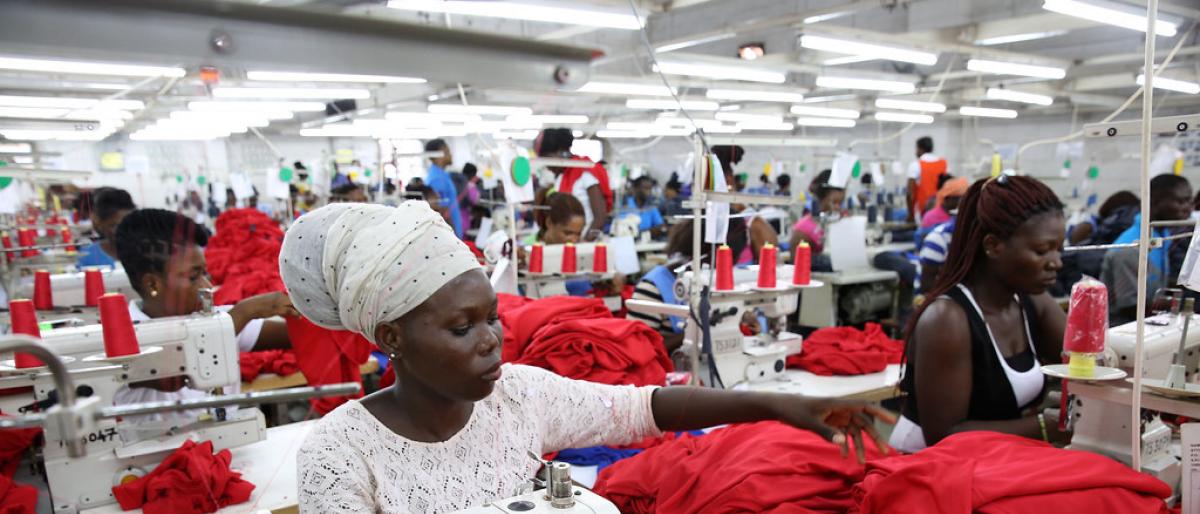
Dignity factory workers producing shirts for overseas clients, in Accra, Ghana

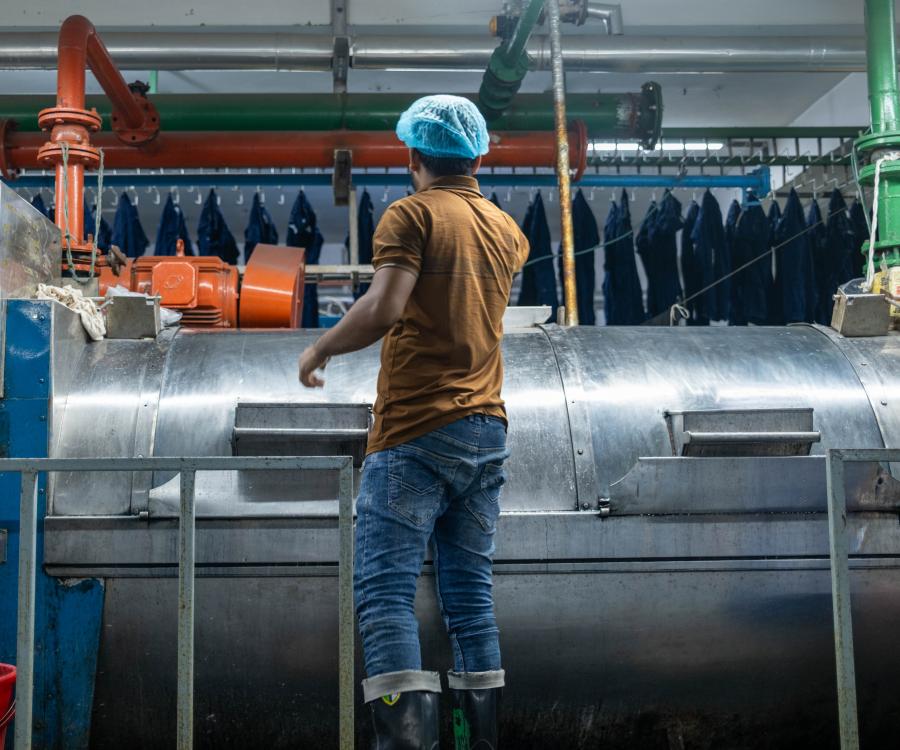
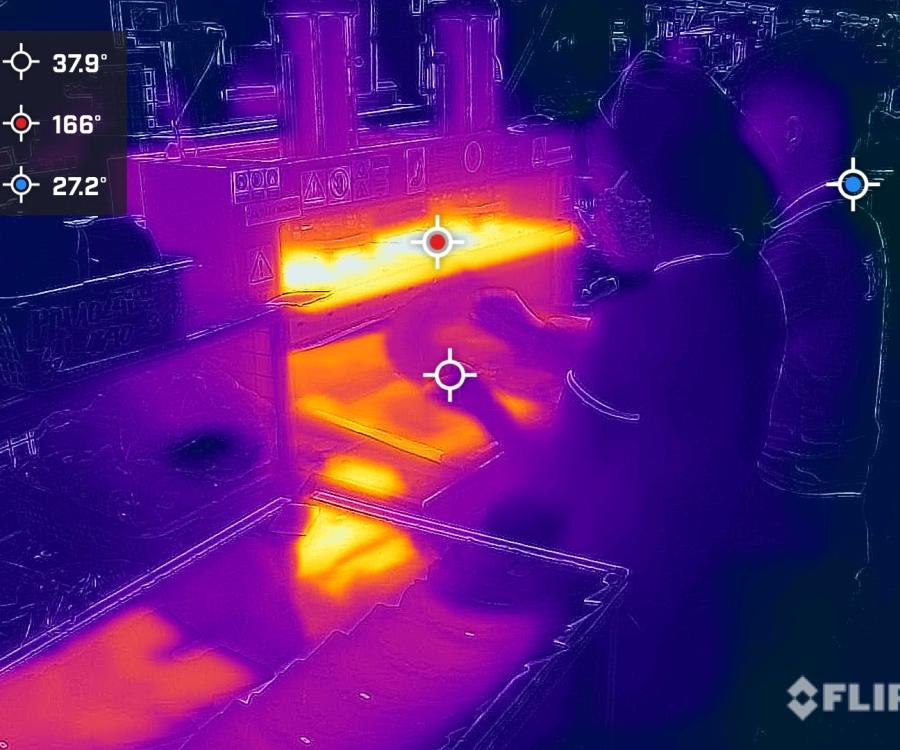
Hot Air: What works to combat extreme heat in apparel production in Asia?

Join us in Bangkok, Thailand at Thammasat Business School as we present new analyses and responses to heat’s impacts for workers, manufacturers, apparel brands and governments in South and Southeast Asia.
Workers walking across a precarious bridge over scant water
Hot Air: What works to combat extreme heat in apparel production in Asia?

The Dindigul Agreement to End Gender-based Violence and Harassment

Has It Worked?

This is GLI’s official final assessment of the Dindigul Agreement to End Gender-Based Violence and Harassment at a South Indian apparel factory that could be a model for other factories around the world. 

Large room of garment factory workers
Read more

Warming to the Idea? Labor Governance and Extreme Heat in Apparel Production

Impacts of Climate Change on Global Apparel Production

How have weather conditions already started to affect the apparel industry and how should the industry adapt? This policy brief builds upon past GLI research and our report co-produced with the IFC and the ILO's Better Work program to present new findings on the impacts of extreme heat and the adaptation responses from employers, workers, their governments and buyers in the global apparel and footwear industry. See our new research here.

Cambodian workers are seen in a local footwear manufacturing plant, with containers of materials in multiple colors sitting in front of workers wearing bandanas and many wearing masks as well.
Read the full report

Measuring Supply Chain Due Diligence

Labor Outcomes Metrics

Read about the Global Labor Institute's new quantitative metrics that measure labor outcomes—actual impacts for workers.

Workers in Bangladesh
Read more about Measuring Supply Chain Due Diligence

Latest Research and Events

Visiting Fellow Samira Rafaela in the International Labor Rights Case Law Journal

She describes the ways this new law can be used to work to eradicate forced labor in Turkmenistan and its larger place in the new emerging global labor order.
photograph of Samira
Visiting Fellow Samira Rafaela in the International Labor Rights Case Law Journal

Higher Ground? Climate change and apparel production

This brief for apparel brands and manufacturers—based on analyses by the Cornell University Global Labor Institute and U.K.-based fund manager Schroders—looks into fashion’s near future to calculate the possible economic damage caused by high heat, rising humidity, and disruptive flooding.
Flooded buildings and streets
Higher Ground? Climate change and apparel production

Brussels CSDDD Event Readout

Measuring outcomes for supply chain workers is “part and parcel of [European] competitiveness,” says MEP Lara Wolters at a recent GLI, ECCHR, and HRW event
MEP Lara Wolters stands at a lecturn with a Press Club Bussels Europe sign on it, in front of a white banner with black and blue text that says "Press Club Brussels Europe" and "Be Hear. Say it in Brussels" at an event
Brussels CSDDD Event Readout

Event: Corporate Sustainability and Accountability: How is it working for labor rights?

Please join us for this event in Brussels organized by Cornell GLI, ECCHR, and Human Rights watch on due diligence and reporting requirement, like the EU CSDDD and their forced labor ban. Member of European Parliament Lara Wolters will be a part of the two expert panels.
White text saying "Corporate Sustainability and Accountability: How is it working for labor rights?" is on a red-colored image background, and black text on a white background says "October 16, 14:00 - 16:00 CEST, Brussels, Belgium." The logos of ILR Global Labor Institute, ECCHR, and Human Rights Watch are on the bottom of the image.
Event: Corporate Sustainability and Accountability: How is it working for labor rights?

Eliminating Gender-based Violence and Harassment in Global Supply Chains

We present here our analysis of processes and outcomes in year 2 of the operation of the agreement, as a prelude to a more comprehensive evaluation in 2025 when the agreement expires.
Busy factory floor with rows of sewing stations
Eliminating Gender-based Violence and Harassment in Global Supply Chains

Eliminating Gender-based Violence and Harassment in Global Supply Chains

We present here our analysis of processes and outcomes in year 2 of the operation of the agreement, as a prelude to a more comprehensive evaluation in 2025 when the agreement expires.
Busy factory floor with rows of sewing stations
Eliminating Gender-based Violence and Harassment in Global Supply Chains

In The News

Media Mentions

The COP30 Deal Won’t Solve Fashion’s Climate Problems

The Business of Fashion News
Jason Judd, executive director of the Global Labor Institute, recommends that the fashion industry should “get their act together” with regard to heat and climate change, “because workers are suffering from heat stress and, in turn, so are margins.”
The COP30 Deal Won’t Solve Fashion’s Climate Problems

Do the Labor Provisions in Trump’s Southeast Asian Trade Deals Have a Point?

Sourcing Journal
Kelly Fay Rodriguez, visiting lecturer at ILR’s Global Labor Institute and former special representative for international affairs at the Department of State, analyzes the importance of labor provisions in trade agreements and discusses how these provisions can best be enforced.
Do the Labor Provisions in Trump’s Southeast Asian Trade Deals Have a Point?

Resilient Threads: Weaving A Climate-Ready, Regenerative Future for Cotton in India

Observer Research Foundation
A study by ILR’s Global Labor Institute is cited in a discussion about climate change causing problems for the cotton supply chain used by Asia’s fashion sector.
Resilient Threads: Weaving A Climate-Ready, Regenerative Future for Cotton in India

Hot Air: How will fashion adapt to accelerating climate change?

Impacts of Climate Change on Global Apparel Production

How have weather conditions already changed in major apparel production centers? In this follow-up to our Higher Ground? reports, we looked at the past twenty years of weather data in our 23 focus cities to try and find that out, as well as ask how workers, brands and retailers, manufacturers and their governments should react and adapt to our warming future in a world of corporate due diligence. Read our findings here.

A flooded area near to Phnom Penh, Cambodia
/global-labor-institute/research-0/gli-hot-air

Higher Ground? Fashion’s Climate Breakdown

Impacts of climate change on global apparel production

In partnership with Schroders, we report the impacts of climate change on global apparel production. In our first report, we track climate change impacts at the global, national, and factory levels. We map fashion's climate vulnerabilities across production centers, and estimate future economic damages from extreme heat and flooding. Our second report examines company-level climate risk, cost, and financing for adaption and just resilience.

Textile workers in Ho Chi Minh City, Vietnam
Read the reports

Change or Groundhog Day? What new research tells us about what works in global labor governance

2024 GLI Conference Highlights

Samira Rafaela
View more information

Stay Connected

Join the Global Labor Institute mailing list.