
Michigan Unions Announce New Coalition to Advance Worker-Centered Clean Energy Transition
Michigan’s unions are ready to build an equitable clean energy economy to confront climate change.
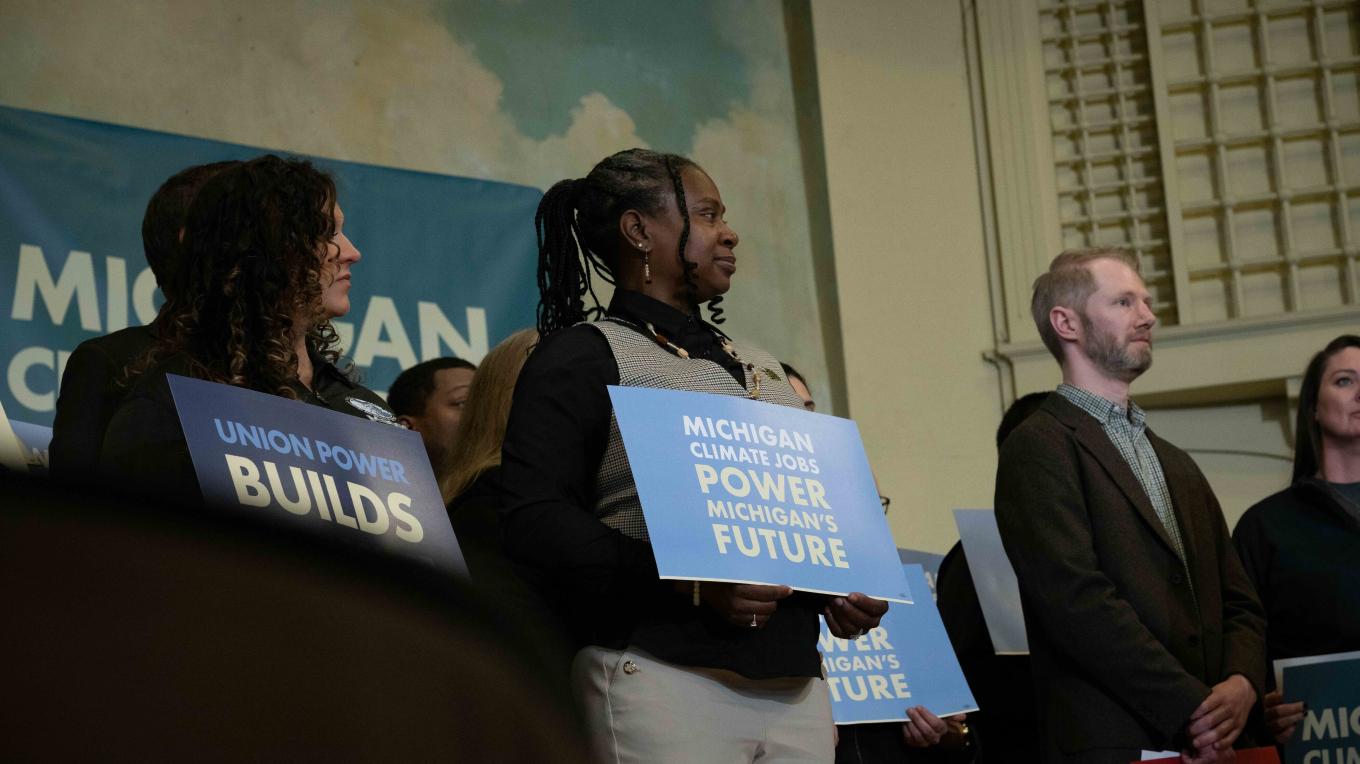
This was the message from Tuesday’s launch of the Michigan Climate Jobs coalition, a group of nine unions across the state coming together to advance worker-led clean energy policy. The organization hosted its official kickoff in Lansing, joined by union members, legislators, and local environmental organizations, to formally announce its goals of reducing state emissions, creating high-quality jobs, and addressing economic inequality.
The launch corresponded with the release of the Michigan Climate Jobs Blueprint for an Equitable Clean Energy Future by the Cornell ILR Climate Jobs Institute (CJI). Developed in partnership with the coalition’s unions, this report serves as a roadmap for the coalition, outlining seventeen policy recommendations across the energy, buildings, transportation, and resilience sectors to reduce emissions and create union jobs. It also includes strategies for union-led workforce development for the next generation of clean energy workers, as well as estimates of the jobs, emissions, and economic impact of each recommendation.
“If reaffirmed, vigorously followed, and pushed further in certain cases, Michigan’s clean energy laws, standards, and regulations can translate into more clean energy projects, with higher wages, and better benefits for working people,” said Grennan Milliken, a Research Associate with CJI who served as lead author of the report alongside Ben Harper. Milliken noted that implementing the report’s clean energy recommendations alone could create 50,000 direct jobs through 2030, including over 10,000 construction trades jobs.
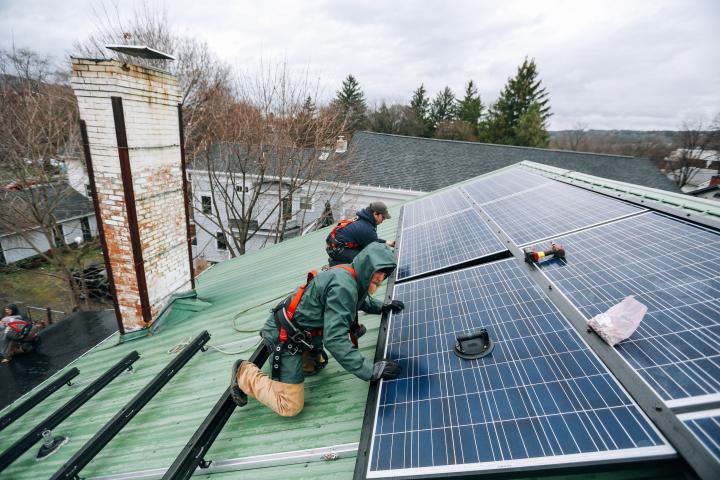
The event also included remarks from workers who have already seen the benefits of union-built clean energy. Armando Ramos, Business Agent of LiUNA Local 1098, said that clean energy jobs like solar provide dignified jobs for their members, including good pay, good healthcare, good retirement, and security.
Natlia Craig of the Operating Engineers Local 324 discussed how her union apprenticeship helped her build a career that provides for her family. “These projects don’t just produce energy,” said Craig, “they produce long-term skilled careers. Careers that allow people like me to stay in the community, raise families, and build a life of dignity and security.”
This launch comes at a critical time for advancing Michigan’s climate policy. The repeal of many federal clean energy tax credits creates challenges for clean energy, while Michiganders are facing increasing electricity rates and some of the worst power outages in the country–a problem being exacerbated by the effects of climate change. CJI’s report recommendations focus on how to accelerate climate progress while addressing affordability and reliability, and on meeting skyrocketing electricity demand.
Michigan Climate Jobs members are ready to hit the ground running to take on these challenges. Ryan Bennet, chair of the coalition and president of the Michigan Pipe Trades Association, announced the coalition’s first two priority campaigns. One will focus on accelerating the state’s clean energy buildout with union labor. With state utilities planning large amounts of renewable energy and storage, the coalition will work to fully implement and enforce strong labor standards to ensure these projects create good-paying union jobs.
Another priority for the coalition will be modernizing and decarbonizing schools. Terrence Martin, president of AFT Michigan, discussed the need for upgrades across the state to improve conditions for students, teachers, and staff. Leveraging data from two state-led studies on public school facilities released in 2025, the coalition will partner with the Michigan Alliance for Student Opportunity to pursue a state grant for supporting school districts in implementing energy efficiency upgrades. “AFT Michigan and the Michigan Education Association are dedicated to being leaders in Michigan Climate Jobs because we believe we need to transform and modernize our public schools, making them safe and healthy for Michigan’s children, while also helping our public schools save money on energy costs over the long term,” Martin said.
With union leadership, coalition leaders emphasized, Michigan can make sure its climate progress supports workers and communities. “We will build clean energy with good-paying union jobs that create real pathways into the middle class and union careers for women, workers of color, and all Michiganders,” said Bennet. “Workers are builders of solutions, not casualties of change.”