


CJI Releases “Blueprint for Labor-Led Residential Decarbonization in New York”
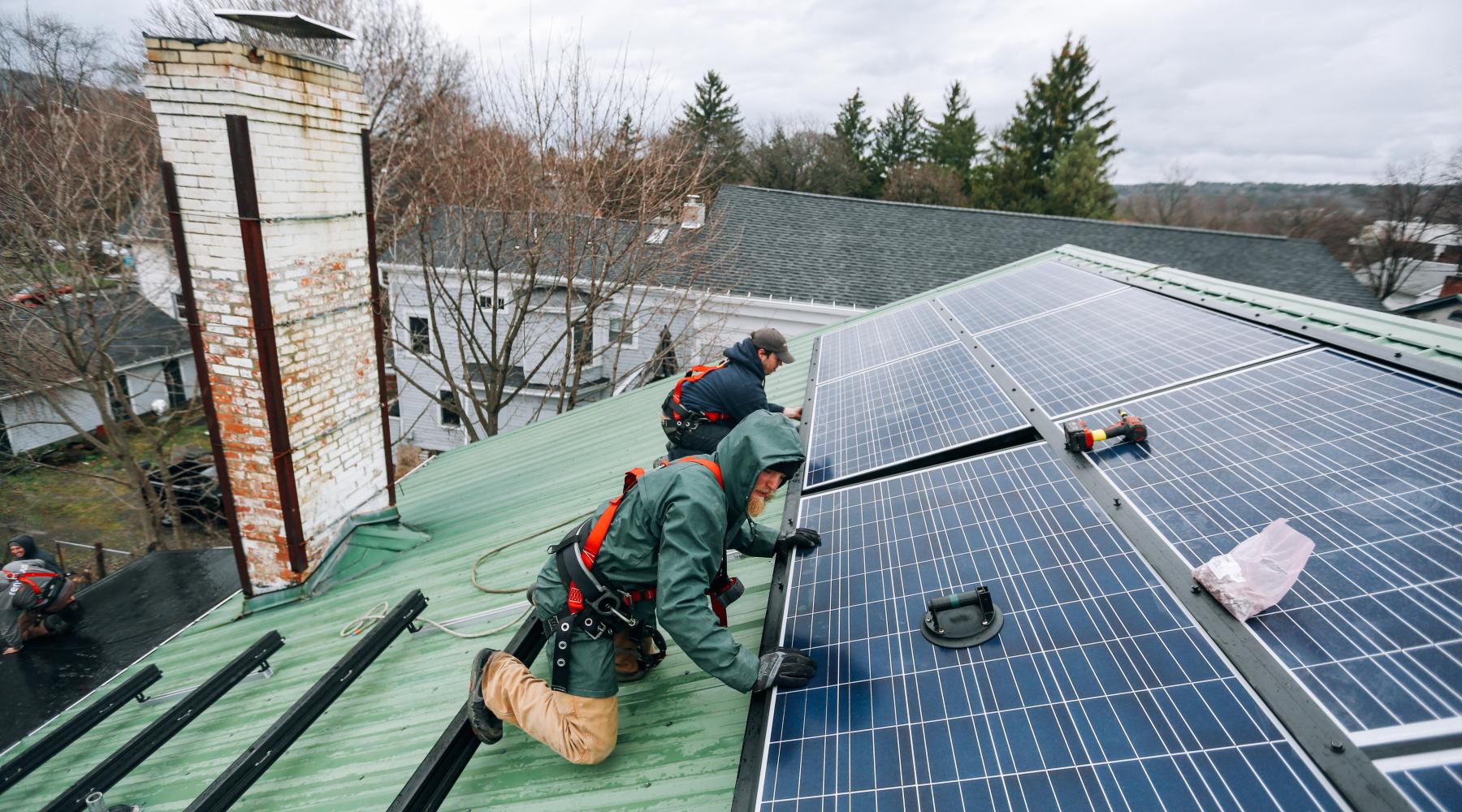
New York state could catalyze a widespread clean energy transition and address its affordability issues by leveraging one of its most important resources – homes – according to a new report from the Climate Jobs Institute at Cornell University.
“The disaggregated and piecemeal approach with which we’ve done residential decarbonization work is not working and is creating a lack of safety protections for workers,” said Lynda Nguyen, the report’s lead author. “We need to think about how we’re doing this work – rehabbing as many homes as we can while also creating pathways out of poverty into the middle class.”
“Bringing Unions Home: A Blueprint for Labor-Led Residential Decarbonization in New York,” was launched during an in-person event held on Sept. 22 at the ILR NYC Conference Center.
The panel of speakers included:
- Harry Bronson, New York State assemblymember, District 138
- Mete Coban MBE, deputy mayor of London for environment and energy
- Brendan Griffith, president, New York City Central Labor Council, AFL-CIO
- Katie Schwamb, managing director, Building Energy Exchange
- Audrey Zibelman, chair, New York State Energy Research and Development Authority
- Lynda Nguyen, climate jobs associate, Climate Jobs Institute
- Reyna Cohen, research and policy development associate, Climate Jobs Institute
- Grennan J. Milliken, climate jobs associate, Climate Jobs Institute
- Lara Skinner, executive director, Climate Jobs Institute
- Zach Cunningham, assistant director of labor education, Climate Jobs Institute
The authors of the report found that the average age of existing residential buildings in New York is 65 years, and that more than half the three million residential buildings rely on fossil fuels. They argue that the current suite of building upgrade programs is insufficient to meet the needs of the state’s aging housing stock, while the promise of high-quality union construction careers has eroded over the last several decades.
They suggest that the state must implement a comprehensive, worker-centered strategy to address the inequities in affordability, deferred maintenance and labor issues in its private housing industry.
By doing so, the state could meet the dual needs of scaled emissions reduction and energy efficiency by creating good union jobs.


