CJI Hosts Launch of New Climate and Community Institute Report
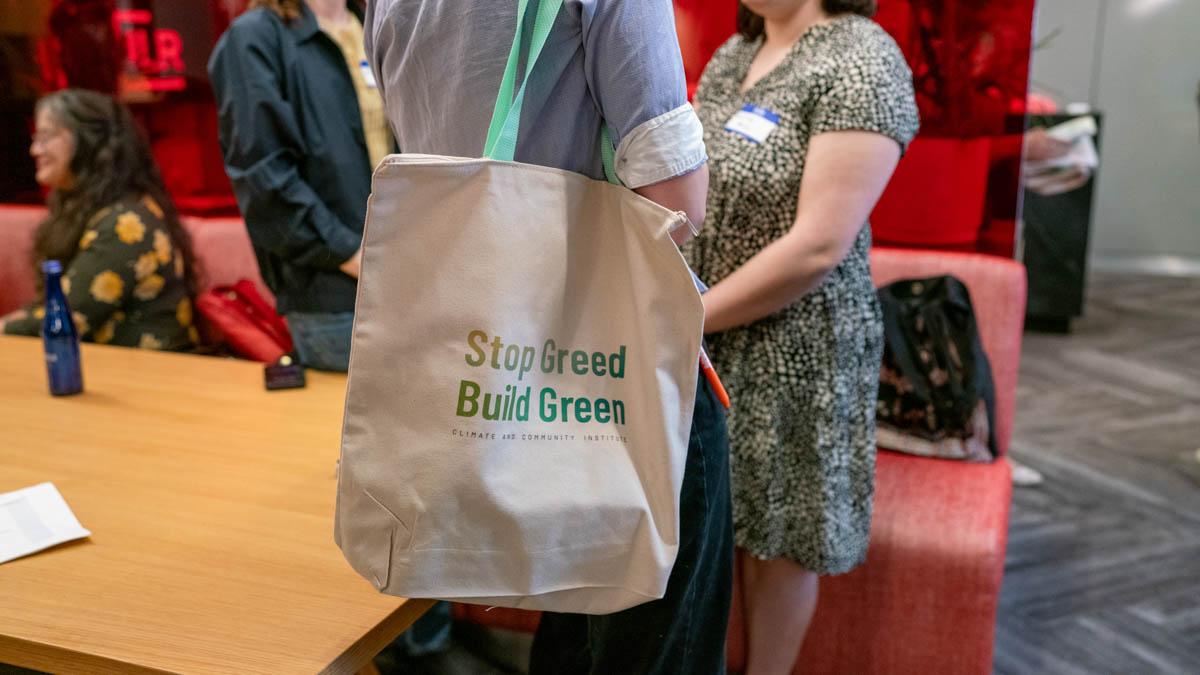
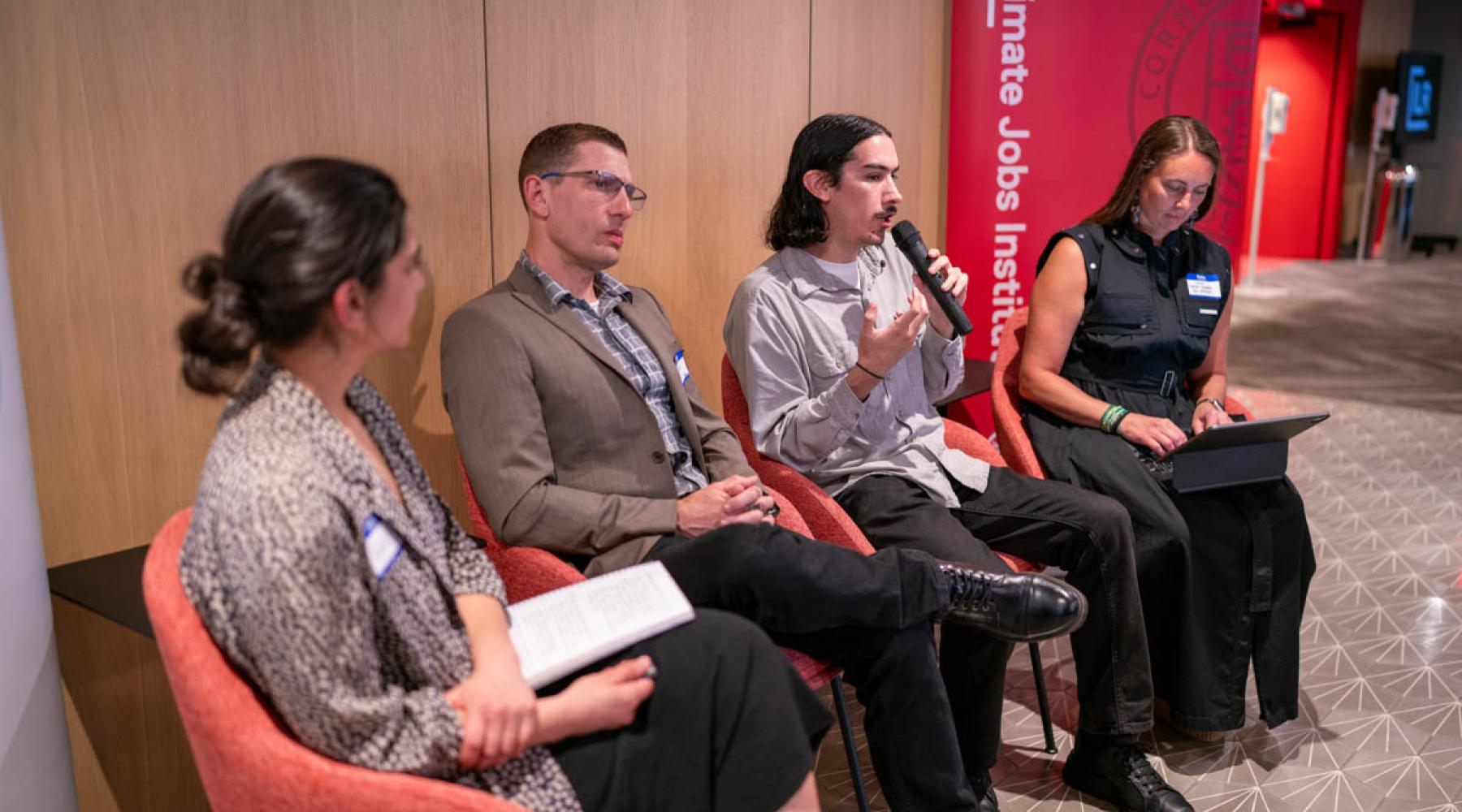
On April 15, the Climate Jobs Institute (CJI) was joined by the Climate and Community Institute (CCI) and other climate and labor partners to announce the launch of CCI’s Stop Greed, Build Green agenda. Hosted in CJI’s New York City office, the event brought together panelists and guests to discuss CCI’s report and strategies for building a working class climate movement.
CCI’s new agenda centers on “Green Economic Populism,” a framework that links the climate and affordability crises. The report argues that focusing on tangible solutions that lower costs, reinvigorate public investment, and drive a clean energy transformation can mobilize a broad working class base, citing a 2026 poll showing that 70 percent of voters think economic policy can lower costs while directly reducing emissions.
In her keynote address, NYC Chief Climate Officer Louise Yeung described how the 2025 election of Zohran Mamdani as mayor exemplifies the power of focusing on cost-of-living issues for everyday people. “The mayor inspired New Yorkers by putting affordability front and center in his administration,” said Yeung, “and that extends to how we think about climate solutions. I really want to make sure we are imbuing all our work with that value.”
Centering workers and creating good union jobs is a cornerstone of Green Economic Populism. A white paper released alongside the agenda argues that the program can help reverse rising inequality and declining unionization by ensuring that green jobs are good jobs, expanding workers’ rights to organize, and directing public investment toward sectors such as public transit, social housing, and renewable energy.
Panelists at CCI’s launch event explored the potential to connect union job creation to a broader economic and clean energy transformation. CJI Director Lara Skinner discussed the institute’s approach to creating clean energy jobs, ensuring they are high-quality union jobs while expanding pathways into these family-sustaining careers. Skinner highlighted CJI’s recent partnership with the Apprenticeship Readiness Collective, Climate Jobs New York, and UPROSE to launch the first climate and clean energy cohort through the Pathways to Apprenticeship Justice Impacted Communities program, which recruits and prepares disadvantaged communities for union apprenticeship opportunities in the clean energy economy.
Gustavo Gordillo, co-chair of the New York City Democratic Socialists of America, described the potential for local programs to address both affordability and job creation through initiatives such as union-built affordable housing, expanded fast and free bus service, and procurement of domestically manufactured electric vehicles for the city’s fleet. He argued that implementing these programs effectively could demonstrate how a working class climate agenda can deliver both good jobs and affordability, while providing a model for other localities and future federal programs.
Another major theme among the panelists was the urgency of both the climate and affordability crises. CCI Research Director Patrick Bigger noted that a shortcoming of previous federal climate programs, such the Inflation Reduction Act, is that people did not see immediate material impacts in their lives. Bigger emphasized that meeting this urgency requires both short- and long-term solutions, including “immediate relief from the economic crisis, strong regulations to reign in the villains, and in the background, massive public investment and a stronger public sector in order to make it all happen.”
Throughout the event, panelists argued that climate action and affordability are deeply connected, and that building broad public support for the clean energy transition will require demonstrating clear economic benefits for working people.
“This is a political power problem, and we need to build a broad based powerful movement that can move the agenda we want,” said Skinner. “That’s what is exciting about this moment.”