Invisible Labor Discussion on Black Women in the Workplace in Erie County
Cornell ILR Buffalo Co-Lab sponsored by The Erie County Commission on the Status of Women and the Economic Development & Upward Mobility Coalition releases new report.
More than one in four Black women in Erie County live in poverty, compared with about one in 10 white women, according to a new report from the Cornell University School of Industrial and Labor Relations.
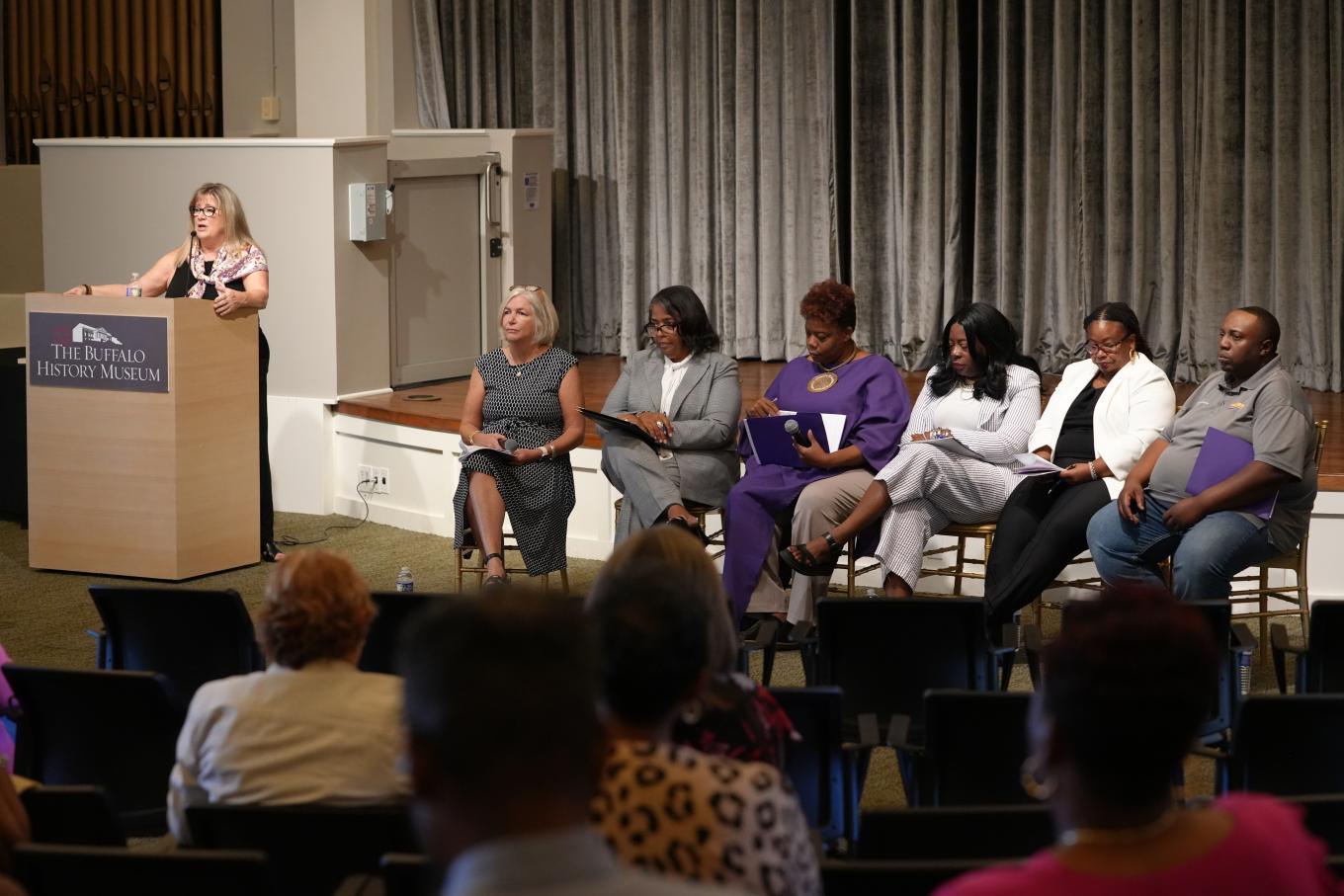
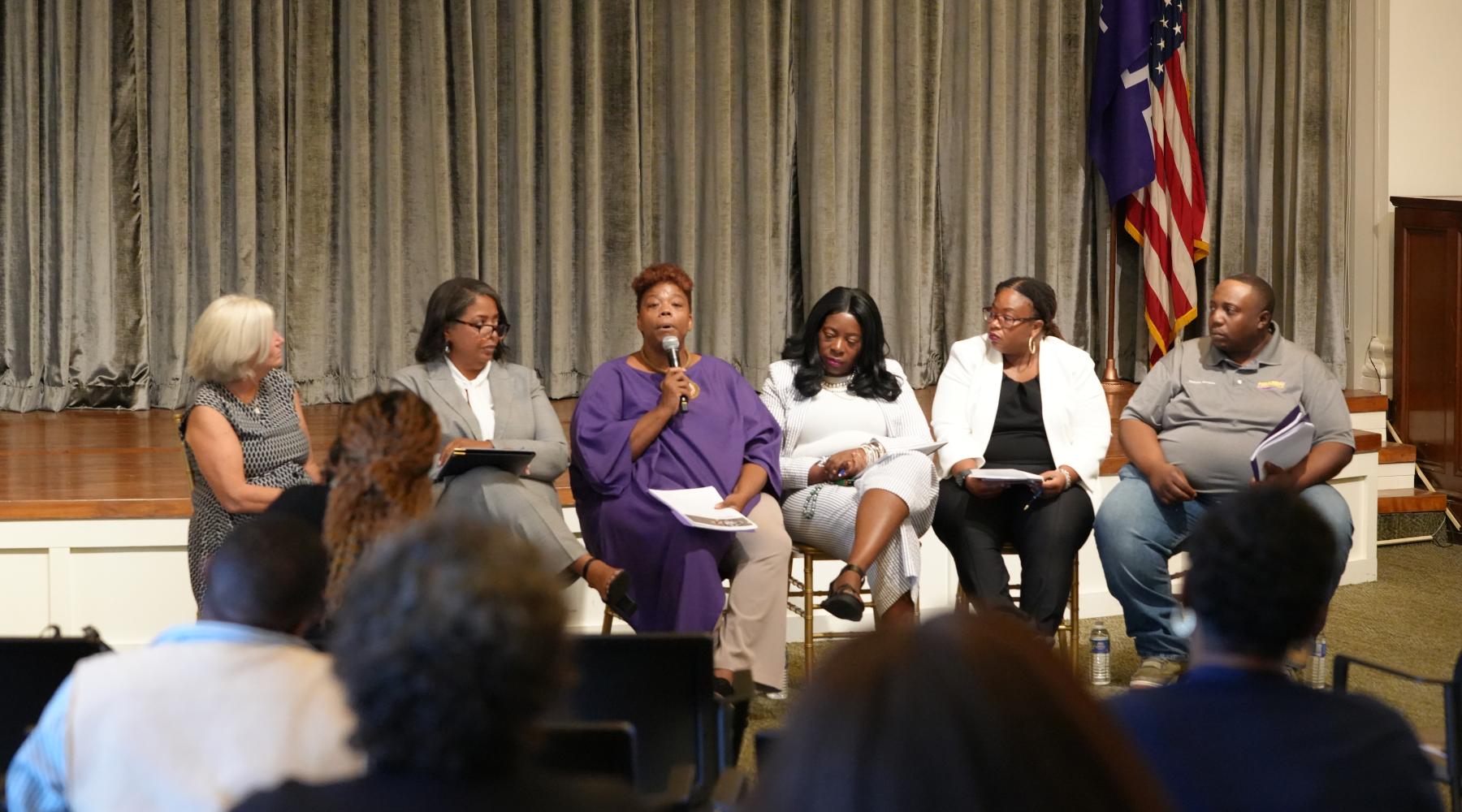
“Concrete Ceilings and Folding Chairs: Workplace Barriers and Agency Among Black Women Professionals, was the focus of a September 10 panel discussion at the Buffalo History Museum. Aptly named, the report examines the economic challenges – including workplace barriers, career challenges and agency – among Black women professionals in Erie County. For researchers, sponsors, panelists, and all in attendance, the discussion represented a first step in a larger effort to move beyond documenting barriers toward identifying specific changes to improve economic opportunity and workplace conditions for Black women in Erie County and beyond.
“Cornell plays such a valuable role in what we do in Erie County,” said Erie County Deputy County Executive Lisa Chimera. “The data they provide, including their recent child care report, and the report they're sharing today – this information is what should guide our work in policy.”
The report was sponsored by The Erie County Commission on the Status of Women and the Economic Development & Upward Mobility Coalition and grew out of earlier research on the gender wage gap, where researchers found that, in addition to pay gaps, lack of political and economic power, and gender biases, women of color were experiencing the workplace differently from other women.
Additional quantitative findings showed deep-seated economic inequality as Black women are 2.6 times more likely than white women to live in poverty and three times more likely than white men to experience poverty.
Even more, researchers conducted focus groups with Black women professionals in health care, education, the public sector, nonprofit organizations and business, documenting workplace experiences that participants described as barriers to career advancement.
The report points to significant differences within these industries, especially the health care industry, where women make up about three-quarters of workers. Black women account for 5.8% of the Erie County workforce but are 28.3% of health care support positions, many of which are lower-wage jobs such as nursing assistants, orderlies and home health aides. Focus groups revealed invisible labor, unequal opportunities for advancement and pay inequities as recurring concerns. Beyond these, deeper findings revealed isolation from being the only Black woman in a workplace, racial stereotypes, microaggressions and ‘macro’ racist comments and questions about professional credentials.
“These types of conversations, around real data and what is happening here in Erie County, are so important to making real change,” said Dr. Karen King, Commissioner of Public Advocacy and Director of the Erie County Commission on the Status of Women
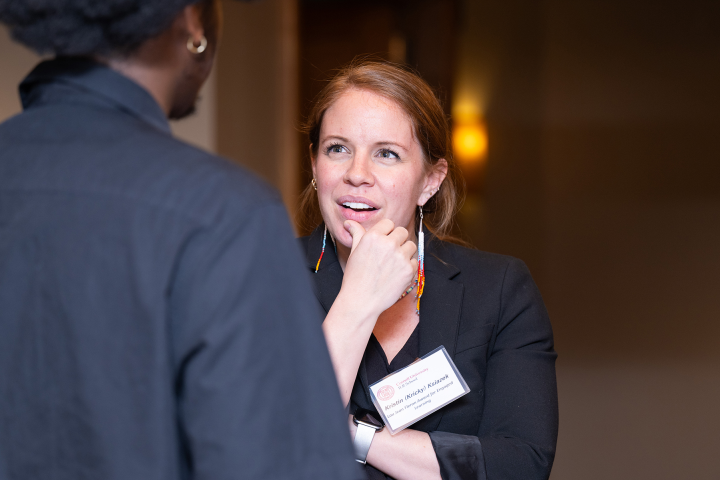
The discussion was moderated by one of the report’s authors, Cathy Creighton, director of the ILR Buffalo Co-Lab. Coauthors on the report were Buffalo Co-Lab researchers Kricky Ksiazek and Rusty Weaver.
Participants described pressures in the workplace that other, non-Black employees do not need to think about, such as code-switching, self-censoring and carefully managing their behavior in order to meet workplace expectations.
According to unadjusted data from the monthly U.S. Census Bureau Current Population Survey, Black women aged 16 years or older saw their unemployment rate rise from 4.9% in December 2024 to approximately 9% by August 2025. Over the same interval, unemployment for white women remained comparatively stable, topping out at just 3.7%. Despite a downward trend between August 2025 and May 2026, Black women’s unemployment is again surging: it was roughly 5% in May, just over 6% in June, and nearly 7% in August 2026.
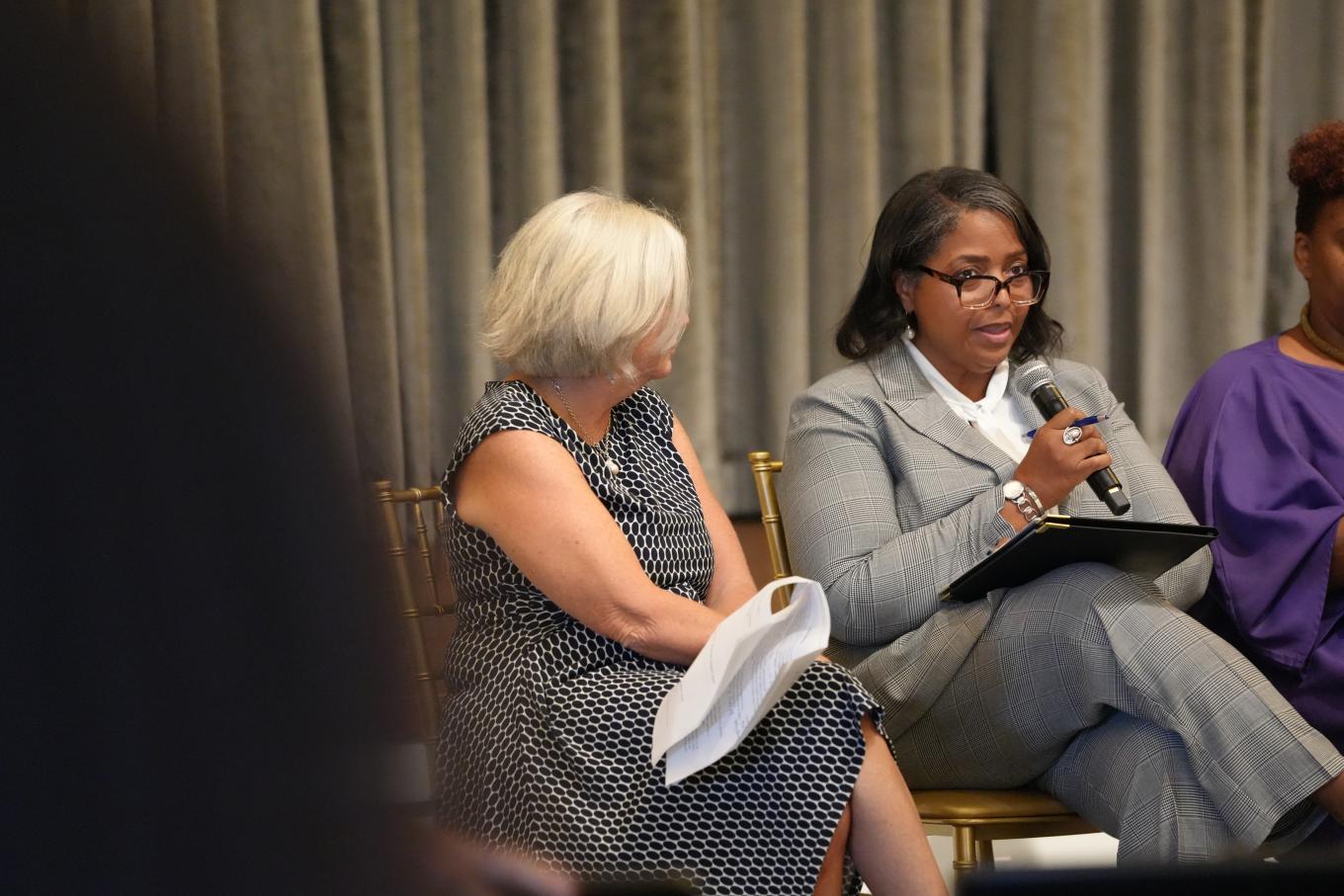
Panelists said the findings reflected challenges they have witnessed in their professional and community lives. Kesha Washington, a retail strategy planning manager at M&T Bank, described the calculation that can accompany bringing one's authentic self into the workplace, including concerns about being perceived as difficult, aggressive or challenging. Latanya Walton-Brown of Say Yes Buffalo said, while it took her decades to reach this point, she finally feels able to bring her authentic self to work. She also discussed the additional pressure experienced by Black women in leadership positions who are expected to perform at levels higher than their non-Black peers so that additional opportunities can be made for others with similar backgrounds. Manny White, an organizer with 1199SEIU, discussed conditions in the health care sector and the role of unions in protecting workers and providing educational opportunities. Dr. Marie Cannon and Dr. Melanie Porter of the Community Action Organization connected workplace and economic conditions to broader issues involving poverty, family stability and children's well-being.
The discussion concluded with a focus on potential solutions and the responsibilities of employers, institutions and policymakers.
Among many others, the report’s recommendations include increasing pay transparency and addressing pay equity; adopting worker-friendly policies that give employees greater voice; investing in employee retention; and expanding flexible work arrangements for workers with family-care responsibilities.
Speakers emphasized mentorship, sponsorship, support networks and greater representation of women of color in leadership. The panelists also addressed the injustice of expecting Black women to solve the systemic inequity that created these unequal conditions, which puts an unfair burden on them, rather than holding institutions and society accountable.
“Whose job is it?” asks Walton-Brown. “It isn’t Black women’s job to both experience the problem and then also find the solution.”