Risa Lieberwitz on the World’s Stage
In 1934, a New York City taxi drivers' strike inspired Clifford Odets to pen the play, “Waiting for Lefty.” The play examined the drivers’ dreadful working conditions and the tough choices they faced during the Depression–in their work and personal lives–of whether to take the courageous step to strike against their exploitative bosses.
91 years on, in a world that has since suffered history’s cycle of slings and arrows, the curtain has risen once again in a revival of "Waiting for Lefty" by the Classic Stage Company in New York City.
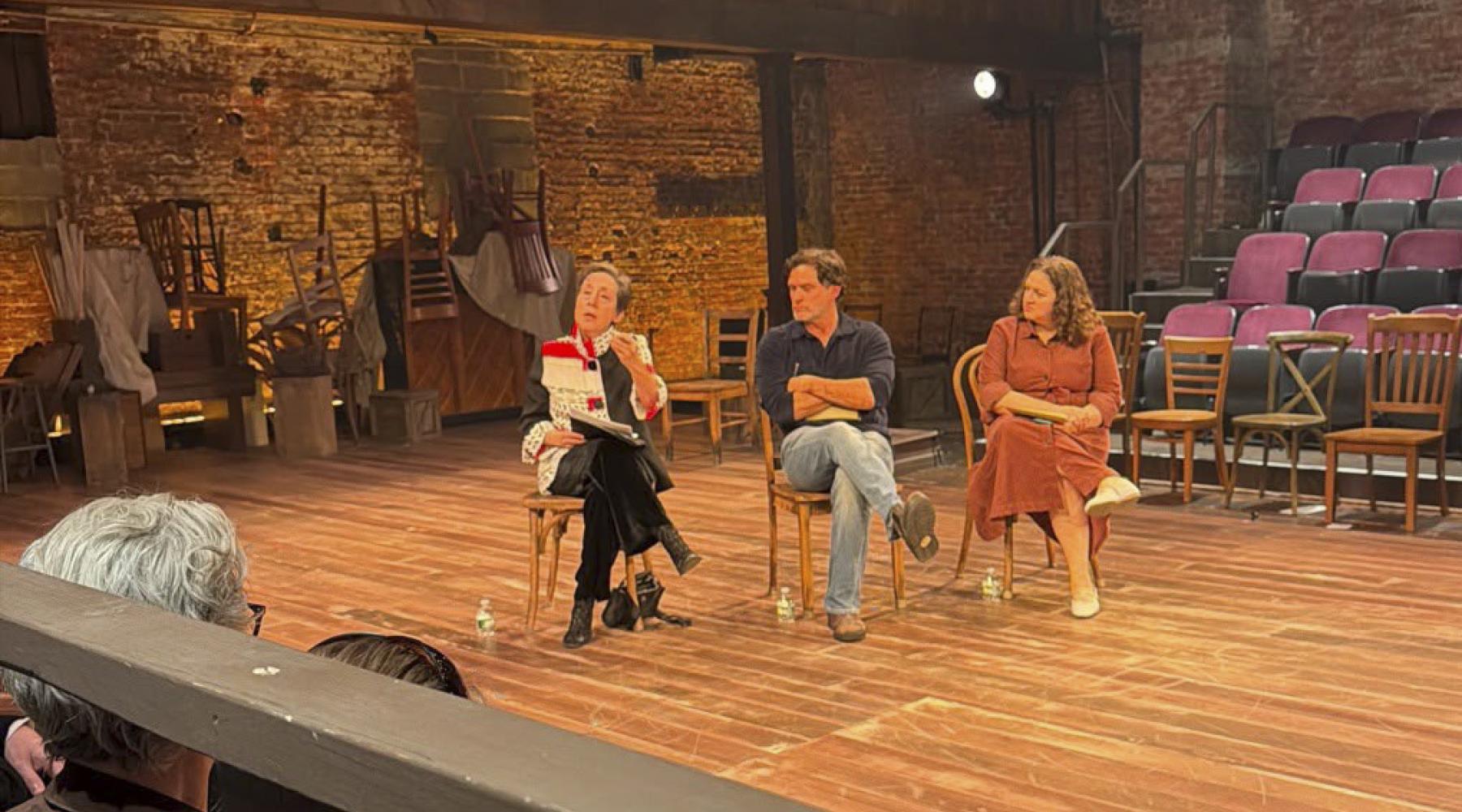
“We are still in the same fight as the workers in ‘Waiting for Lefty’ – fighting for the fundamental right to unionize and collectively bargain for a fair distribution of wealth and power in the workplace,” said Risa L. Lieberwitz, professor of Labor and Employment Law at Cornell University’s School of Industrial and Labor Relations, where she has been a professor since 1982, and more recently the Academic Director of the ILR Worker Institute. Lieberwitz was a featured speaker in a Nov. 7 post-performance “talkback” panel with “Waiting for Lefty” director Steven Pasquale and CSC producing artistic director Jill Rafson.
“My career as a professor of labor and employment law at the ILR School has been devoted to teaching, writing and speaking about the need to protect and strengthen labor rights,” said Lieberwitz, reflecting on the play. “These are key themes in ‘Waiting for Lefty’ – the fundamental rights to unionize, collectively bargain and strike; rights to gender and racial equality; and rights of expression and freedom of association.”
It was Lieberwitz’s sister, Claire Lieberwitz, who underwrote the Classic Stage Company’s run of “Waiting for Lefty” in Risa’s honor. They grew up together during the Civil Rights Movement, amid the rise of the feminist movement and at the height of the anti-Vietnam War movement. Their mother was a public school teacher who joined the teachers’ strike in Florida in the 1960s.
“I was surrounded by inspiring leaders and activists who were fighting against injustice and fighting for a better world,” said Lieberwitz. “For me, all these fights were interconnected – and they still are.”
“Waiting for Lefty” was written in the same year that Congress passed the National Labor Relations Act (NLRA) as part of President Franklin D. Roosevelt’s New Deal legislation. This was an important victory, as the NLRA provided private-sector workers with rights to unionize, collectively bargain, strike and engage in other collective or “concerted” action for the mutual benefit of the workers.
However, the NLRA was amended in 1947 and 1959 to weaken labor rights, including the right to strike. Since the 1980s, with the Reagan era, union density has dropped due to ongoing attacks on labor rights by business and right-wing politicians. To quote an old playwright, “What's past is prologue.”
“When I teach,” began Lieberwitz, “I hope that my students feel my passion for these issues and understand how valuable it is to work to move the world toward equality – through collective action in unions and other social justice organizations, through advocacy work in the law, and through education…La lucha continúa!”