
"These attacks are serious, but so are we": ILR's Worker Institute Hosts Third Care Convening
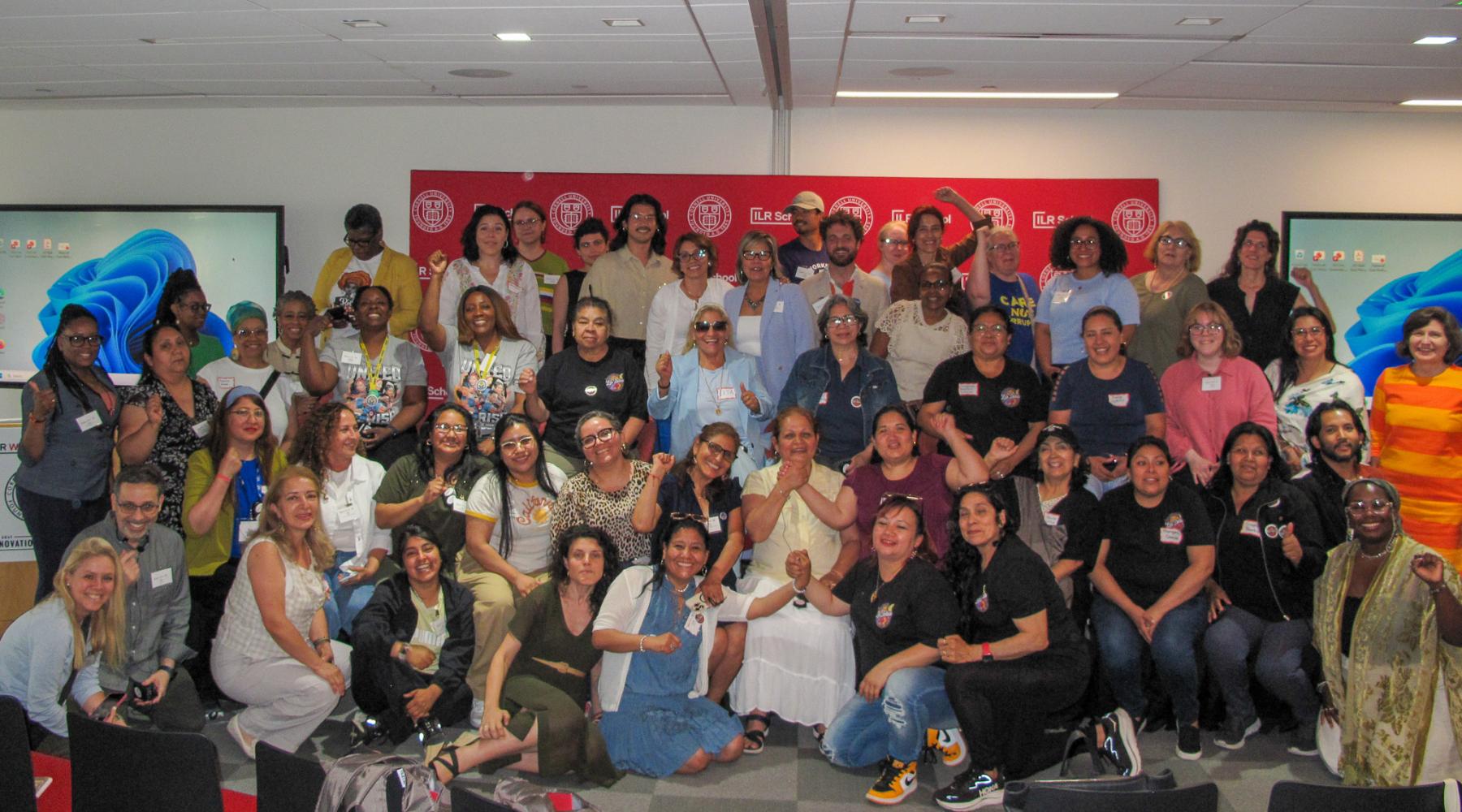
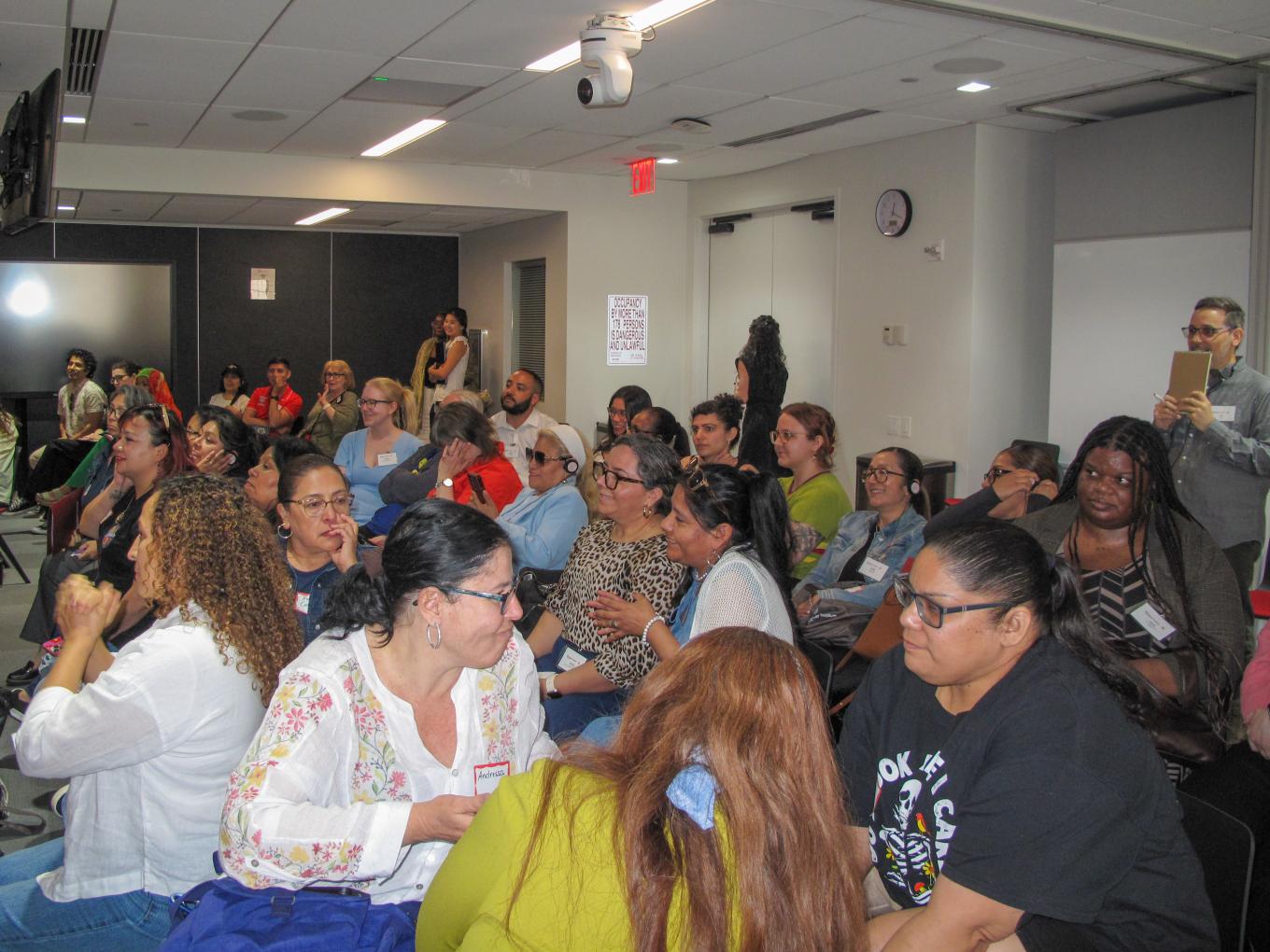
On June 5th and 6th, Cornell ILR’s Worker Institute hosted its third Future of Care Work Convening in New York City. Dozens of advocates, care workers, labor leaders, scholars and organizers gathered to reimagine the existing carework systems, which were already inadequate and unequal, but are now facing sharp escalations of attack: cuts to Medicaid, rollbacks of labor protections, anti-immigrant enforcement and the erosion of worker rights. The convening’s speakers, panels and action sessions sought to answer a simple but daunting question: how do we protect careworkers in times of disruption?
“Care workers have long faced having their labor devalued, being themselves devalued on the basis of their race, their gender, their immigration status, and having been excluded from core worker protections,” said Zoë West, senior researcher for worker rights and equity at the Worker Institute.
“There have long been fights for care workers to win protections and dignity at work, but in this moment, we are facing a sharp escalation. We are facing attempts to roll back the progress that workers have fought for. We're facing attempts to violently strengthen some of these systems of oppression that affect all of the care workers in this room and all care workers.”
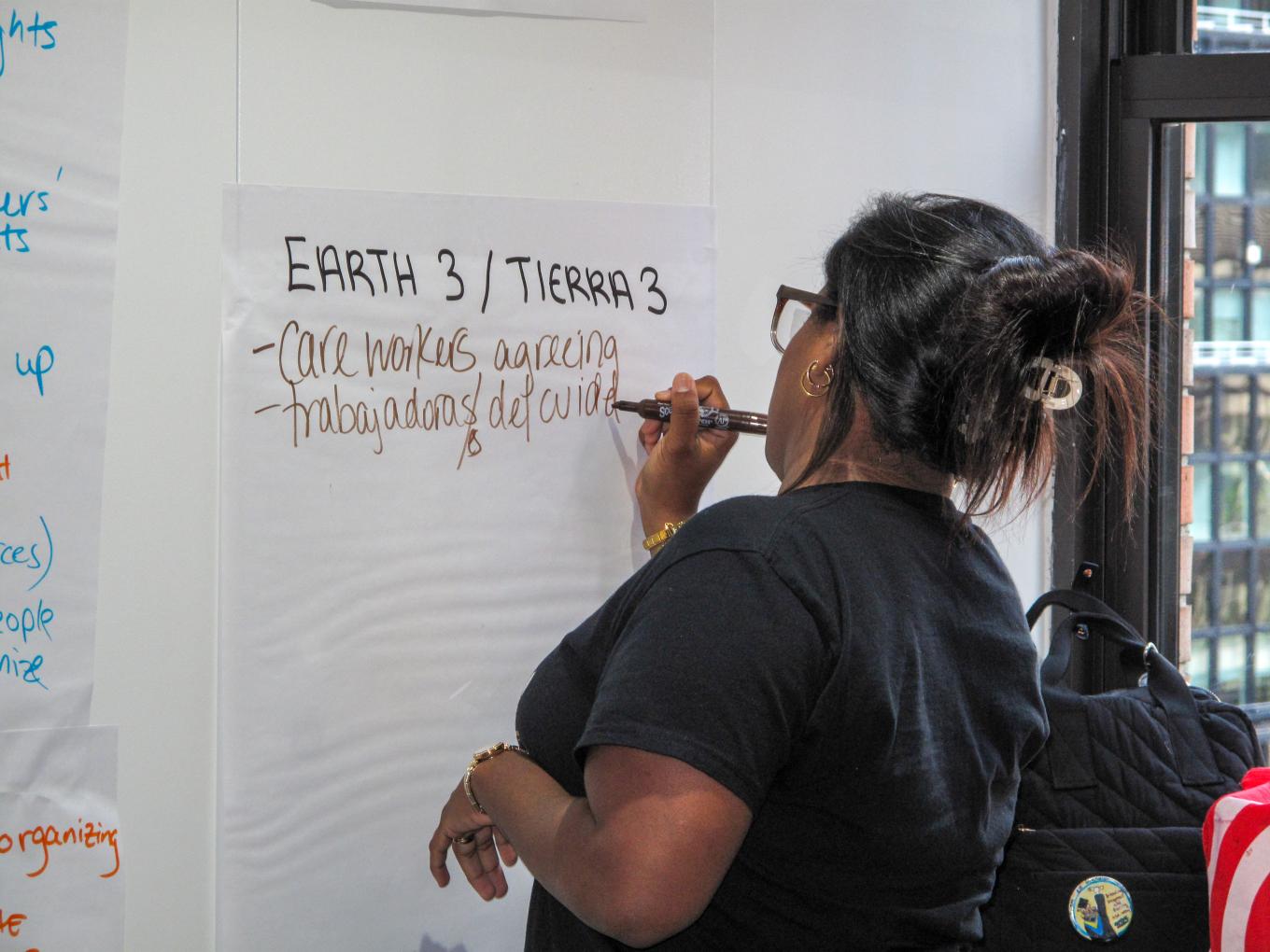
Critical to the convening was the idea that we don’t want things to simply go back to the way they were–because even before careworkers were under attack, they were still underpaid and underappreciated. Arianna Schindle, director of training at the Worker Institute, introduced the three-earth concept, a model borrowed from organizer and advocate Ai-jen Poo.
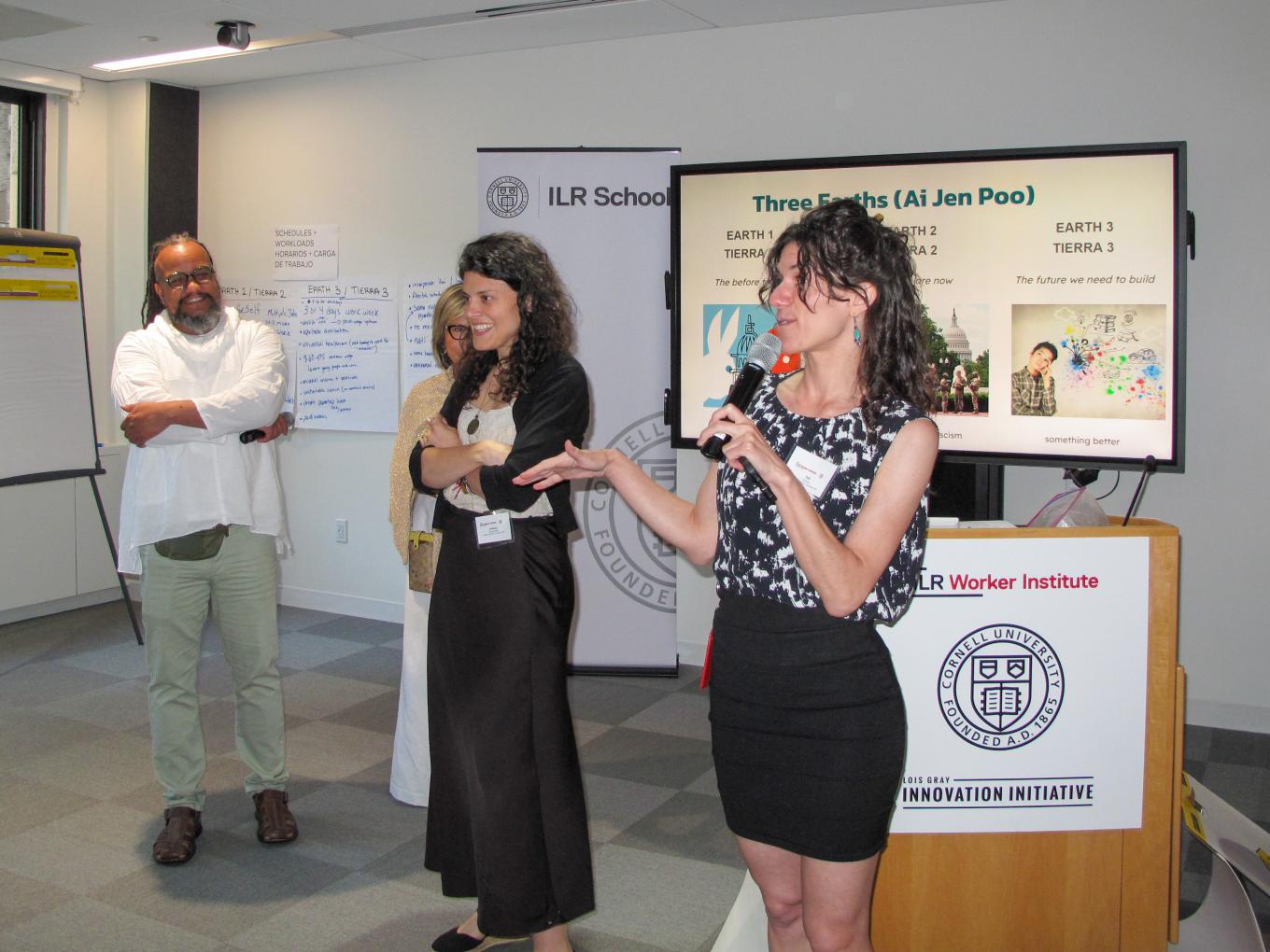
“Many of us remember Earth One,” began Schindle, “And we know that that democracy didn't function for many people, right? It isn’t something we want to go back to. But now we're here in Earth Two, in a moment of authoritarianism. We know that in this country, some communities have faced authoritarianism before. But now it's on a scale we have never seen, and it requires a solution and a vision we have never seen before. That's what builds us towards Earth Three. Earth Three is the vision for what we want to build.”
It was in Earth One when Deputy Mayor Julie Su’s mother came to the United States on a cargo ship because she couldn't afford a passenger ticket. “I grew up asking ‘how much’ instead of ‘can we’, because the cost of living is everything when you can't afford the basics. The thing that changed my life was simple: My mom got a union job working for the County of Los Angeles. Suddenly, she could come home at 5:30 pm. We could go to the doctor when we were sick, and now that she's retired, she has a pension,” said Su, deputy mayor of New York City for Economic Justice.
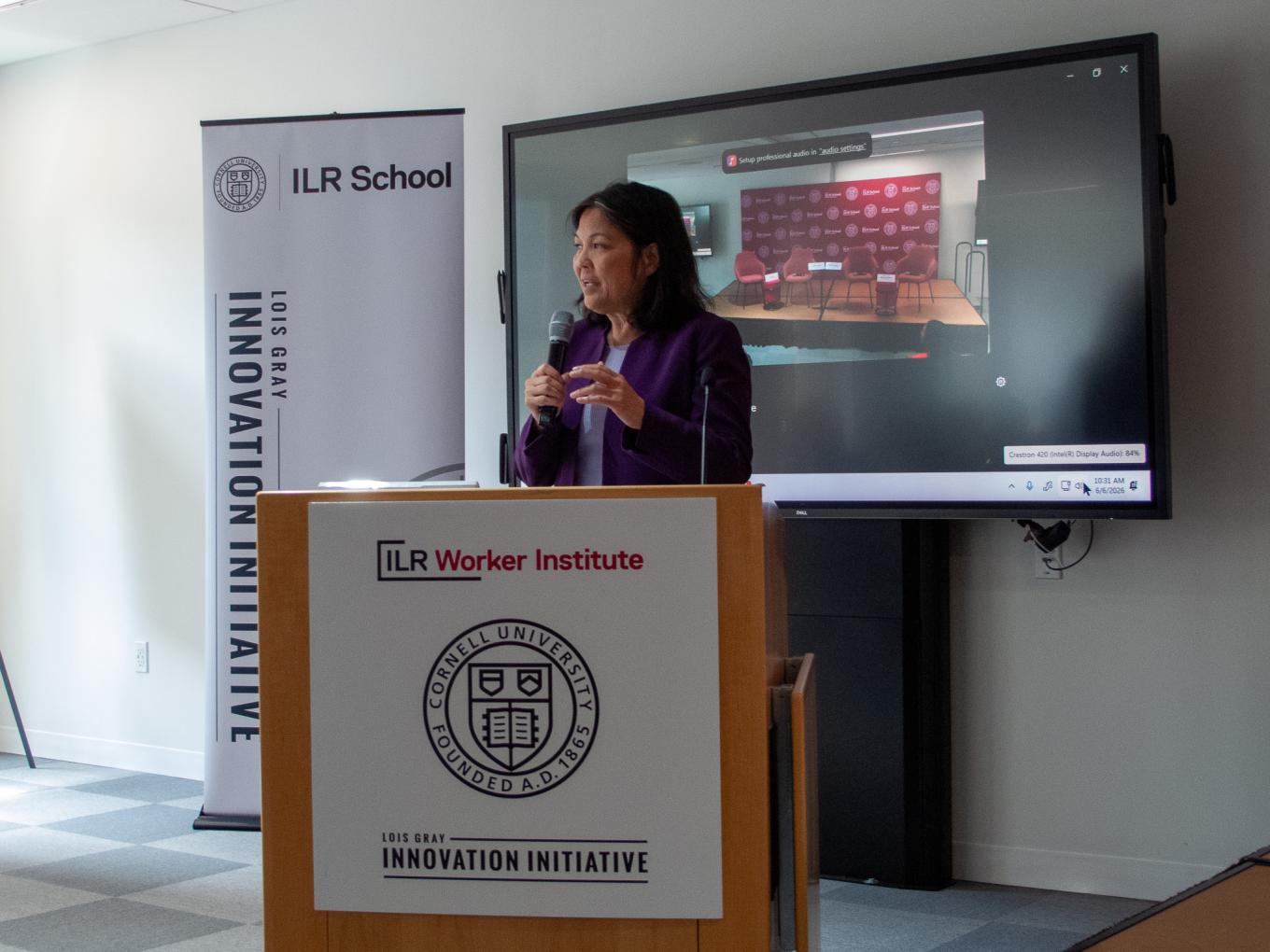
“It shouldn't be so impossible for people to have those things, and I share all that, not so much as biography, but as policy: Stability, a schedule you can count on, wages that you can live on, and an environment where you are respected not just for your labor but for your humanity,” said Su. “These are all things that our society can choose to make possible—or not.”
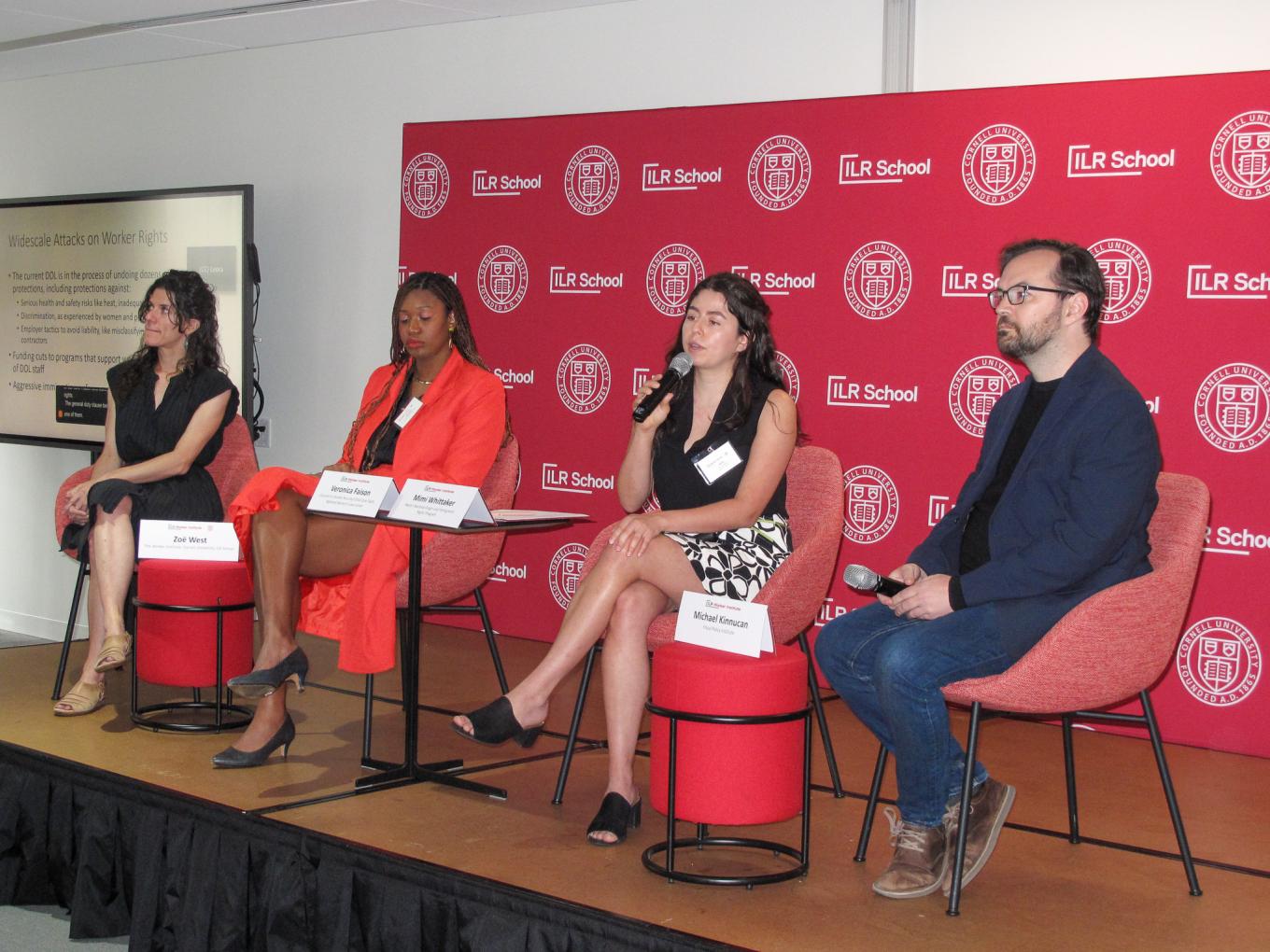
A panel discussion on current challenges in care work painted a picture of Earth Two. Mimi Whittaker, staff attorney at Legal Aid at Work's National Origin and Immigrants Rights Program, discussed the historical undervaluation of care work and the recent efforts to undo protections for home care workers under the Fair Labor Standards Act. Veronica Faison, Counsel on Income Security/Child Care Team at the National Women's Law Center, highlighted the vulnerabilities of care workers, including low wages, high turnover rates and reliance on public benefits. Meanwhile, Health Policy Director of the Fiscal Policy Institute, Michael Kinnucan, illustrated the impact of Medicaid cuts on long-term care and the need to rebuild the system from the ground up.
“Let me say plainly what everyone in this room knows, but oftentimes people in positions of power still refuse to acknowledge: care workers are the foundation of everything else in our society–the people raising our children, supporting our elders, caring for those who are sick, caring for people with disabilities. They are not just one sector of the workforce; you are the foundation of the entire workforce, your work has value, and it is hard,” said Su.
“The exploitation of working people is not accidental,” said Su. “It's not the result of a few bad actors doing a few bad things. It's built into our economy. It is structural, and that means that changing it requires structural choices—not just good intentions, not just the listening ear, but the deliberate use of power to tip the balance toward workers; that is what brought me here.”
In a subsequent panel, the conversation shifted from diagnosis to vision and strategy: Earth Three. Panelists described Earth Three as a world with universal child care and long‑term care, family and home‑based providers fully included and respected, pay justice across the system, and care workers and recipients at the center of policy decisions. They stressed that getting there requires building worker and political power—strengthening unions and collective representation, forging broad coalitions with parents, elders, disabled people and immigrant communities and running care workers for office. Schindle closed the panel by inviting participants to imagine specific people’s lives in Earth Three and to treat that vision as a concrete organizing roadmap, not just an abstract ideal.
After the panel, Executive Director of the Worker Institute, Patricia Campos-Medina, reflected on Nelson Mandela's quote, ‘It always seems impossible until it's done.’ “That means if you have a vision, then you have to make a plan, and then you have to find others who have the same vision as you. Then all of us have to do something about it. Then it's not that impossible to get it done.”
“What we do here [in New York City] is an example for the nation, right? We know that. We feel it every single day, and that's why we are going to succeed,” said Su. “This is not going to be easy. The funding is just one part of it. How we implement it, how we breathe life into it, how we make it real is hard work. There are lots of difficult questions... but this convening, bringing together researchers, organizers, advocates and workers across every sector of care—that's amazing. This is exactly the kind of space where that capacity to make policy decisions gets built. This is where the strategy will come from…The attacks are serious, but so are we.”
The convening concluded with workers, organizers and advocates turning ideas into action. In an afternoon breakout track on home care and healthcare, speakers and participants shared practical strategies for confronting attacks on immigrant workers, Medicaid and labor rights while building the long-term power needed to transform care. In a track on childcare, speakers and participants strategized on how to weave pay justice for childcare workers into the movement for universal childcare. Through panel discussions and interactive workshops in both tracks, attendees explored how coalition-building, collective bargaining, legal advocacy, political organizing and compelling public narratives can strengthen the movement for a more just and equitable care system. Rather than ending with a diagnosis of the challenges ahead, the convening closed with participants collectively mapping the strategies that will help bring Earth Three into being.