Cornell University mobile logo

Stories and articles from and about the Yang-Tan Workability Incubator at ILR's CAROW.

Understanding Key Stakeholders' Perspectives Towards Artificial Intelligence in Home Care Work

New research from the Initiative on Home Care Work at Cornell University’s Center for Applied Research on Work (CAROW) finds that AI could support home care, but only if aides, patients, and other relevant stakeholders help shape how it is governed.
An arm rests next to a blood pressure monitor and a smartphone.
Understanding Key Stakeholders' Perspectives Towards Artificial Intelligence in Home Care Work

AI’s Impact on Professional Work to Be Examined by CAROW Yang-Tan Incubator Initiative

A new research team plans to explore AI’s impact on professional work through a new two-year pilot initiative housed at the K. Lisa Yang and Hock E. Tan Yang-Tan WorkABILITY Incubator.
An illustration of a robot replacing a worker at his desk
AI’s Impact on Professional Work to Be Examined by CAROW Yang-Tan Incubator Initiative

How Older Adults Are Getting Home Care

Dr. Madeline Sterling discusses long-term care for older adults and highlights that most prefer to age at home. She discusses existing gaps in the healthcare system, including underfunded services and geographic differences, and she emphasizes that telehealth and AI can be leveraged with support from better infrastructure and ongoing research.
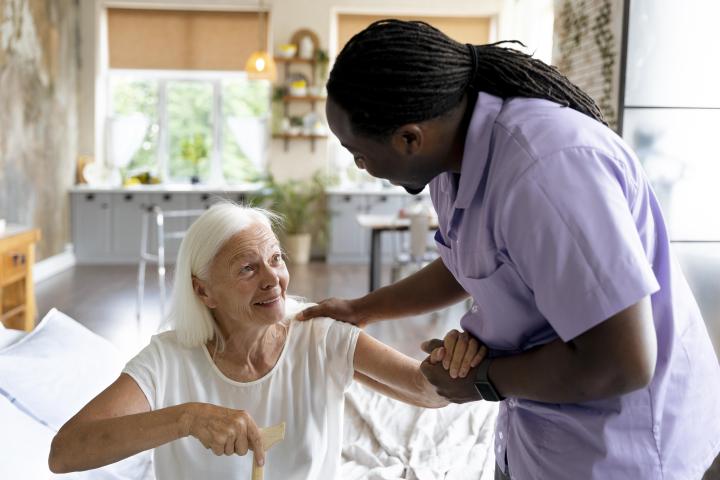
social-worker-taking-care-old-woman
How Older Adults Are Getting Home Care

Armed with heart failure training, tech, home health aides deliver better care, study finds

A heart failure pilot study conducted by Dr. Madeline Sterling and Margaret McDonald found that providing home health aides with heart failure specific training and supportive technology increases their confidence and skills, improves patient outcomes, and helps integrate them more fully into the care team.
training
Armed with heart failure training, tech, home health aides deliver better care, study finds

The Realities of Paid Caregiving in the United States

Dr. Madeline Sterling and Maya Levinson explain that aging in place depends on paid caregivers who provide essential medical and daily living support. They warn that worsening policies, low pay, and difficult working conditions are driving caregivers away, creating a crisis that could leave many without the care they need.
HHA and Patient
The Realities of Paid Caregiving in the United States

Integrating Home Health Care into Learning Health System

Dr. Madeline Sterling and Dr. Lisa Kern highlight the need to better integrate home care into the broader healthcare system to improve outcomes for heart failure patients. Incorporating Home Heath Agencies into a "learning health system" could reduce hospital readmissions and enhance continuity of care after discharge.
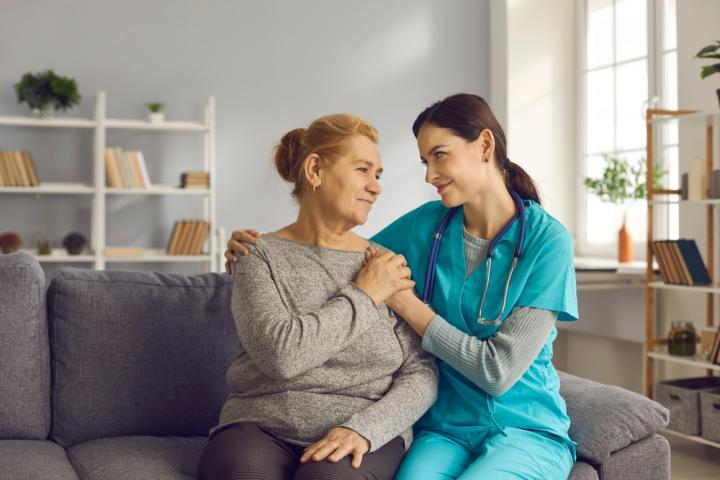
nurse and patient
Integrating Home Health Care into Learning Health System

New Research Shows Home Care Cooperative Can Improve Patient Care

Home care cooperatives – agencies co-owned and managed by home care workers – have key factors that appear to significantly improve the quality of care for patients, according to a new study co-authored by Senior Associate Dean for Outreach and Sponsored Research Ariel Avgar, Ph.D. ’08.
A home healthcare worker takes a man's blood pressure.
New Research Shows Home Care Cooperative Can Improve Patient Care